Groh v. Ramirez
Home | All Cases | Criminal Procedure | Groh v. Ramirez
Case Overview
CITATION
ARGUED ON
DECIDED ON
DECIDED BY
540 U.S. 551
Nov. 4, 2003
Feb. 24, 2004
Legal Issue
Does a search conducted pursuant to a warrant that fails to identify the items to be seized violate the Fourth Amendment’s particularity requirement, rendering the search presumptively unreasonable?
Holding
Yes, a search warrant that fails to describe the items to be seized is plainly invalid under the Fourth Amendment, and because the document provides no description of the evidence sought, the search is presumptively unreasonable and must be regarded as warrantless.
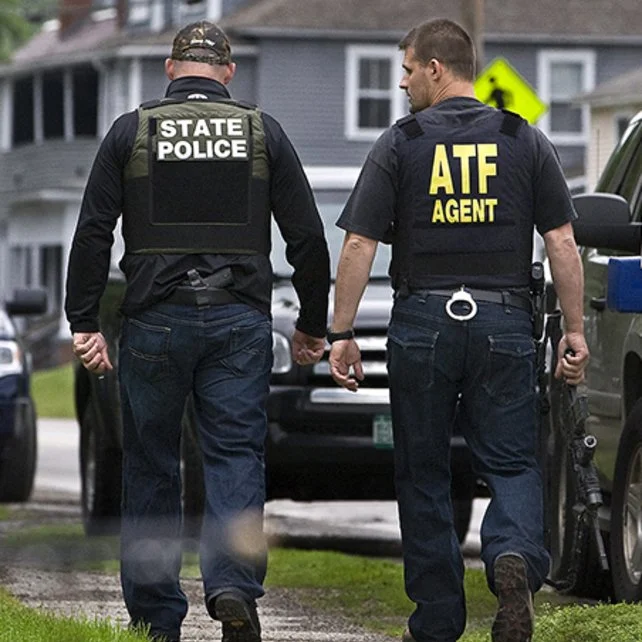
An ATF agent photographed with State Police | Credit: ATF
Background
In February 1997, ATF Special Agent Jeff Groh was notified by a citizen that a large stockpile of illegal weaponry (including an automatic rifle, grenades, a grenade launcher, and a rocket launcher) was located on a ranch owned by Joseph Ramirez and his family in Butte-Silver Bow County, Montana. Based on this information, Groh prepared and signed an application for a search warrant along with a supporting affidavit detailing the probable cause to search the ranch for illegal firearms, explosives, and related transaction records. Groh also filled out a standard warrant form and submitted all three documents to a Magistrate Judge, who signed the warrant. However, while the application and affidavit correctly listed the specific items to be seized, Groh accidentally typed a description of the Ramirez home (“a single dwelling residence two story in height which is blue in color”) in the space designated for the property to be seized. The warrant form also didn’t incorporate the application or affidavit by reference, nor were those supporting documents attached to the warrant.
Groh led a search team of federal agents and local sheriff’s deputies to execute the warrant at the Ramirez ranch. Ramirez wasn’t at the property during the search, but his wife and children were. The search ultimately yielded no illegal weapons or explosives and resulted in no property being seized. Upon leaving, Groh provided Mrs. Ramirez with a copy of the defective search warrant, but not the supporting application because it had been placed under seal. The next day, after Ramirez’s attorney requested details about the search, Groh faxed over the page of the warrant application that itemized the weapons sought. No criminal charges were ever filed against Ramirez or any member of his family.
The Ramirez family subsequently filed a civil lawsuit in federal court against Groh and the other search team members under Bivens v. Six Unknown Fed. Narcotics Agents (1971) and 42 U.S.C. § 1983, claiming that the search violated their Fourth Amendment rights. The U.S. District Court for the District of Montana granted summary judgment in favor of Groh and the other search team members, ruling that no Fourth Amendment violation occurred and that had one occurred, the officers were protected by qualified immunity because the omission was a mere “typographical error.” On appeal, the U.S. Court of Appeals for the Ninth Circuit affirmed summary judgment for the other officers but reversed as to Groh, holding that the search warrant was invalid for failing to particularly describe the items to be seized and that Groh wasn’t entitled to qualified immunity because as the search team leader who drafted the warrant, he had a duty to ensure it was not glaringly defective before executing it. The U.S. Supreme Court subsequently granted certiorari.
5 - 4 decision for Ramirez
Groh


Ramirez


Stevens
Rehnquist
Thomas
Scalia
Kennedy
Souter
O’Connor
Ginsburg
Breyer
-
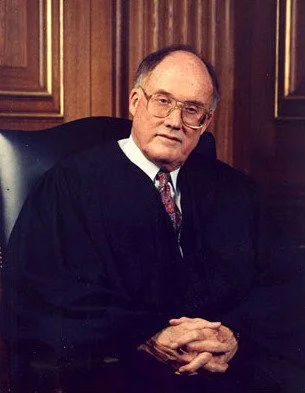
Writing for the Court, Justice John Paul Stevens held that a search conducted pursuant to a search warrant that fails to describe the items to be seized is “plainly invalid” and clearly “unreasonable” under the Fourth Amendment, emphasizing that search warrants must “particularly describ[e] . . . the persons or things to be seized.” Because Groh conceded that the warrant didn’t describe the type of evidence sought and instead had only a description of the house in the space reserved for items to be seized, Stevens found that the warrant “did not describe the items to be seized at all.” Consequently, Stevens established that a search executed under such a glaringly defective document is “so obviously deficient that we must regard the search as ‘warrantless’ within the meaning of our case law,” meaning the entry into the Ramirez’s ranch “presumptively unreasonable.”
Stevens rejected the government’s argument that an adequate description in the supporting warrant application or affidavit can save a facially invalid warrant, writing that the Fourth Amendment “requires particularity in the warrant, not in the supporting documents.” Stevens explained that while a warrant may cross-reference supporting papers if it uses “appropriate words of incorporation” and the supporting document accompanies the warrant, no such incorporation or attachment took place in Ramirez’s case because the affidavit remained sealed. Stevens emphasized that the particularity requirement doesn’t merely prevent general searches but also “assures the individual whose property is searched or seized of the lawful authority of the executing officer, his need to search, and the limits of his power to search.”
Turning to qualified immunity under Saucier v. Katz, Stevens explained that immunity depends on “whether it would be clear to a reasonable officer that his conduct was unlawful in the situation he confronted.” He added that under United States v. Leon, “a warrant may be so facially deficient . . . that the executing officers cannot reasonably presume it to be valid.” Here, Stevens reasoned that because Groh prepared the warrant himself, he couldn’t reasonably rely on the magistrate’s signature or a claim ignorance of a “glaring deficiency that any reasonable police officer would have known was constitutionally fatal.”
Applying these principles to Groh’s search of the Ramirez’s ranch, Stevens found that Groh conducted an unconstitutional search and was not entitled to qualified immunity. Stevens explained that while Groh detailed the stockpiled firearms and explosives in his affidavit, he mistakenly typed a description of the ranch in the warrant’s itemization block, leaving the warrant without any reference to the specific evidence sought. Stevens also found that Groh’s alleged oral statements to Mrs. Ramirez during the search couldn’t cure the constitutional defect, because her account showed that Groh stated only that he was looking for “an explosive device in a box,” which he described as “little better than no guidance at all.” Ultimately, Stevens concluded that “even a cursory reading of the warrant in this case—perhaps just a simple glance—would have revealed a glaring deficiency,” holding that Groh violated the Ramirez’s Fourth Amendment rights and denying him qualified immunity.