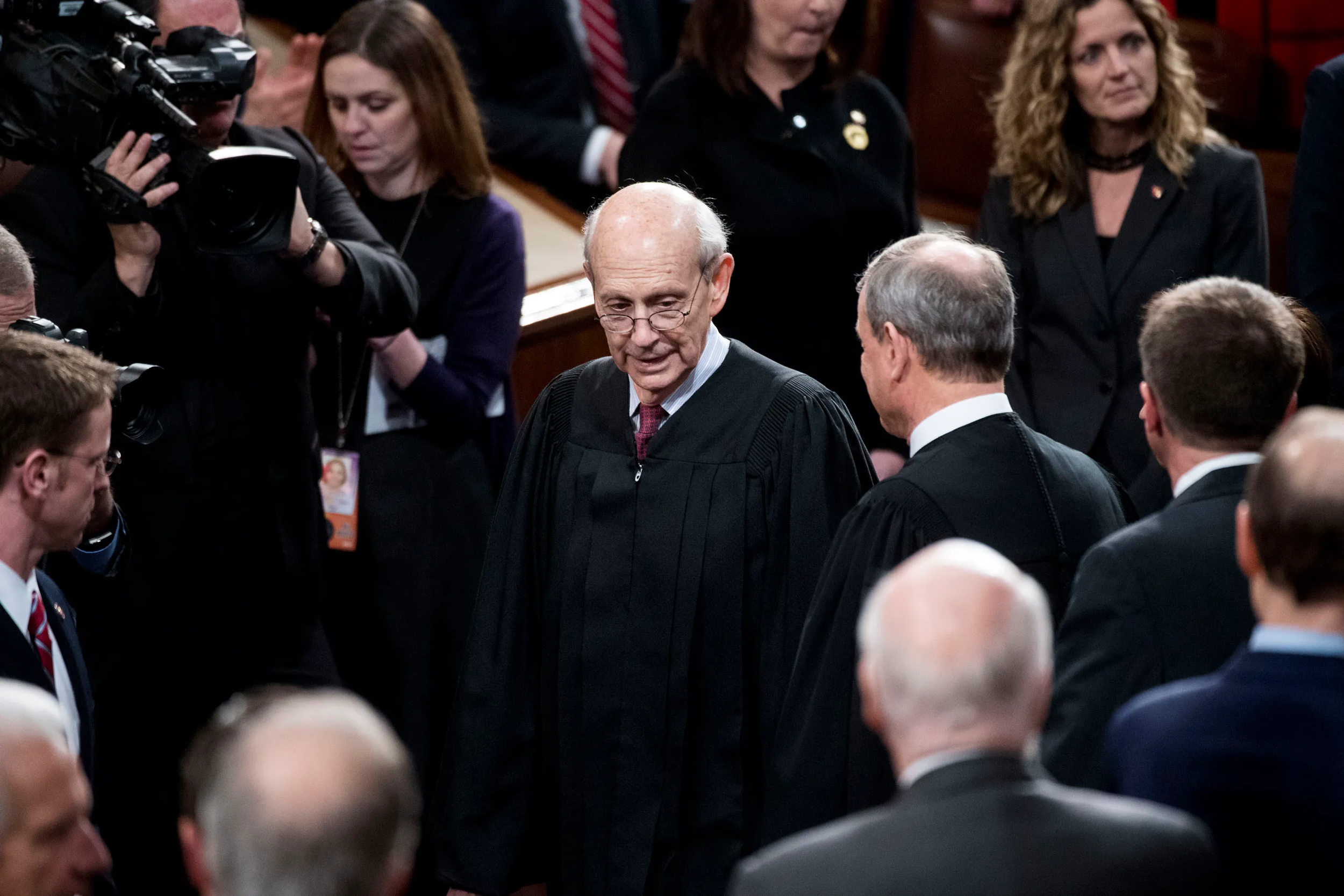
STEPHEN BREYER
Associate Justice (1994 - 2022)

QUICK FACTS
APPOINTED BY
Bill Clinton
PRECEDED BY
BIRTHPLACE
California
SWORN IN
August 3, 1994
SUCCEEDED BY
LAW SCHOOL
Harvard
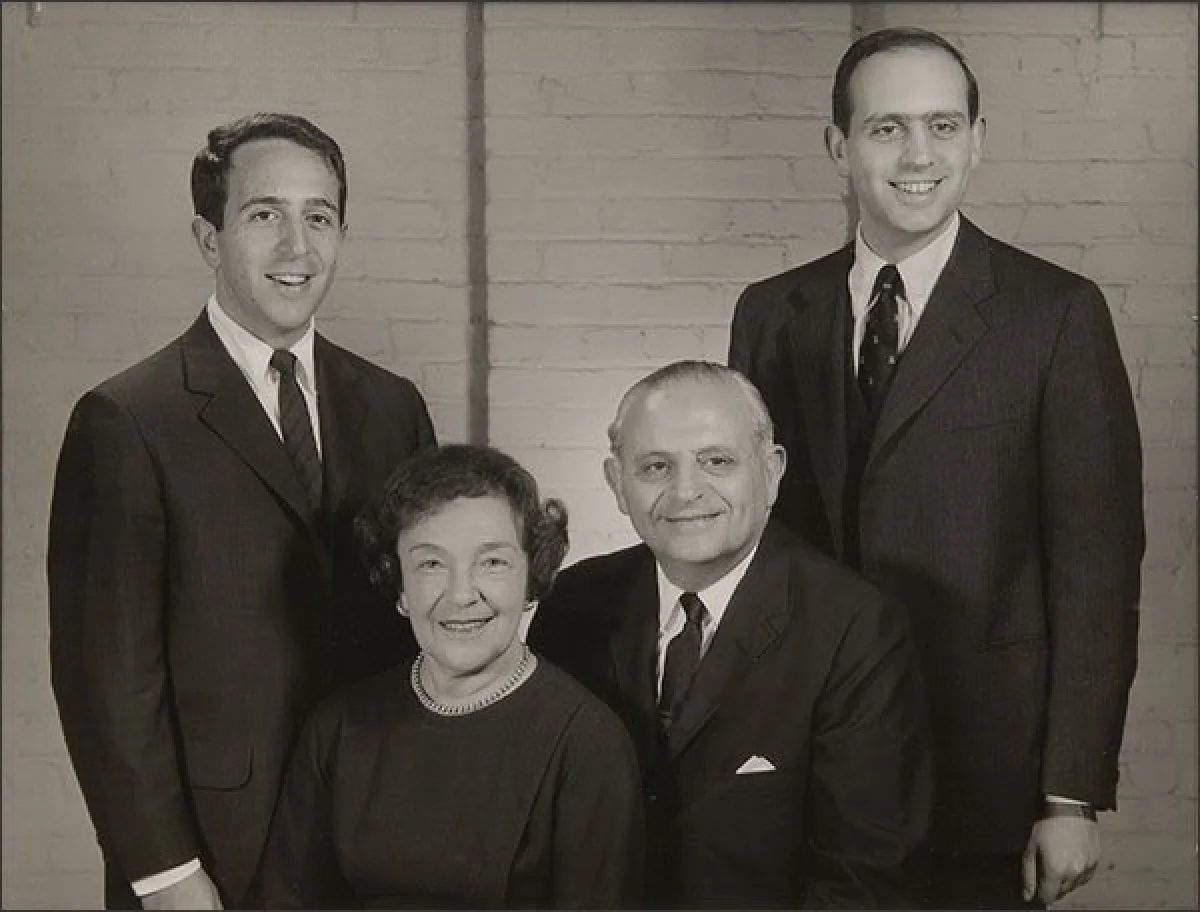
Photo of the Breyer family (1958) | Credit: Education Week/Collection of the Supreme Court of the United States
Personal Life and Education
Stephen Breyer was born on August 15, 1938, in San Francisco, California, to Anne and Irving Gerald Breyer. Breyer was raised in a middle-class Reform Jewish family. His father was a legal counsel for the San Francisco Board of Education. Breyer and his brother were in the Boy Scouts of America, where Breyer earned the rank of Eagle Scout. In 2007, Breyer received the Distinguished Eagle Scout Award. His brother would be appointed to the U.S. District Court for the Northern District of California by President Bill Clinton.
Breyer attended Lowell High School in San Francisco. Breyer was a member of the Lowell Forensic Society and debated in high school tournaments, including against future California governor Jerry Brown and future Harvard Law School professor Laurence Tribe. He graduated in 1955. Breyer went on to attend Stanford University, where he studied philosophy and was a member of Phi Beta Kappa. Breyer graduated with honors in 1959 with a B.A. in philosophy. Breyer was then awarded a Marshall Scholarship, which he used to study philosophy, politics, and economics in Oxford, England. He earned a B.A. with honors in 1961. Breyer then returned to the United States to attend Harvard Law School, where he was an editor of the Harvard Law Review. He graduated magna cum laude in 1964. After graduating from law school, Breyer clerked for Justice Arthur Goldberg. During his clerkship, Breyer wrote the first draft of Goldberg’s concurrence in Griswold v. Connecticut (1965). In 1965, Breyer joined the U.S. Army Reserve. He served for eight years during the Vietnam War, including six months on active duty in the Army Strategic Intelligence Corps. Breyer was honorably discharged in 1965 after reaching the rank of corporal.
In 1967, Breyer married Joanna Freda Hare, a psychologist and member of the British aristocracy. Together they had three children.
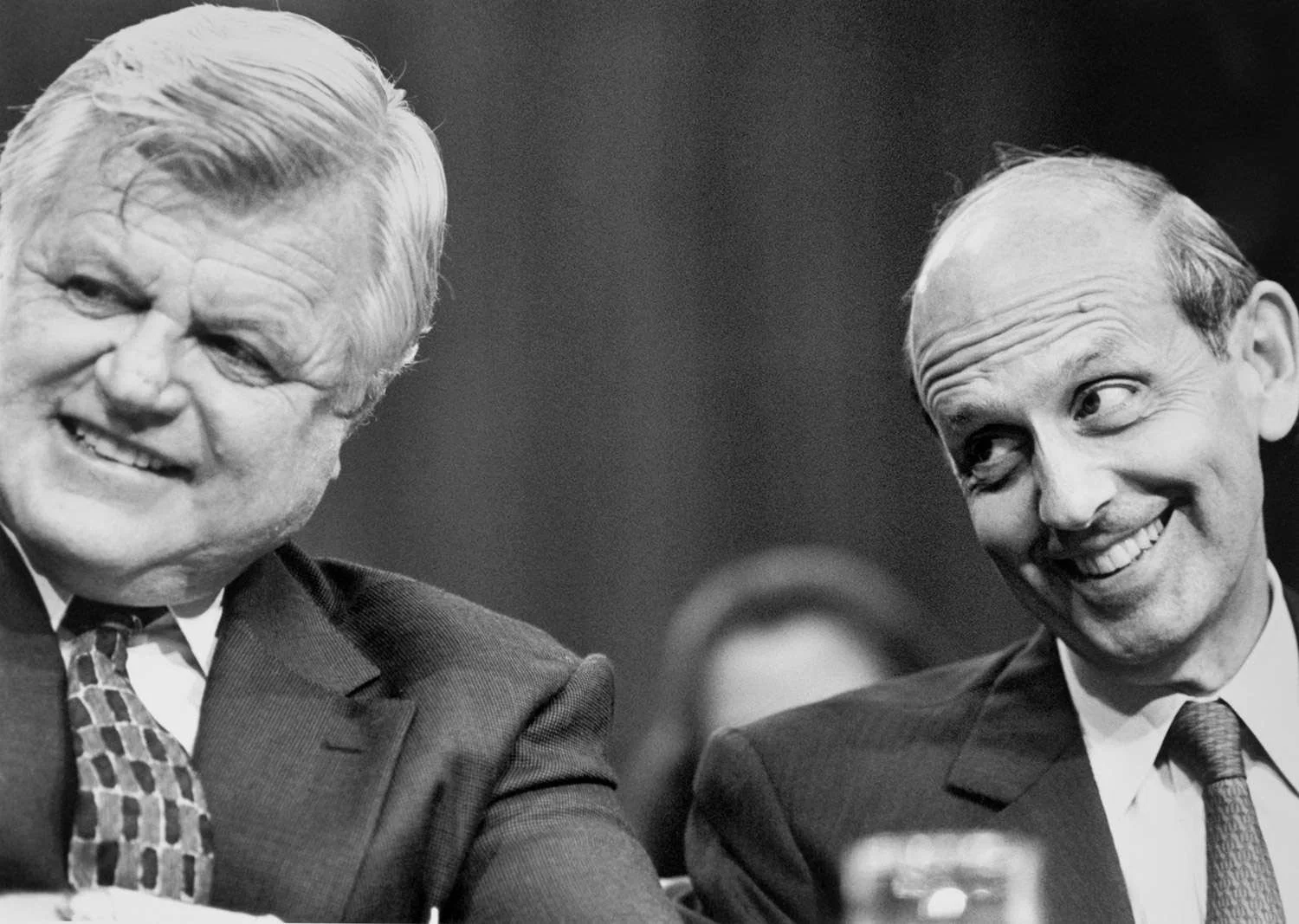
Photo of Stephen Breyer and Senator Ted Kennedy | Credit: CNN/Laura Patterson/Getty
Early Career
After clerking for Justice Goldberg, Breyer served briefly as a fact-checker for the Warren Commission and as as a special assistant to the Assistant Attorney General of the Department of Justice’s Antitrust Division for two years.
In 1967, Breyer became an assistant professor at Harvard Law School and taught there until 1980. From 1977 to 1980 he also had a joint appointment at Harvard Kennedy School. He was a leading expert on administrative law and wrote two influential books on deregulation: Breaking the Vicious Circle: Toward Effective Risk Regulation and Regulation and Its Reform. In 1970, economist Ben Kaplan prompted him to write “The Uneasy Case for Copyright”. In 1979, he co-wrote Administrative Law and Regulatory Policy with Richard Stewart. Breyer also served as a visiting professor in Sydney, Rome, and at Tulane University Law School.
While teaching at Harvard, Breyer took several leaves of absence to serve in the U.S. government. In 1973, Breyer served as an assistant special prosecutor on the Watergate Special Prosecution Force. From 1974-1975, Breyer served as special counsel to the Senate Judiciary Committee and from 1979-1980, he served as their chief counsel. In his time at the committee, worked closely with the chairman, Senator Ted Kennedy, to pass the Airline Deregulation Act that closed the Civil Aeronautics Board. In 2011, Breyer officiated the wedding of Kennedy’s son Patrick.
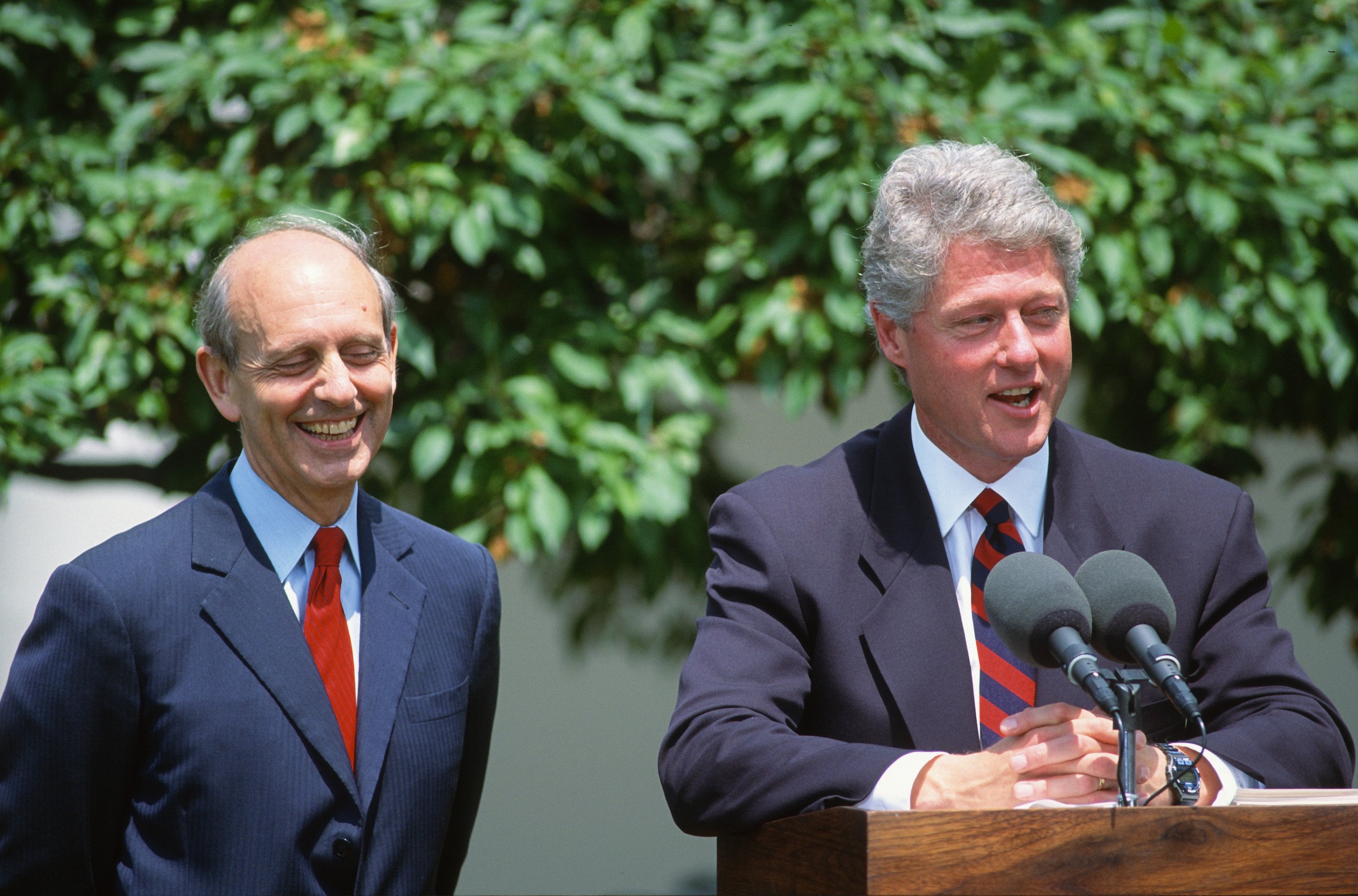
Photo of Stephen Breyer standing by President Clinton as he’s nominated to the Supreme Court | Credit: RON SACHS/CNP/GETTY IMAGES
Nomination to the Supreme Court
In 1993, Republican Senator Orrin Hatch recommended both Breyer and Ruth Bader Ginsburg to President Bill Clinton as options to nominate to fill the seat vacated by Justice Byron White. Clinton appointed Ginsburg, fearing that Breyer’s focus on administrative law would lead to conservative rulings.
After Justice Harry Blackmun’s retirement in 1994, Clinton offered the nomination to a number of people before ultimately landing on Breyer. First, Clinton chose George Mitchell, the Senate Majority Leader, but Mitchell declined so he could focus on passing the Clinton health care plan. Clinton then offered it to his Secretary of the Interior, Bruce Babbitt, but he declined so that his wife wouldn’t have to resign as U.S. Ambassador to the Organization of American States. Clinton next chose Richard S. Arnold, who was then the chief judge of the U.S. Court of Appeals for the Eighth Circuit, but Arnold withdrew himself from consideration the day before Clinton planned to announce because his doctors concluded that his recurrent cancer might lead to an early death.
Ultimately, Clinton nominated Breyer on May 17, 1994, after heavy lobbying by Senator Ted Kennedy. Breyer was easily confirmed on July 29 by a vote of 87 to 9.
“People have to be educated and they have to stick to it. If people lose that respect, an awful lot is lost.”
— Justice Stephen Breyer
Cite this page