Rodriguez v. United States
Home | All Cases | Criminal Procedure | Rodriguez v. United States
Case Overview
CITATION
ARGUED ON
DECIDED ON
DECIDED BY
575 U.S. 348
Jan. 21, 2015
Apr. 21, 2015
Legal Issue
Does the Fourth Amendment’s protection from unreasonable search and seizure prohibit an officer from extending a traffic stop to allow a drug-sniffing dog to conduct a sniff search of the vehicle?
Holding
Yes, while an officer may conduct certain unrelated checks during a lawful traffic stop, they may not extend the length of the traffic without reasonable suspicion.
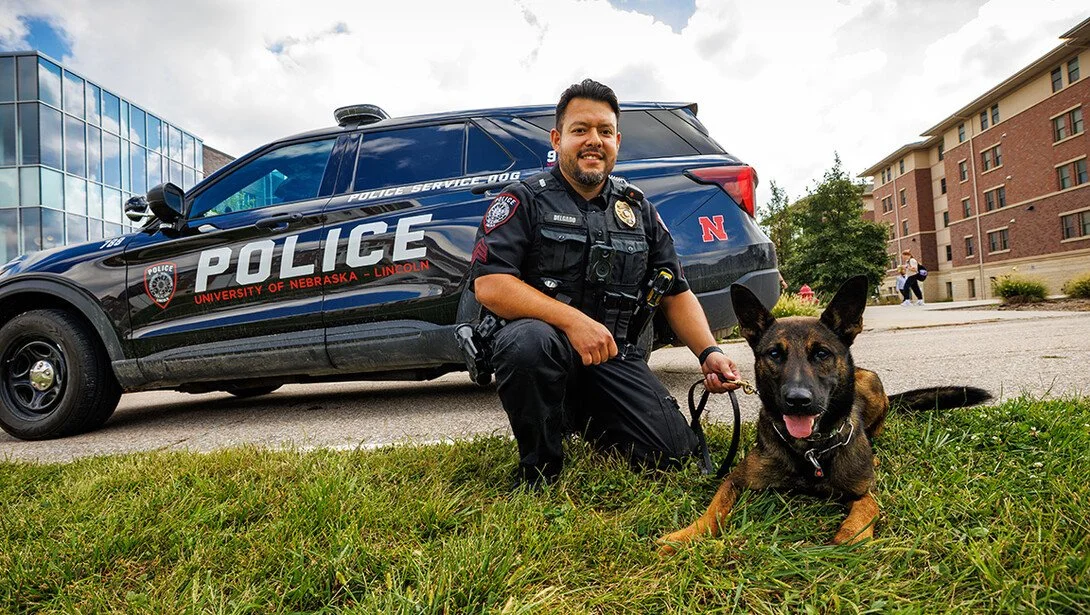
Dodger, a K-9 with the University of Nebraska-Lincoln Police Department | Credit: UNL/Nebraska Today
Background
Just after midnight at 12:06 a.m. on March 27, 2012, Officer Morgan Struble, a K-9 officer with the Valley Police Department in Nebraska who had his dog Floyd in his patrol car, observed a vehicle veer slowly onto the shoulder of the Nebraska State Highway for one or two seconds before jerking back onto the road. Driving on the highway shoulder violated Nebraska law, so Struble initiated a traffic stop. The vehicle was occupied by Dennys Rodriguez, the driver, and Scott Pollman, his passenger. Struble asked Rodriguez why he had swerved, to which Rodriguez replied that he was trying to avoid a pothole. When Struble collected Rodriguez’s driver’s license, vehicle registration, and proof of insurance, he asked Rodriguez to sit in the patrol car. Rodriguez asked if he was required to do so, Struble answered that he was not, and Rodriguez chose to wait in his own vehicle.
Struble ran a records check on Rodriguez, returned to the vehicle, collected Pollman’s driver’s license, and asked about their travel plans. Pollman explained that they had traveled to Omaha, Nebraska, to look at a Ford Mustang that was for sale and were now returning to Norfolk, Nebraska. Returning to his patrol car, Struble ran a records check on Pollman, called for a second officer, and began writing a written warning for the shoulder-driving infraction. By 12:27 or 12:28 a.m., Struble returned to Rodriguez’s vehicle a third time, explained the written warning, and returned all documents to Rodriguez and Pollman. At this point, all official business related to the stop was completed, but despite having completed all traffic-related tasks, Struble didn’t consider Rodriguez free to leave and asked for permission to walk his narcotics-detection dog around the vehicle. Rodriguez refused, so Struble ordered him to turn off the vehicle and wait in front of his patrol car until backup arrived. A deputy sheriff arrived at 12:33 a.m., whereupon Struble retrieved his dog and walked him twice around Rodriguez’s vehicle. Approximately seven to eight minutes after the written warning was issued, the dog alerted to the presence of drugs, and a subsequent search uncovered a large bag of methamphetamine.
A federal grand jury in the U.S. District Court for the District of Nebraska indicted Rodriguez on one count of possession with intent to distribute 50 grams or more of methamphetamine. Rodriguez moved to suppress the drug evidence, arguing that Officer Struble had unconstitutionally prolonged the traffic stop without reasonable suspicion in order to conduct the dog sniff. A Magistrate Judge recommended denying the motion, finding that while Officer Struble lacked independent reasonable suspicion once the written warning was issued, Eighth Circuit precedent treated a seven- to eight-minute extension for a dog sniff as a permissible de minimis intrusion on Fourth Amendment rights. The district court adopted the Magistrate Judge’s findings and denied Rodriguez’s motion to suppress, after which he entered a conditional guilty plea and was sentenced to five years in prison. The U.S. Court of Appeals for the Eighth Circuit affirmed, holding that the brief delay was an acceptable de minimis intrusion on personal liberty and declining to decide whether reasonable suspicion existed. The U.S. Supreme Court then granted certiorari.
6 - 3 decision for Rodriguez
Rodriguez
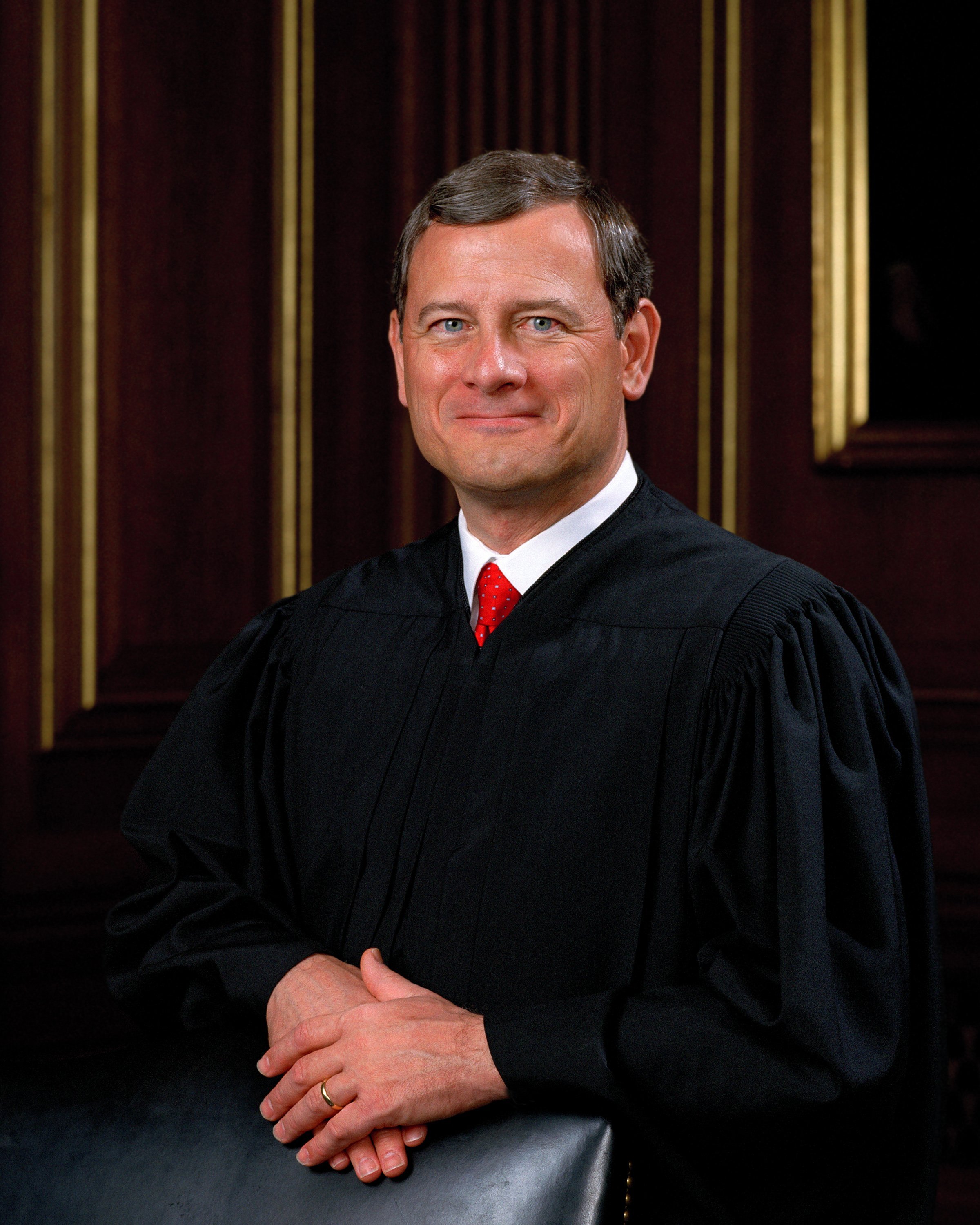

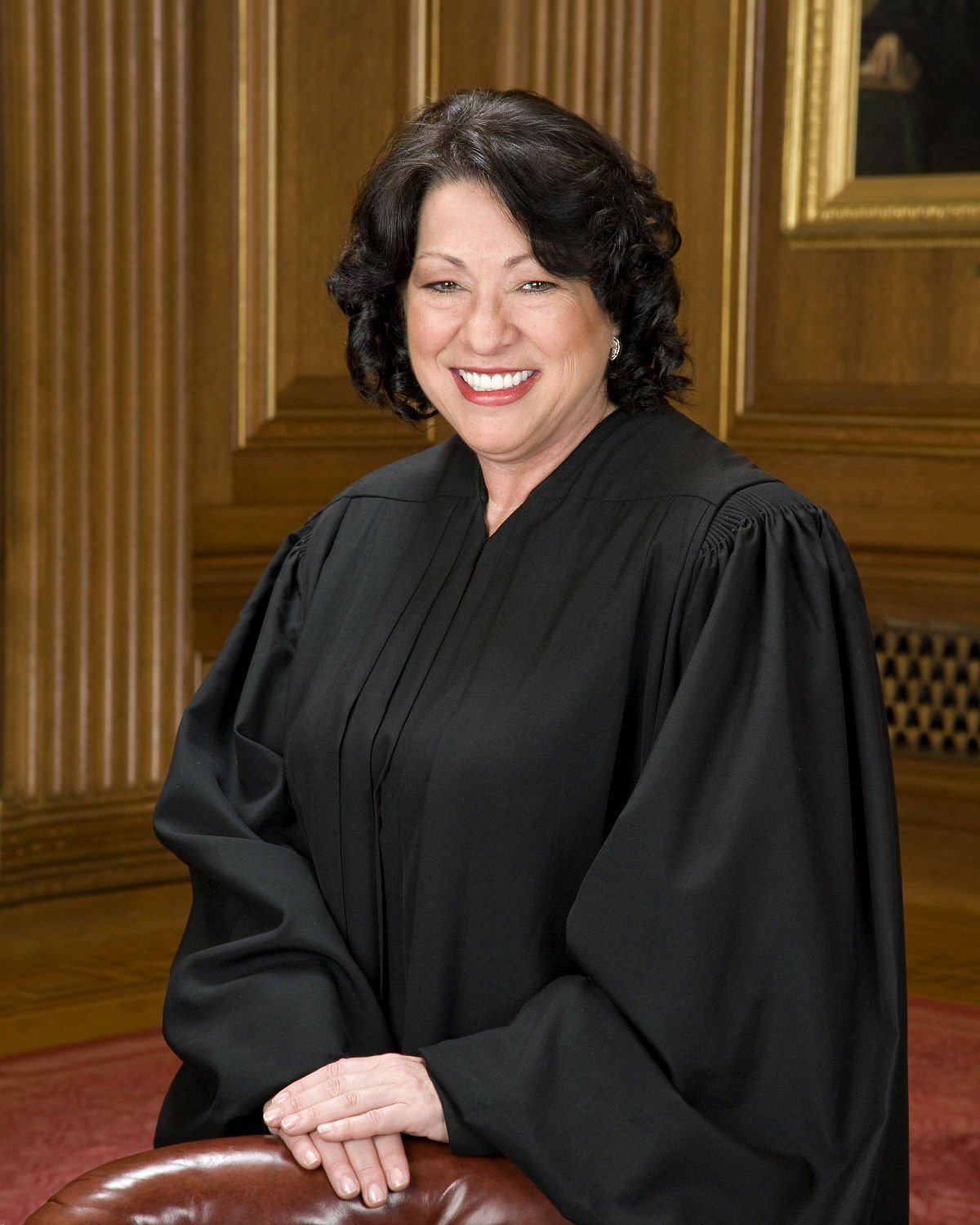


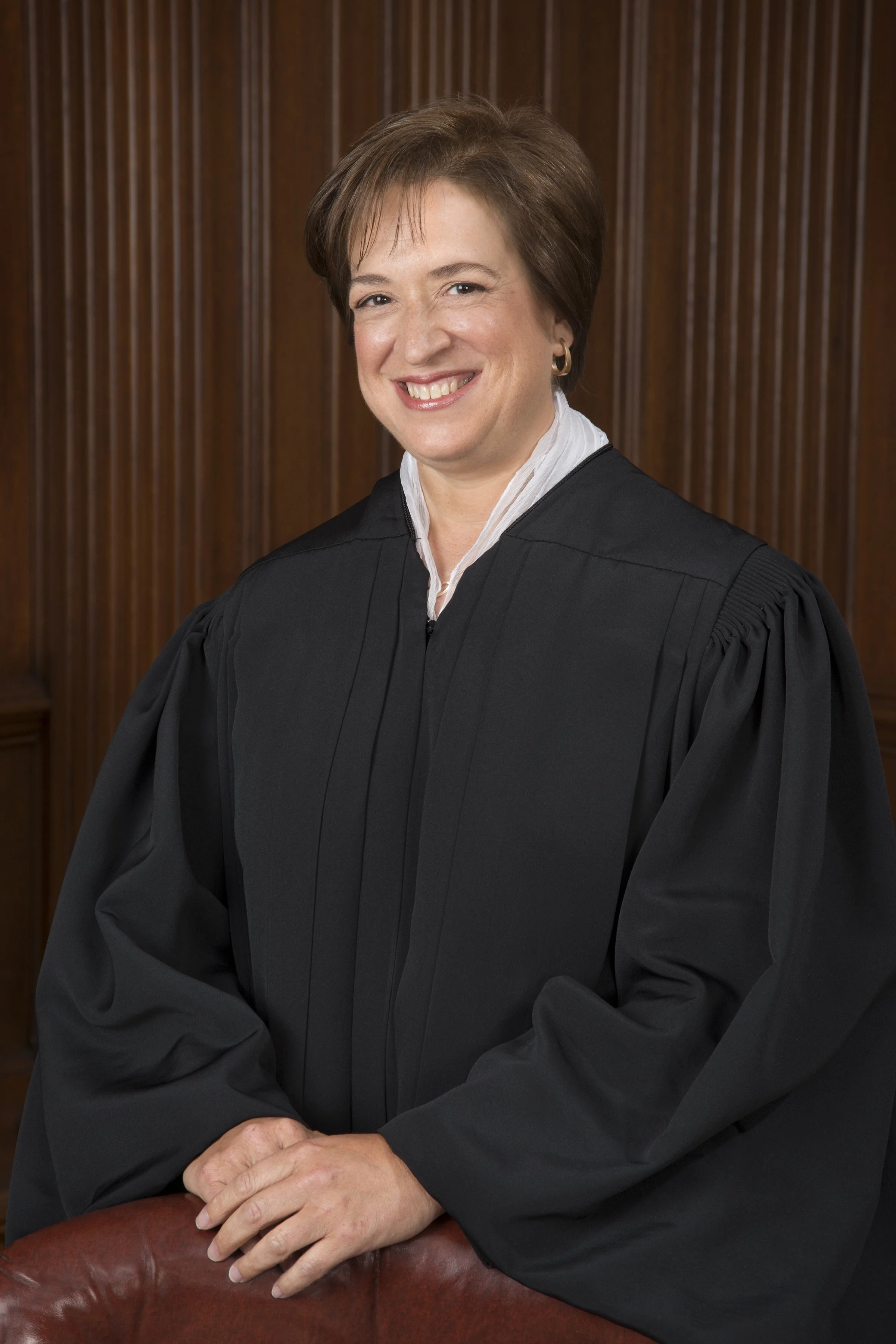
U.S.


Thomas
Scalia
Kennedy
Roberts
Ginsburg
Sotomayor
Alito
Kagan
Breyer
-
Writing for the Court, Justice Ruth Bader Ginsburg held that “a police stop exceeding the time needed to handle the matter for which the stop was made violates the Constitution’s shield against unreasonable seizures.” She added that “[a] seizure justified only by a police-observed traffic violation, therefore, ‘become[s] unlawful if it is prolonged beyond the time reasonably required to complete th[e] mission’ of issuing a ticket for the violation.” Ginsburg explained that a routine traffic stop is a relatively brief encounter more analogous to a Terry stop than it is to a formal arrest. She wrote that like a Terry stop, “the tolerable duration of police inquiries in the traffic-stop context is determined by the seizure’s ‘mission’—to address the traffic violation that warranted the stop . . . and attend to related safety concerns.” Because addressing the infraction is the purpose of the stop, it “may ‘last no longer than is necessary to effectuate th[at] purpose.’” Ginsburg asserted that “[a]uthority for the seizure thus ends when tasks tied to the traffic infraction are—or reasonably should have been—completed.”
Ginsburg noted that the Court’s prior decisions in Illinois v. Caballes (2005) and Arizona v. Johnson (2009) “tolerated certain unrelated investigations that did not lengthen the roadside detention.” However, she emphasized that Caballes explicitly warned that a traffic stop “can become unlawful if it is prolonged beyond the time reasonably required to complete th[e] mission” of issuing a warning ticket. Ginsburg reiterated that Johnson reinforced this limitation, holding that a seizure remains lawful only “so long as [unrelated] inquiries do not measurably extend the duration of the stop.” Thus, Ginsburg stated that while an officer may conduct certain unrelated checks during an otherwise lawful traffic stop, “he may not do so in a way that prolongs the stop, absent the reasonable suspicion ordinarily demanded to justify detaining an individual.”
Defining the proper scope of law enforcement authority, Ginsburg explained that beyond deciding whether to issue a traffic ticket, an officer’s mission also includes “ordinary inquiries incident to [the traffic] stop.” Ginsburg stated that typically, such inquiries involve checking the driver’s license, determining whether there are outstanding warrants against the driver, and inspecting the vehicle’s registration and proof of insurance, all of which “serve the same objective as enforcement of the traffic code: ensuring that vehicles on the road are operated safely and responsibly.” In contrast to routine traffic inquiries, Ginsburg explained that a dog sniff is “a measure aimed at ‘detect[ing] evidence of ordinary criminal wrongdoing.’” Because a dog sniff lacks the “same close connection to roadway safety as the ordinary inquiries,” she held that “a dog sniff is not fairly characterized as part of the officer’s traffic mission.”
Responding to the Eighth Circuit’s reliance on Pennsylvania v. Mimms (1977), Ginsburg rejected the argument that a dog sniff could be justified as a de minimis intrusion offset by governmental interests. Ginsburg clarified that the officer safety interest recognized in Mimms, which allowed officers to order drivers to exit vehicles, “stemmed from the danger to the officer associated with the traffic stop itself.” In contrast, “[o]n-scene investigation into other crimes . . . detours from that mission,” as do the safety precautions taken to facilitate such detours. She argued that because highway and officer safety “are interests different in kind from the Government’s endeavor to detect crime in general or drug trafficking in particular,” Mimms provides no basis for prolonging a stop to execute a dog sniff.
Ginsburg also rejected the Government’s argument that an officer who completes traffic tasks expeditiously earns extra or “bonus time” to pursue an unrelated criminal investigation. Stressing that the reasonableness of a seizure depends on what police in fact do, Ginsburg argued that “[i]f an officer can complete traffic-based inquiries expeditiously, then that is the amount of ‘time reasonably required to complete [the stop’s] mission.’” She then reasoned that “[t]he critical question, then, is not whether the dog sniff occurs before or after the officer issues a ticket . . . but whether conducting the sniff ‘prolongs’—i. e., adds time to—‘the stop.’”
Ultimately, Ginsburg concluded that the extension of Rodriguez’s traffic stop to conduct a dog sniff of his vehicle without reasonable suspicion violated the Fourth Amendment’s protection from unreasonable search and seizure. Ginsburg noted that because the Eighth Circuit affirmed the denial of Rodriguez’s motion to suppress without reviewing the Magistrate Judge’s finding regarding reasonable suspicion, the lower court had not yet passed on that issue. She wrote, “[t]he question whether reasonable suspicion of criminal activity justified detaining Rodriguez beyond completion of the traffic infraction investigation, therefore, remains open for Eighth Circuit consideration on remand.”