Gonzalez v. Raich
Case Overview
CITATION
ARGUED ON
DECIDED ON
DECIDED BY
545 U.S. 1
Nov. 24, 2004
Jun. 6, 2005
Legal Issues
Does the Commerce Clause grant Congress the authority to prohibit the purely intrastate manufacture and possession of marijuana for medical purposes?
Holding
Yes, the Commerce Clause grants Congress the authority prohibit the manufacture and possession of marijuana, regardless of its purpose or whether it was a purely intrastate activity.
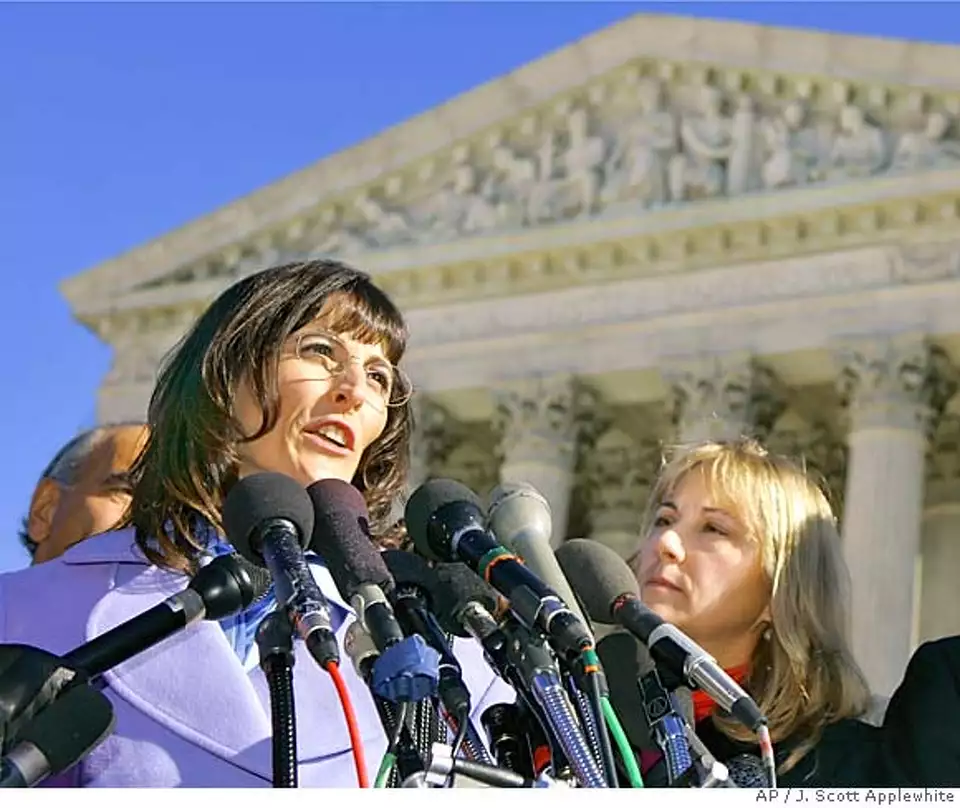
Angel Raich and Diane Monson speaking outside the Supreme Court | Credit: SFGATE
Background
In 1969, President Richard declared a national “War on Drugs”. Nixon worked with Congress to codify drug legislation from several States on the federal level, resulting in the Comprehensive Drug Abuse Prevention and Control Act of 1970. Subsequently, Congress passed the Controlled Substances Act (CSA), which created a regulatory system for controlled substances based on “schedules” and outlawed the manufacturing, distribution, dispense, or possession of any controlled substance except as authorized by the CSA. Under the CSA, marijuana was a schedule I drug, meaning it couldn’t be legally prescribed.
In 1996, California voters approved Proposition 215, which was codified as the Compassionate Use Act of 1996. The measure allowed “seriously ill” residents of California to access marijuana for medical purposes and created an exemption from criminal prosecution for physicians and patients who possess or grow marijuana for medical purposes.
Angel Raich and Diana Monson were both California residents who suffered from a number of serious medical conditions. Both women were being treated by licensed physicians, and for several years both used marijuana as a medication on the advice of their physicians. Raich and Monson brought an action against the U.S. Attorney General (then Alberto Gonzalez) seeking injunctive and declaratory relief prohibiting enforcement of the CSA to the extent that it would prevent them from possessing, obtaining, or manufacturing marijuana for their personal medical use.
6 - 3 decision for Gonzalez
Gonzalez

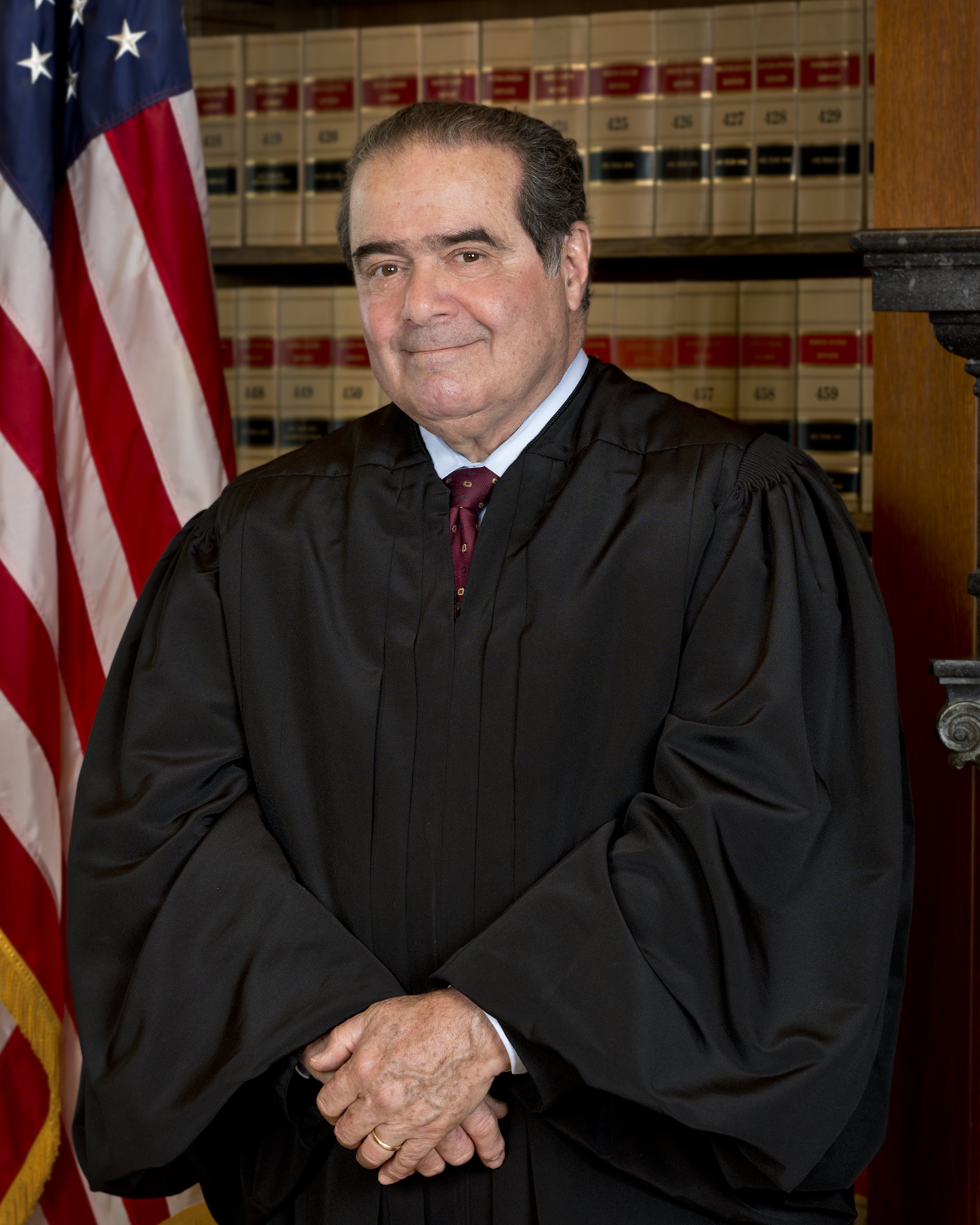


Raich


Rehnquist
Kennedy
Stevens
Breyer
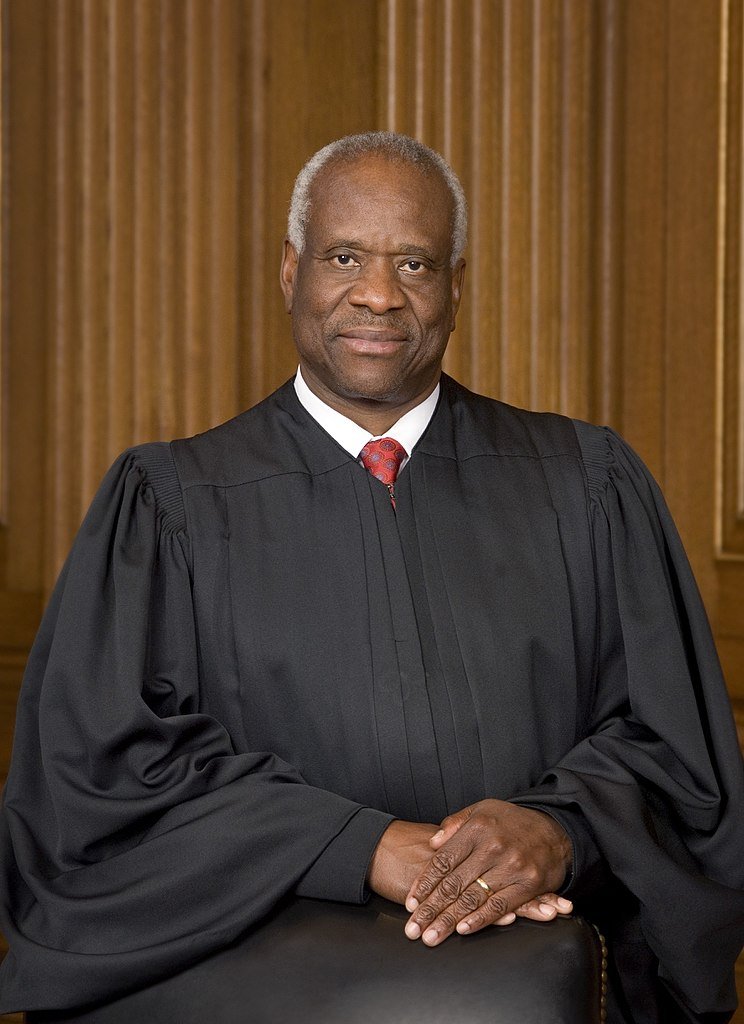
Scalia
O’Connor
Ginsburg
Thomas
Souter
-
Writing for the Court, Justice John Paul Stevens began by stating the three areas in which Congress can regulate under its commerce power: the channels of interstate commerce, the instrumentalities of interstate commerce, and activities that substantially affect interstate commerce. Stevens then stated that only the third category, activities substantially affecting interstate commerce, was at play in this case.
Stevens relied on the Court’s holding in Wickard v. Filburn (1942) to establish Congress’ authority to regulate local activity if it exerts a “substantial economic effect” on interstate commerce, even if that activity is purely intrastate and not itself “commercial”. Stevens explained that in affirming such authority, the Court has “never required Congress to legislate with scientific exactitude. When Congress decides that the ‘total incidence’ of a practice poses a threat to a national market, it may regulate the entire class.”
Stevens stated that the similarities between the facts in this case and those in Wickard were “striking.” Stevens explained that in Wickard, the Agricultural Adjustment Act aimed to control the volume of wheat moving in interstate commerce, just as the CSA aims to control the supply and demand of controlled substances in lawful and unlawful drug markets. He stated, “the regulation is squarely within Congress’ commerce power because production of the commodity meant for home consumption, be it wheat or marijuana, has a substantial effect on supply and demand in the national market for that commodity.”
Stevens asserted that the Court’s task in this case was not to determine whether Raich and Monson’s activities, when taken in the aggregate, “substantially affect” interstate commerce, but rather only whether Congress had a “rational basis” to conclude it does. Stevens pointed out that unique difficulties exist in distinguishing between marijuana grown locally and marijuana grown elsewhere, so the Court had “no difficulty concluding that Congress had a rational basis for believing that failure to regulate the intrastate manufacture and possession of marijuana would leave a gaping hole in the CSA.” Therefore, he explained, Congress was acting within its constitutional authority to “‘make all Laws which shall be necessary and proper’ to ‘regulate Commerce ... among the several States.’”
Stevens then responded to the argument that the Court should “excise individual applications of a concededly valid statutory scheme.” Stevens distinguished this request from the Court’s holdings in United States v. Lopez(1995) and United States v. Morrison(2000), where two statutes enacted under the Commerce Clause were struck down as an unconstitutional exercise of Congress’s commerce power. Stevens explained stated that “[u]nlike those at issue in Lopez and Morrison, the activities regulated by the CSA are quintessentially economic.” He further explained that since the CSA regulates production, distribution, and consumption of commodities for which an established interstate market already exists, Congress’ prohibition of intrastate manufacture or possession is a rational and commonly utilized regulation. Stevens concluded that because “the CSA is a statute that directly regulates economic, commercial activity,” there is no doubt regarding its constitutionality.
-
In his concurring opinion, Justice Antonin Scalia stated that while he agreed with the Court’s holding regarding the validity of the CSA, he wrote separately “because my understanding of the doctrinal foundation on which the holding rests is, if not inconsistent with that of the Court, at least more nuanced.”
Scalia reaffirmed the three categories of commerce regulation historically permitted by the Court, those being the channels of interstate commerce, the instrumentalities of interstate commerce, and activities that substantially affect interstate commerce. However, Scalia argued that the third category “is different in kind, and its recitation without explanation is misleading and incomplete.” Scalia explained that unlike the first two categories, Congress’ power to regulate intrastate activities that aren’t themselves part of interstate commerce derives from the Necessary and Proper Clause. He stated that “[w]here necessary to make a regulation of interstate commerce effective, Congress may regulate even those intrastate activities that do not themselves substantially affect interstate commerce.”
In this case, Scalia noted that the CSA sought to keep substances under Schedule 1 from entering the interstate market and stated that “[t]he Commerce Clause unquestionably permits this.” He further explained that the fact that possession is a noneconomic activity “is immaterial” to whether Congress can prohibit it “as a necessary part of a larger regulation.” Scalia pointed out that “marijuana grown at home and possessed for personal use is never more than in instant from the interstate market.” With that in mind, he argued that Congress didn’t have to rely on state law creating a strict division between a lawful and unlawful marijuana market.