United States v. Morrison
Case Overview
CITATION
ARGUED ON
DECIDED ON
DECIDED BY
529 U.S. 598
Jan. 11, 2000
May 15, 2000
Legal Issues
Can Congress regulate noneconomic, violent criminal conduct based solely on its aggregate effect on interstate commerce?
Holding
No, the Commerce Clause doesn’t grant Congress the authority to regulate noneconomic conduct based solely on its aggregate effect on interstate commerce

Christy Brzonkala speaking at a press conference about her case before the Supreme Court | Credit: CSPAN
Background
In 1994, Congress passed the Violence Against Women Act, which contained a provision (42 U.S.C. §13981) that created a federal civil remedy to victims of gender-based violence even if no criminal charges had been filed against the alleged perpetrator of that violence.
In the fall of 1994, Christy Brzonkala, a freshman at Virginia Tech, alleged that she was assaulted and raped by Antonio Morrison and James Crawford. Morrison claimed their encounter was consensual. Morrison was initially suspended by the university, but that was later struck down. A state grand jury did not find sufficient evidence to charge either man with a crime.
Brzonkala then filed suit under the Violence Against Women Act in the U.S. District Court for the Western District of Virginia, who found that §13981 was unconstitutional. A three-judge panel of the U.S. Court of Appeals for the Fourth Circuit reversed the decision, but the Fourth Circuit reheard the case en banc and reversed the panel. The Supreme Court then granted certiorari.
5 - 4 decision for Morrison
U.S.


Lopez

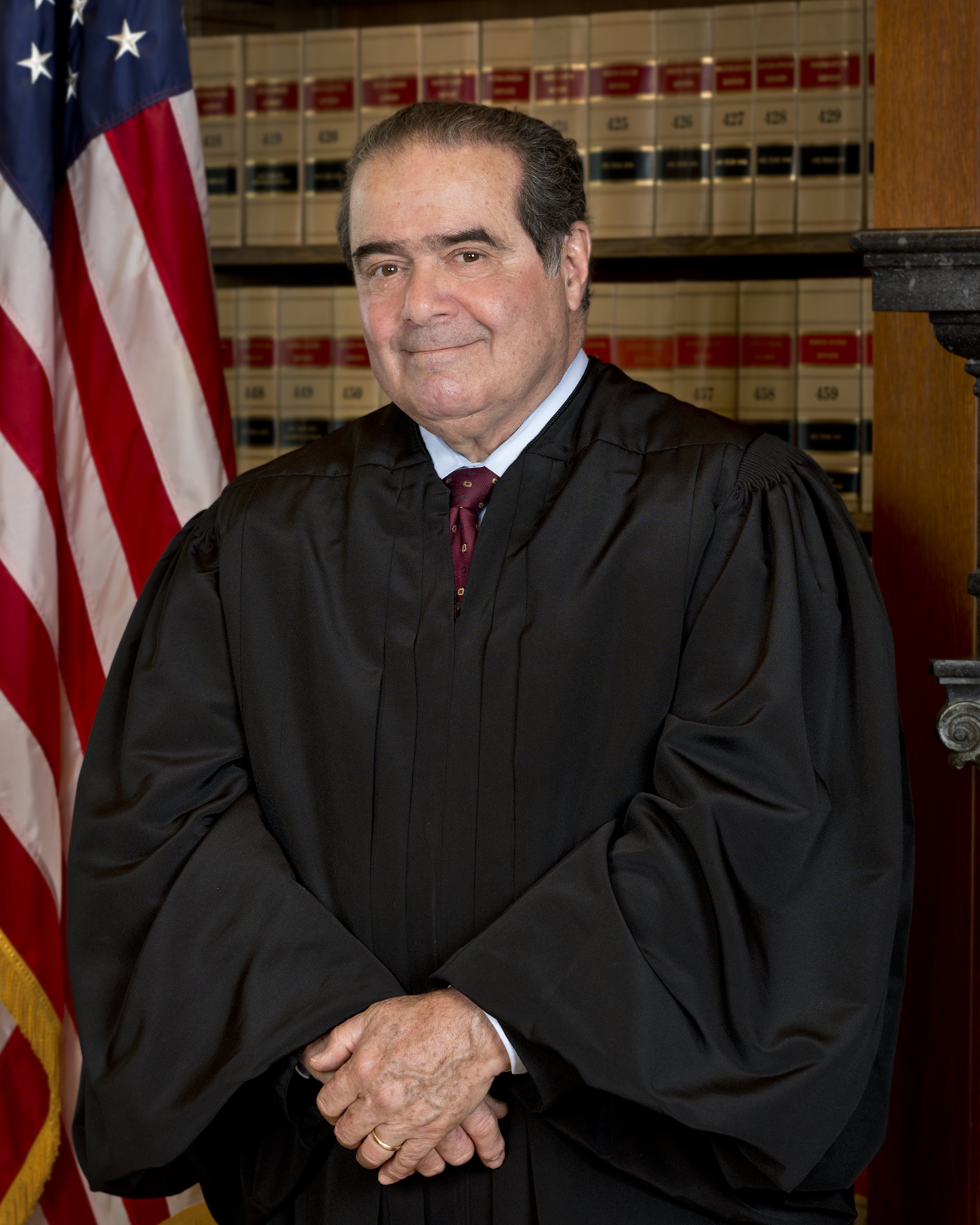
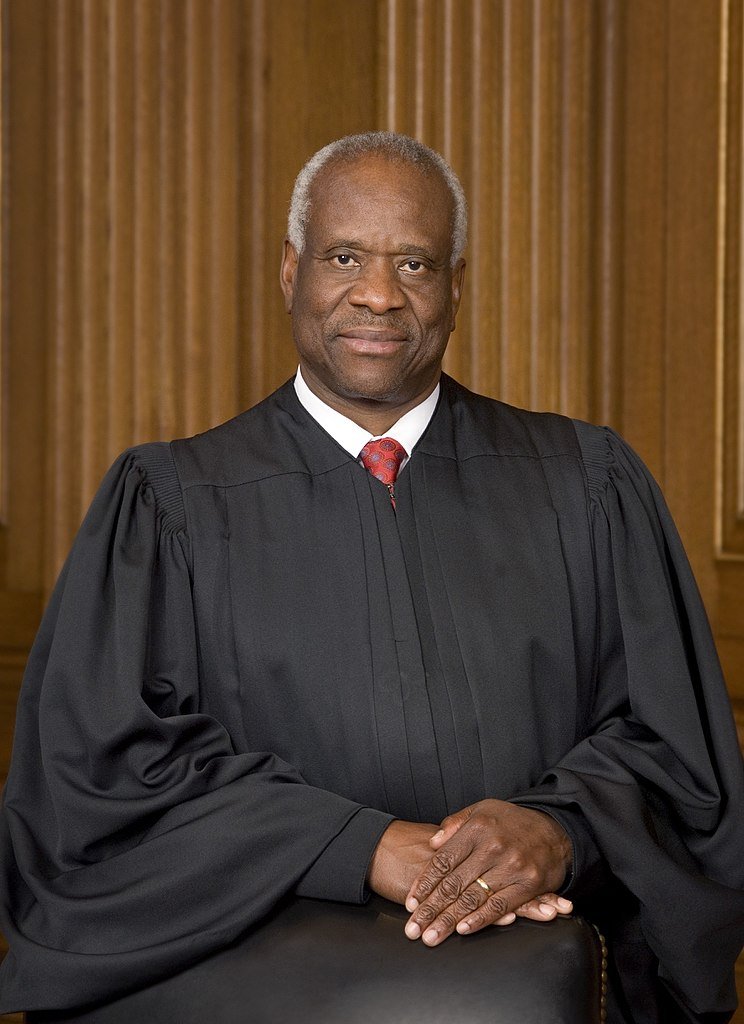


Rehnquist
Kennedy
Stevens
Breyer
Scalia
O’Connor
Ginsburg
Thomas
Souter
-
Writing for the Court, Chief Justice William Rehnquist first emphasized the principle of deference towards the legislature, writing that “[d]ue respect for the decisions of a coordinate branch of Government demands that we invalidate a congressional enactment only upon a plain showing that Congress has exceeded its constitutional bounds.”
Rehnquist then reiterated the framework for the Commerce Clause established in United States v. Lopez, noting that Congress could regulate the channels of interstate commerce, the instrumentalities of interstate commerce, and activities that substantially affected interstate commerce. Rehnquist explained that since the Violence Against Women Act didn’t target the channels or instrumentalities of commerce, it had to be evaluated as “substantially affecting” commerce. Rehnquist pointed out that the noneconomic, criminal nature of the conduct was central to Lopez and stressed that the Court had historically only upheld the regulation of intrastate activity under the Commerce Clause when that activity was economic in nature.
In this case, Rehnquist found that gender-motivated crimes of violence “are not, in any sense of the phrase, economic activity.” Rehnquist pointed out that the Violence Against Women Act lacked any jurisdictional element establishing that the federal cause of action was pursued in connection with interstate commerce. Rehnquist noted that although Congress provided numerous findings that gender-motivated violence affected interstate commerce by deterring travel and employment, diminishing national productivity, and increasing medical costs. However, he explained that these findings relied on an unworkable “but-for” causal chain that linked the initial occurrence of a violent crime to every effect on interstate commerce.
Rehnquist argued that acceptance the “but-for” standard would allow Congress to regulate any crime, or even areas of traditional state regulation like family law, simply by aggregating the economic impact of those activities. Rehnquist asserted that this would completely obliterate the Constitution’s distinction between what is truly national and what is truly local. Ultimately, Rehnquist concluded that Congress couldn’t regulate noneconomic, violent criminal conduct based solely on its aggregate effect on interstate commerce. He wrote, “[t]he Constitution requires a distinction between what is truly national and what is truly local.”
-
In his concurring opinion, Justice Clarence Thomas stated that he agreed with the Court’s application of Lopez in this case but that he wrote separately to express his view “that the very notion of a ‘substantial effects’ test under the Commerce Clause is inconsistent with the original understanding of Congress’s powers and with this Court’s early Commerce Clause cases.” By continuing to apply this rootless and malleable standard, however circumscribed, the Court has encouraged the Federal Government to persist in its view that the Commerce Clause has virtually no limits.”
Thomas warned that until flawed precedents are overruled and the Court’s Commerce Clause jurisprudence is replaced with a standard more consistent with the original understanding, “we will continue to see Congress appropriating state police powers under the guise of regulating commerce.”
-
In his dissenting opinion, Justice David Souter stated that the Court should have adhered to its established practice of deferring to Congress’ judgment if there was a rational basis for concluding that a regulated activity substantially affected interstate commerce. Souter argued that fact-finding was the institutional responsibility of Congress, and that the judiciary’s only proper role was to review the rationality of those legislative conclusions.
In this case, Souter emphasized the “mountain of data” gathered by Congress over four years of hearings that demonstrated the severe impact of violence against women on interstate commerce. Souter noted that this legislative record was far larger than what was compiled to defend Title II of the Civil Rights Act of 1964 in cases such as Hearts of Atlanta and Katzenbach. Souter also compared the economic effects of gender-based violence in the 1990s to those of racial discrimination in the 1960s, pointing out that both severely reduced the mobility, production, and consumption of their targeted groups within the national economy.