Welsh v. Wisconsin
Home | All Cases | Criminal Procedure | Welsh v. Wisconsin
Case Overview
CITATION
ARGUED ON
DECIDED ON
DECIDED BY
466 U.S. 740
Oct. 5, 1983
May 15, 1984
Legal Issue
Does the Fourth Amendment prohibit a warrantless, nighttime home entry to arrest a suspect for a nonjailable traffic offense?
Holding
Yes, warrantless entry of a suspect’s home is presumptively unreasonable under the Fourth Amendment, meaning that law enforcement officers are prohibited from entering a home at night without a warrant to arrest a suspect for a nonjailable traffic offense, absent exigent circumstances.
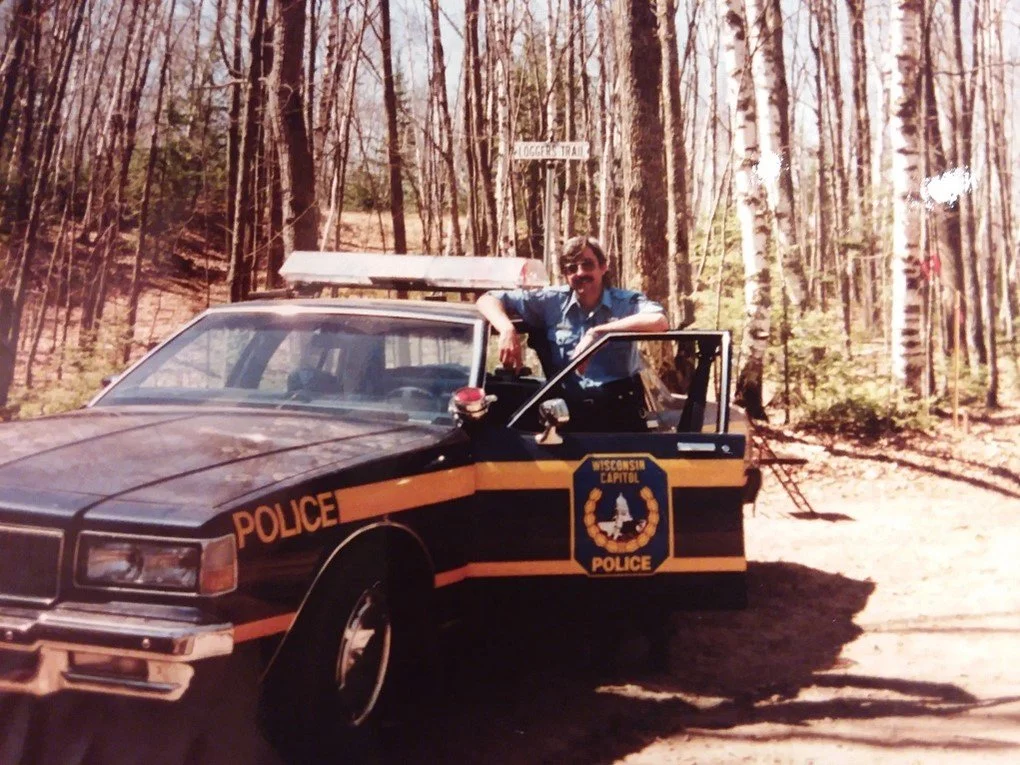
An officer with the Wisconsin State Capitol Police photographed in the 1980s | Credit: Wisconsin.gov
Background
Shortly before 9:00pm on April 24, 1978, Randy Jabionic saw Edward Welsh driving erratically by changing speeds, veering from side to side, and eventually swerving off the road and stopping in an open field. When Welsh stopped, Jabionic drove his truck to block Welsh from returning to the highway and asked a passing driver to call the police. Before officers arrived, Welsh stepped out of his vehicle and asked Jabionic for a ride home, but Jabionic suggested they wait for assistance. Welsh ignored him and walked away. Minutes later, officers from the Madison Police Department arrived and questioned Jabionic, who told them that Welsh was either very drunk or sick. The officers checked the vehicle’s registration, learned the car belonged to Welsh and that his residence was within walking distance. The officers proceeded to the home, gained entry after Welsh’s stepdaughter answered the door, and went upstairs to his bedroom where they found him lying naked in bed. They placed him under arrest for driving under the influence and took him to the police station, where he refused to submit to a breath-analysis test.
At the time, Wisconsin law classified a first offense of DUI as a noncriminal civil violation and considered the refusal to submit to a breath test reasonable if the underlying arrest was unlawful. Welsh challenged his arrest during his civil license revocation hearing, but the state trial court ruled that the warrantless home arrest was lawful and suspended Welsh’s license for sixty days. On appeal, the Wisconsin Court of Appeals vacated the suspension, finding that the warrantless entry of Welsh’s home violated the Fourth Amendment because the state failed to demonstrate exigent circumstances to overcome the presumption of unreasonableness. The Wisconsin Supreme Court then reversed, concluding that the warrantless arrest was justified by three exigent circumstances, including the need to prevent the destruction of evidence by taking Welsh’s blood-alcohol level before it dissipated. The U.S. Supreme Court subsequently granted certiorari.
6 - 3 decision for Welsh
Welsh


Wisconsin
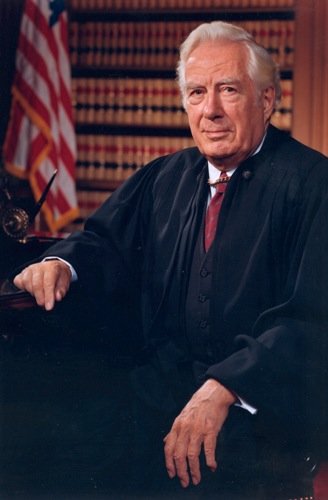

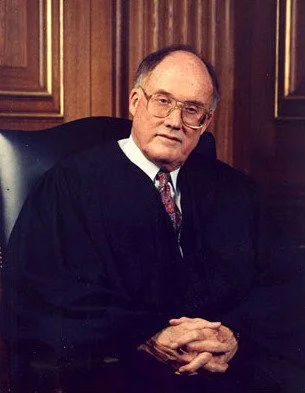
O’Connor
Burger
Powell
Rehnquist
Stevens
Marshall
White
Brennan
Blackmun
-
Writing for the Court, Justice William Brennan held that the Fourth Amendment prohibits the police from making a warrantless, nighttime entry into a suspect’s home to arrest them for a civil, nonjailable traffic offense. Brennan emphasized that the “physical entry of the home is the chief evil against which the wording of the Fourth Amendment is directed,” meaning that warrantless searches and seizures inside a home are presumptively unreasonable. He established that before the government may invade this sanctuary, the burden is on the state to demonstrate “exigent circumstances that overcome the presumption of unreasonableness that attaches to all warrantless home entries.” He noted that “[w]hen the government’s interest is only to arrest for a minor offense, that presumption of unreasonableness is difficult to rebut, and the government usually should be allowed to make such arrests only with a warrant issued upon probable cause by a neutral and detached magistrate.”
Brennan explained that because warrantless home entries represent such a severe intrusion, the application of the exigent-circumstances exception “should rarely be sanctioned when there is probable cause to believe that only a minor offense... has been committed.” Brennan noted that “an important factor to be considered when determining whether any exigency exists is the gravity of the underlying offense for which the arrest is being made.” To determine the gravity of the offense, Brennan explained that courts must look to statutory penalties, as “the penalty that may attach to any particular offense seems to provide the clearest and most consistent indication of the State’s interest in arresting individuals suspected of committing that offense.” Thus, if a state chooses to classify an offense as a civil, noncriminal violation with no possibility of imprisonment, it signals a minor state interest insufficient to justify a warrantless home arrest.
Turning to Welsh’s case, Brennan rejected each of the State’s claimed exigent circumstances. Brennan found that the hot-pursuit doctrine didn’t apply because there was “no immediate or continuous pursuit of the petitioner from the scene of a crime,” and there was little threat to public safety since Welsh had already arrived home and was no longer driving. He further found that the State’s interest in preventing the destruction of evidence by capturing Welsh’s blood-alcohol level before it dissipated didn’t justify the intrusion, explaining that since Wisconsin classified the offense as a “noncriminal, civil forfeiture offense for which no imprisonment is possible,” the State’s minor interest in prosecution was insufficient to overcome the presumptive unreasonableness of a warrantless entry. Ultimately, Brennan concluded that to allow a warrantless entry under these circumstances “would be to approve unreasonable police behavior that the principles of the Fourth Amendment will not sanction.”