Whren v. United States
Home | All Cases | Criminal Procedure | Whren v. United States
Case Overview
CITATION
ARGUED ON
DECIDED ON
DECIDED BY
517 U.S. 106
Apr. 17, 1996
May 15, 1996
Legal Issue
Does the temporary detention of a driver based on probable cause that they committed a civil traffic violation violate the Fourth Amendment’s prohibition against unreasonable seizures if the officer had an ulterior or pretextual motive to investigate unrelated criminal conduct?
Holding
No, the temporary detention of a driver is reasonable under the Fourth Amendment whenever the police possess probable cause to believe a traffic law has been violated, regardless of the officer’s underlying subjective intentions or pretextual motives.
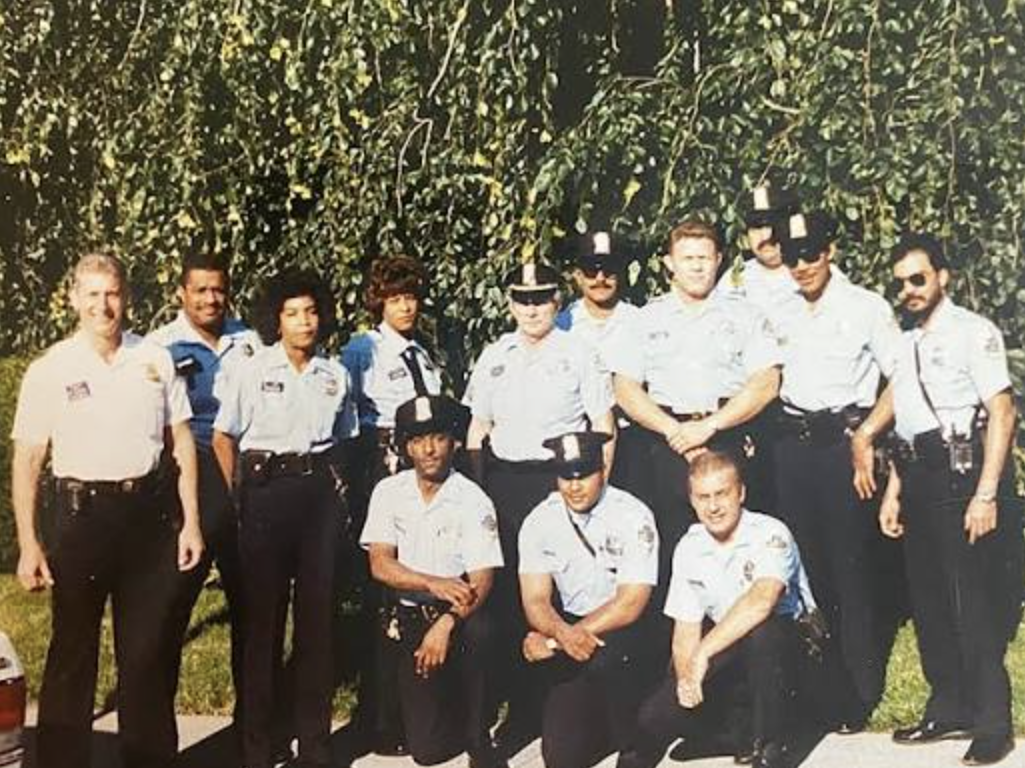
Officers of the Washington Metropolitan Police Department pictured in the 1990s | Credit: Washington Metropolitan Police Department
Background
On the evening of June 10, 1993, plainclothes vice-squad officers of the District of Columbia Metropolitan Police Department were patrolling a high drug area of the city in an unmarked vehicle. The officers’ suspicions were aroused when they observed a dark Pathfinder truck with temporary license plates stopped at an intersection for more than 20 seconds, with the driver looking down into the lap of the passenger to his right. When the officers executed a U-turn to head back toward the truck, the vehicle turned suddenly to its right without signaling and sped off at an “unreasonable” speed. The officers followed and passed the vehicle when it stopped behind other traffic at a red light. At that point, Officer Ephraim Soto stepped out, approached the driver’s door, identified himself as a police officer, and directed the driver, James Brown, to put the vehicle in park. Officer Soto observed two large plastic bags of what appeared to be crack cocaine in the hands of the passenger, Michael A. Whren. Brown and Whren were subsequently arrested, and additional quantities of illegal drugs were retrieved from the truck. Brown and Whren were charged in a four-count indictment with federal drug offenses.
Prior to trial in the U.S. District Court for the District of Columbia, Brown and Whren moved to suppress the drug evidence, arguing that the stop was not justified by probable cause or reasonable suspicion of illegal drug activity, but the District Court denied the motion. On appeal, the U.S. Court of Appeals for the D.C. Circuit affirmed the convictions. The U.S. Supreme Court then granted certiorari.
Unanimous decision for the United States
Whren
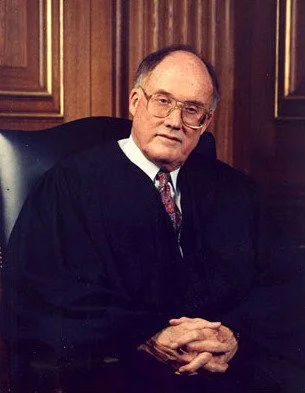


United States


Thomas
Scalia
Kennedy
Rehnquist
Stevens
Souter
O’Connor
Ginsburg
Breyer
-
Writing for the Court, Justice Antonin Scalia held that the temporary detention of a driver based on probable cause that they violated traffic laws doesn’t violate the Fourth Amendment’s prohibition against unreasonable seizures, regardless of the officer’s underlying motives. Addressing the argument that police commonly use minor civil traffic infractions as a pretext to investigate unrelated criminal activity, Scalia rejected the premise that an officer’s subjective intentions could invalidate objectively justifiable police conduct, writing that “[s]ubjective intentions play no role in ordinary, probable-cause Fourth Amendment analysis.” Scalia emphasized that while the Constitution prohibits selective law enforcement based on impermissible factors such as race, “the constitutional basis for objecting to intentionally discriminatory application of laws is the Equal Protection Clause, not the Fourth Amendment.” Scalia clarified that prior Supreme Court precedents treating pretext as relevant were strictly limited to inventory searches or administrative inspections conducted in the total absence of probable cause.
Scalia rejected the idea that test evaluating whether a reasonable officer under the same circumstances would have made the traffic stop for the reason given was truly an objective standard. Scalia argued that “although framed in empirical terms, this approach is plainly and indisputably driven by subjective considerations” because its whole purpose was to combat perceived pretext. Scalia explained that Fourth Amendment jurisprudence rejected this approach because “the Fourth Amendment’s concern with ‘reasonableness’ allows certain actions to be taken in certain circumstances, whatever the subjective intent.” Scalia also criticized the workability of evaluating standard police practices across jurisdictions, explaining that “police enforcement practices, even if they could be practicably assessed by a judge, vary from place to place and from time to time,” and declining to accept that “the search and seizure protections of the Fourth Amendment are so variable. . . and can be made to turn upon such trivialities.”
Scalia also rejected the argument that Fourth Amendment reasonableness required courts to engage in a case-by-case balancing of governmental and individual interests for minor traffic stops. Scalia clarified that detailed balancing analysis was necessary only in cases involving seizures executed without probable cause, or in extraordinary circumstances involving searches conducted in an unusual or physically invasive manner, such as the use of deadly force or bodily penetration. Scalia explained that “the making of a traffic stop out of uniform does not remotely qualify as such an extreme practice, and so is governed by the usual rule that probable cause to believe the law has been broken ‘outbalances’ private interest in avoiding police contact.” Applying these principles to the case, Scalia concluded that because plainclothes officers possessed probable cause to believe petitioners had committed traffic violations, “[t]hat rendered the stop reasonable under the Fourth Amendment, the evidence thereby discovered admissible, and the upholding of the convictions by the Court of Appeals for the District of Columbia Circuit correct.”