Trump v. United States
Case Overview
CITATION
ARGUED ON
DECIDED ON
DECIDED BY
603 U.S. 593
Apr. 25, 2024
Jul. 1, 2024
Legal Issues
Does a former President enjoy presidential immunity from criminal prosecution for conduct alleged to involve official acts during his tenure in office? If so, to what extent?
Holding
Yes, the nature of Presidential power entitles a former President to absolute immunity from criminal prosecution for actions within his conclusive and preclusive constitutional authority, and at least presumptive immunity for all official acts; there is no immunity for unofficial acts.
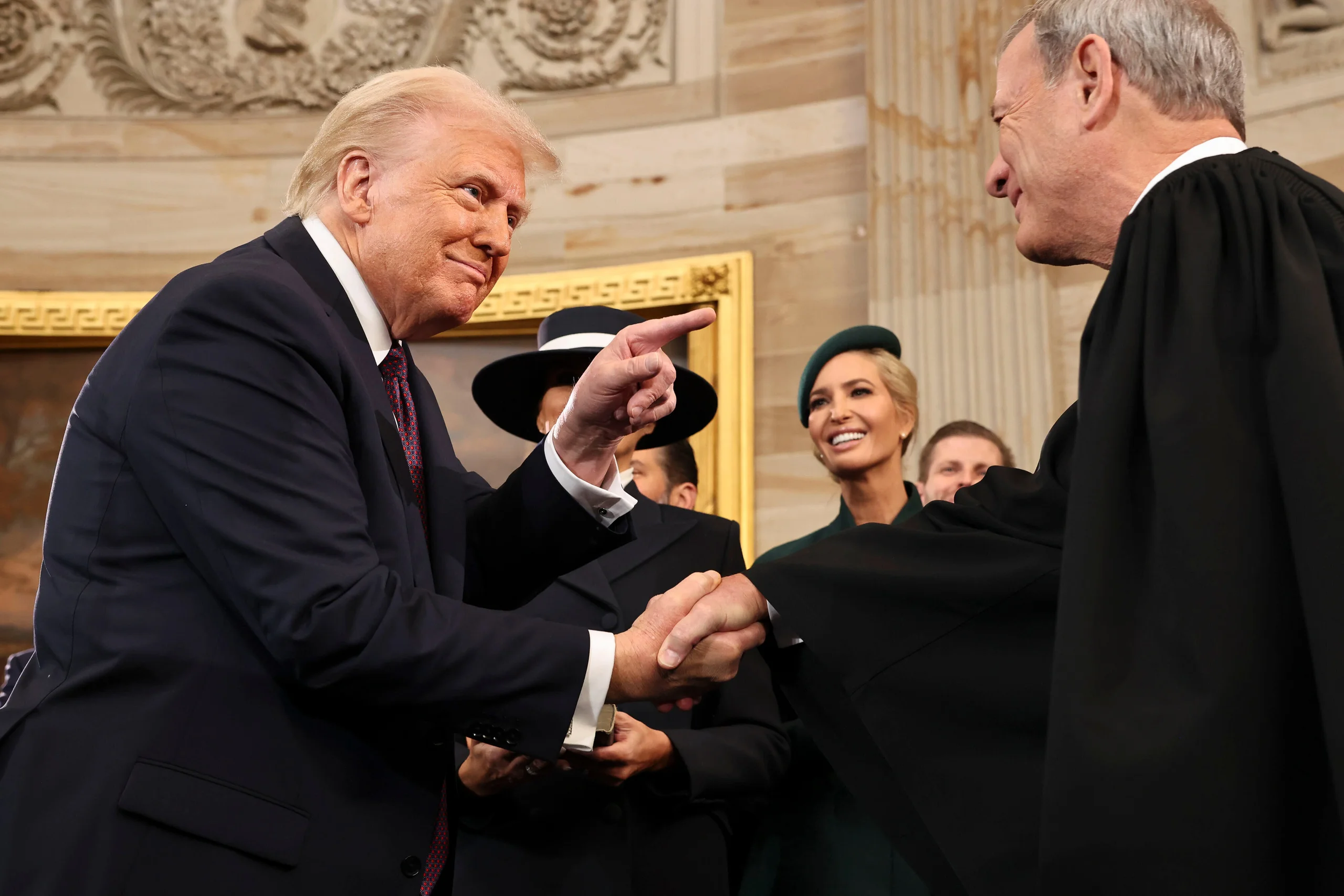
President Trump shaking Chief Justice Roberts’ hand after Roberts administered the oath for his second term in office; Trump’s victory in the 2024 election ended the federal criminal prosecution against him | Credit: Chip Somodevilla/Getty Images/HUFFPOST
Background
In November of 2020, President Donald Trump disputed the results of the presidential election against Joe Biden. In March of 2022, the DOJ impaneled grand juries to examine the actions of Trump and his inner circle regarding the 2020 election. On August 1, 2023, a federal grand jury indicted Trump on four counts for conduct that took place during his Presidency following the 2020 election.
The indictment alleged that Trump conspired to overturn the 2020 election by spreading knowingly false claims of election fraud to obstruct the collecting, counting, and certifying of the election results. Trump was charged with:
1) conspiracy to defraud the United States (18 U.S.C. § 71);
2) conspiracy to obstruct an official proceeding (18 U.S.C. §1512(k));
3) obstruction of and attempt to obstruct an official proceeding (18 U.S.C. §1512(c)(2)); and
4) conspiracy against rights (18 U.S.C. §241).
The indictment alleged that Trump alleged that “Trump and his co-conspirators”:
1) “used knowingly false claims of election fraud to get state legislators and election officials to ... change electoral votes for [Trump's] opponent, Joseph R. Biden, Jr., to electoral votes for [Trump].”;
2) “organized fraudulent slates of electors in seven targeted states” and “caused these fraudulent electors to transmit their false certificates to the Vice President and other government officials to be counted at the certification proceeding on January 6.”;
3) attempted to use the DOJ “to conduct sham election crime investigations and to send a letter to the targeted states that falsely claimed that the Justice Department had identified significant concerns that may have impacted the election outcome.”;
4) attempted to persuade “the Vice President to use his ceremonial role at the January 6 certification proceeding to fraudulently alter the election results,” and “repeated knowingly false claims of election fraud to gathered supporters, falsely told them that the Vice President had the authority to and might alter the election results, and directed them to the Capitol to obstruct the certification proceeding.”;
5) and when “a large and angry crowd ... violently attacked the Capitol and halted the proceeding,” Trump and his co-conspirators “exploited the disruption by redoubling efforts to levy false claims of election fraud and convince Members of Congress to further delay the certification.”
Trump filed a motion to dismiss in the U.S. District Court for the District of Columbia, arguing that he was protected from criminal prosecution based on Presidential immunity. The District Court denied his motion, and the U.S. Court of Appeals for the D.C. Circuit affirmed. The Supreme Court then granted certiorari.
6 - 3 decision for Trump
Trump
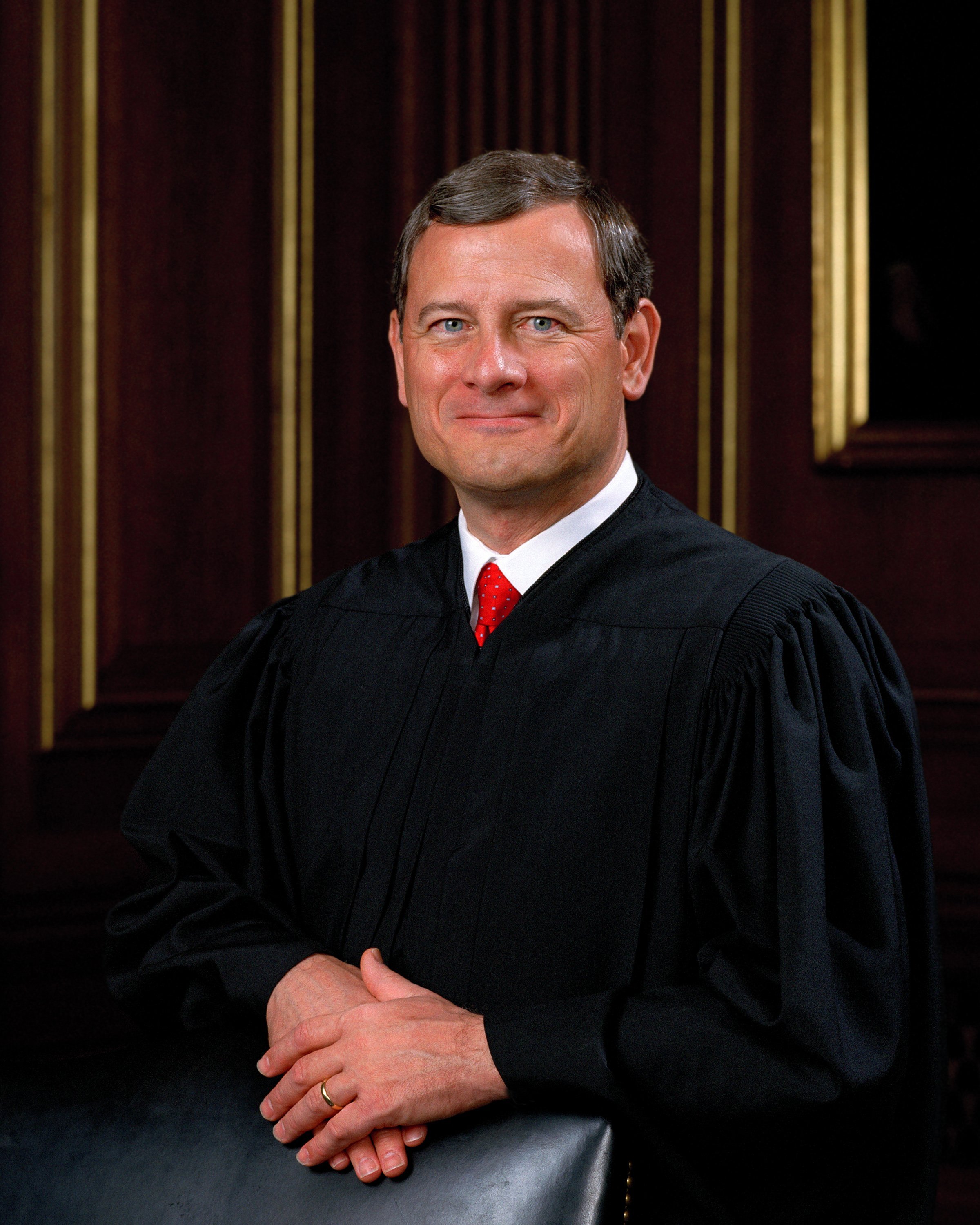


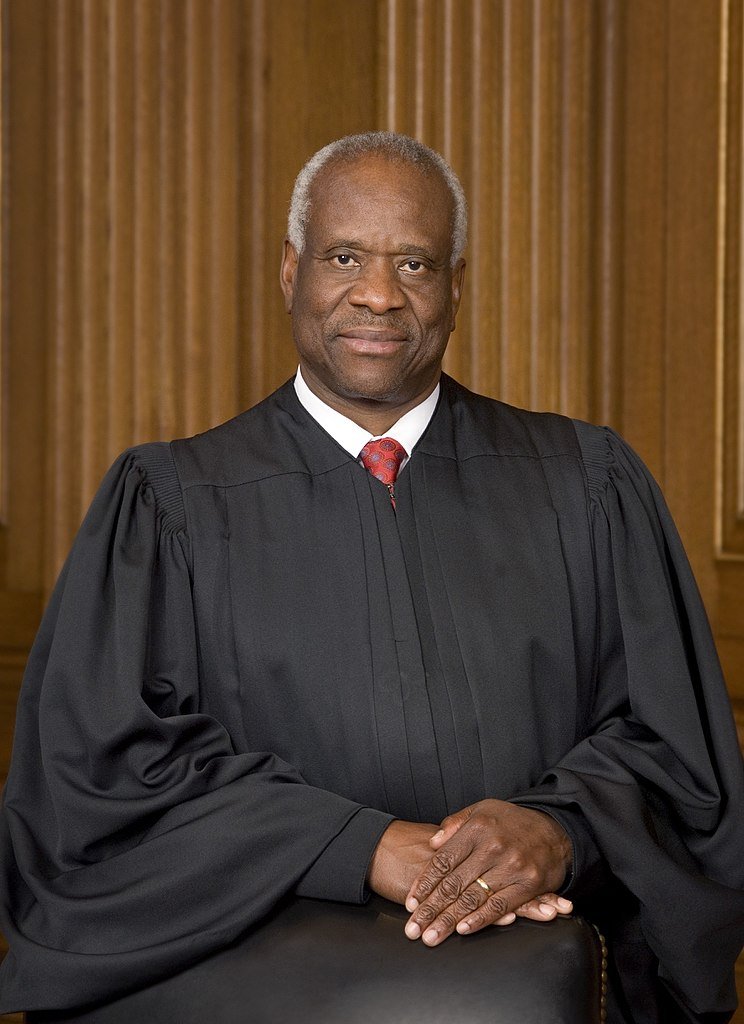

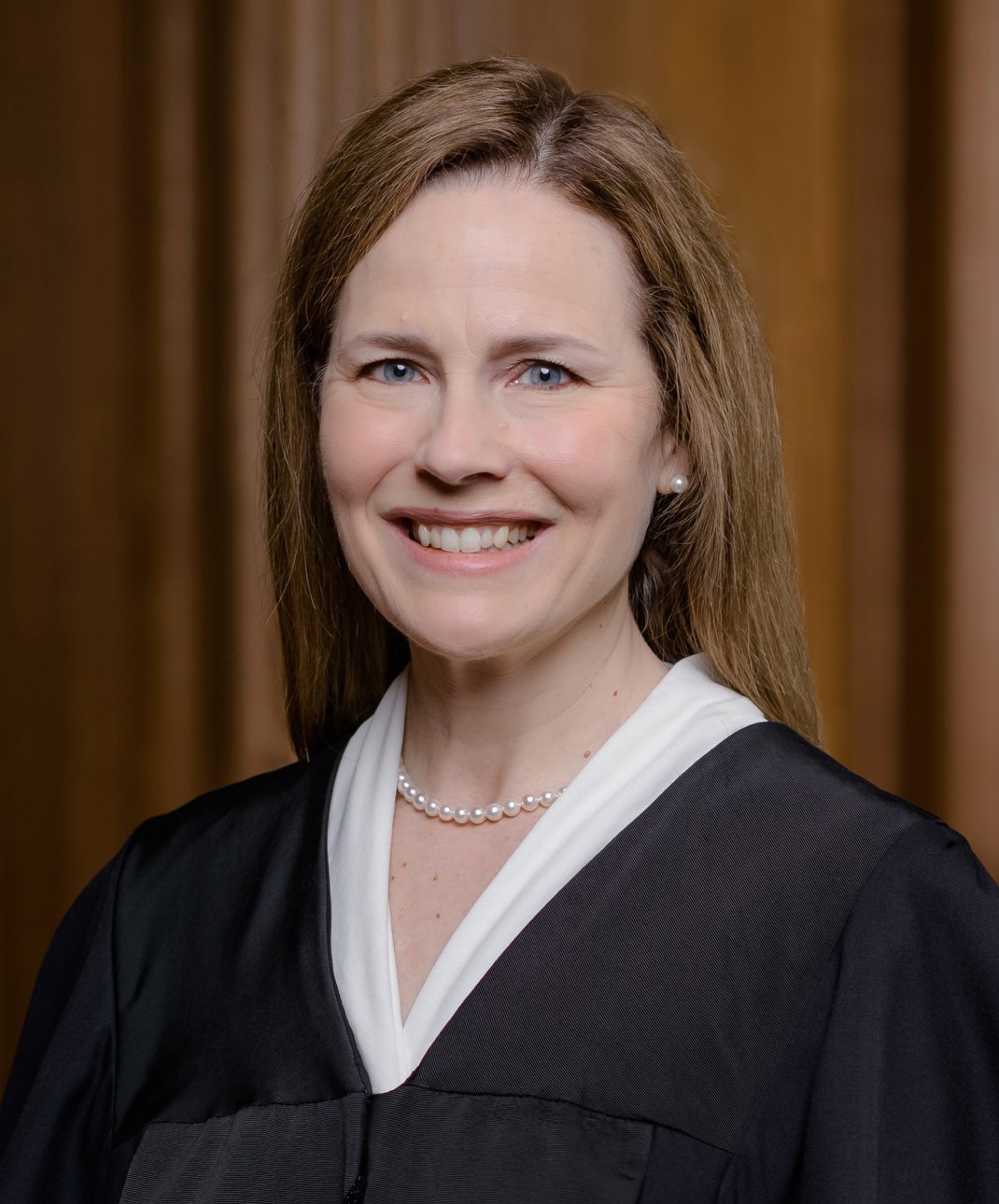
U.S.

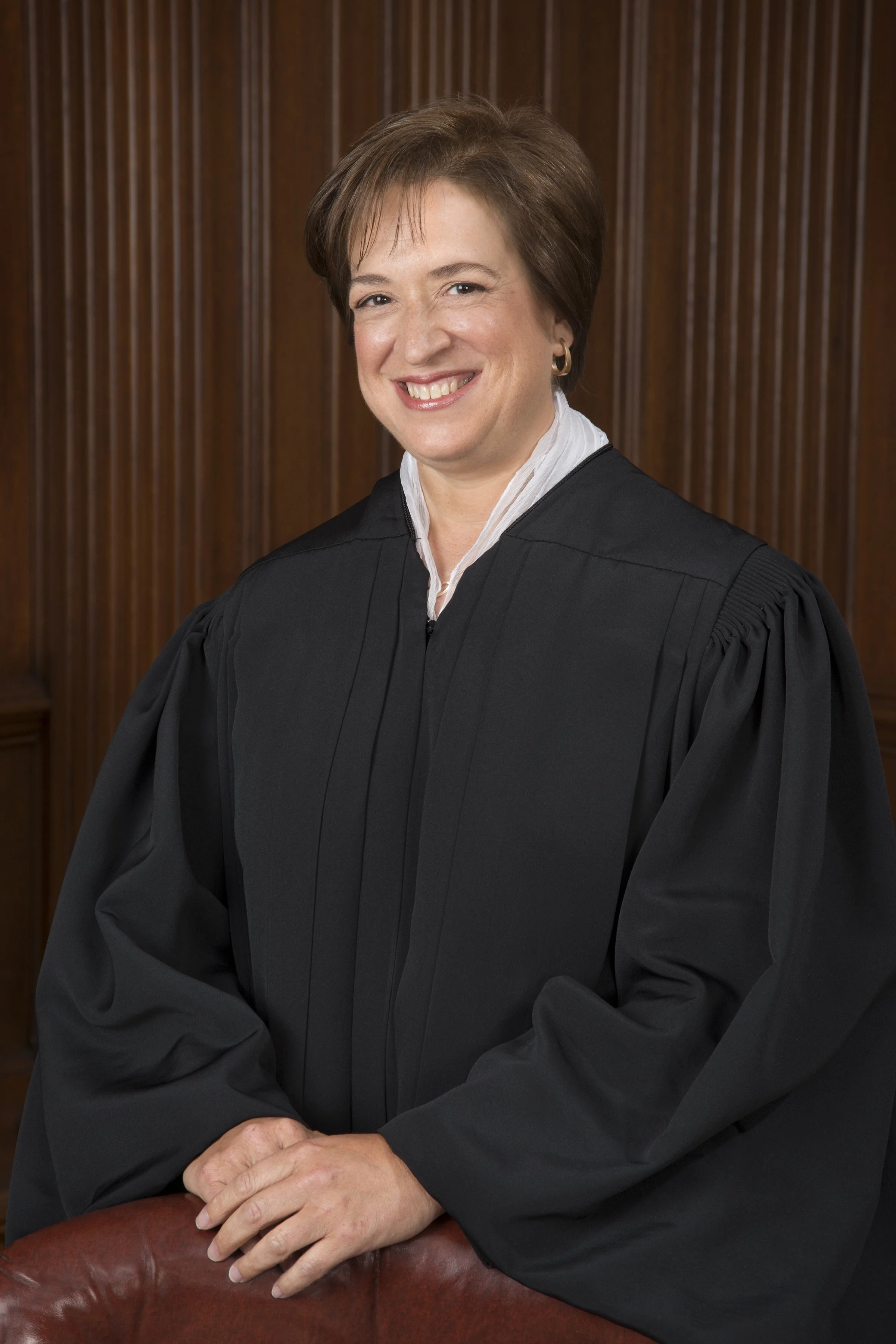

Kagan
Roberts
Gorsuch
Thomas
Jackson
Barrett
Sotomayor
Alito
Kavanaugh
-
Writing for the Court, Chief Justice John Roberts started by noting the significance of this case as the first criminal prosecution of a former President in the Nation’s history. He wrote that the Court “[undertook] that responsibility conscious that we must not confuse ‘the issue of a power's validity with the cause it is invoked to promote,’ but must instead focus on the ‘enduring consequences upon the balanced power structure of our Republic.’”
Unofficial Acts
Roberts first established that the President is not immune from criminal prosecution for unofficial acts committed while in office. He explained that “[t]he ‘justifying purposes’ of the immunity we recognized … are not that the President must be immune because he is the President; rather, they are to ensure that the President can undertake his constitutionally designated functions effectively, free from undue pressures or distortions.” He added that “it [is] the nature of the function performed, not the identity of the actor who perform[s] it, that inform[s] our immunity analysis.”
Roberts clarified that the dispute in this case was whether a former President can be prosecuted for his official actions, , since neither party disagreed with the contention that Presidents have no immunity for unofficial acts.
Official Acts under “Conclusive and Preclusive” Authority
Roberts began the analysis by stating that the President’s duties under Article II “are of ‘unrivaled gravity and breadth.’” That power, however, stems from the Constitution or an act of Congress “no matter the context.” Roberts explained that when the President acts under power granted by the constitution, his authority is sometimes “conclusive and preclusive.” And “[w]hen the President exercises such authority, he “disable[es] the Congress from acting on the subject” and “may act even when the measures he takes are ‘incompatible with the expressed or implied will of Congress.’” Not even the courts have power to control the President’s discretion “when he acts pursuant to the powers invested exclusively in him by the Constitution.” As an example, Roberts pointed to the Court’s ruling in United States v. Klein (1870) that the President’s pardon power is unlimited. Roberts added that If the President claims authority to act but in fact exercises mere ‘individual will’ and ‘authority without law,’ the courts may say so. … But once it is determined that the President acted within the scope of his exclusive authority, his discretion in exercising such authority cannot be subject to further judicial examination.
He explained that since “Congress cannot act on, and courts cannot examine, the President's actions on subjects within his ‘conclusive and preclusive’ constitutional authority, [i]t follows that an Act of Congress—either a specific one targeted at the President or a generally applicable one—may not criminalize the President's actions within his exclusive constitutional power. Neither may the courts adjudicate a criminal prosecution that examines such Presidential actions.” The Court concluded that “the President is absolutely immune from criminal prosecution for conduct within his exclusive sphere of constitutional authority.”
Official Acts in the “Zone of Twilight” of Concurrent Authority
Regarding the “zone of twilight” where the President and Congress may have concurrent authority, Roberts stated that “[t]he reasons that justify the President's absolute immunity from criminal prosecution for acts within the scope of his exclusive authority … do not extend to conduct in areas where his authority is shared with Congress. To determine the extent of Presidential immunity in this area, the Court must look to “the Framers’ design of the Presidency within the separation of powers, our precedent on Presidential immunity in the civil context, and our criminal cases where a President resisted prosecutorial demands for documents.”
Evaluating the history, Roberts first established that the President is a unique figure in the constitutional scheme in our government as “the only person who alone composes a branch of government.” He explained that the Framers thought it essential that the Nation have an energetic executive to ensure “good governance” and vested the President with “supervisory and policy responsibilities of utmost discretion and sensitivity.” Roberts added that “[a]ppreciating the ‘unique risks to the effective functioning of government’ that arise when the President's energies are diverted by proceedings that might render him ‘unduly cautious in the discharge of his official duties,’ we have recognized Presidential immunities and privileges ‘rooted in the constitutional tradition of the separation of powers and supported by our history.’”
Regarding the Court’s precedent, Roberts pointed to Nixon v. Fitzgerald (1982), where it held that a former President “is entitled to absolute immunity from damages liability predicated on his official acts” as “a functionally mandated incident of [his] unique office.” For cases where prosecutors sought evidence from a President, Roberts first highlighted the Court’s opinion in United States v. Burr (1807), where the Court held that a subpoena could be issued against President Jefferson because the President doesn’t “stand exempt from the general provisions of the constitution.” In that case, Chief Justice John Marshall wrote that “the law does not discriminate between president and private citizen,” but acknowledged that the President had “a ‘privilege’ to withhold certain ‘official paper[s]’ that ‘ought not on light ground be forced into public view.” In United States v. Nixon (1974), the Court rejected President Nixon’s claim of absolute privilege “given the ‘constitutional duty of the Judicial Branch to do justice in criminal prosecutions,” but held that “’a presumptive privilege’ protects Presidential communications.” And that privilege, Roberts explained, “relates to the effective discharge of a President’s powers.” He added that such a protection is “fundamental to the operation of Government and inextricably rooted in the separation of powers under the Constitution.”
In evaluating the extent of a former President’s immunity from criminal prosecution for actions taken under authority in this area, Roberts first warned that criminal prosecution of a President for official conduct “poses a far greater intrusion on the authority and functions of the Executive Branch than simply seeking evidence in his possession.” Roberts explained that the consequences of criminal prosecution far outweigh those involved in a civil case, writing that ‘”[p]otential criminal liability, and the peculiar public opprobrium that attaches to criminal proceedings, are plainly more likely to distort Presidential decisionmaking than the potential payment of civil damages.”
Roberts argued that “if a former President's official acts are routinely subjected to scrutiny in criminal prosecutions, ‘the independence of the Executive Branch’ may be significantly undermined.” He added that “such counterproductive burdens” go against the Framers vision for an energetic executive. Roberts acknowledged that there is a compelling interest in fair and effective law enforcement and stated that “[t]he President, charged with enforcing federal criminal laws, is not above them.”
Ultimately, Roberts found that the principles of the separation of powers found in the Court’s precedent “necessitate at least a presumptive immunity from criminal prosecution for a President’s acts within the outer perimeter of his official responsibility.” He explained that if presumptive protection is permitted when a prosecutor seeks evidence his official papers and communications, then its permitted when a prosecutor “seeks to charge, try, and imprison the President himself for his official actions.” Roberts concluded that “[a]t a minimum, the President must therefore be immune from prosecution for an official act unless the Government can show that applying a criminal prohibition to that act would pose no ‘dangers of intrusion on the authority and functions of the Executive Branch.’”
Determination of Presidential Immunity
Moving to the determination as to whether a former President is entitled to immunity from a particular prosecution, Roberts established that the first step is to distinguish the President’s official actions from his unofficial action. Roberts stated that the President “takes official action to perform the functions of his office” when he “acts pursuant to ‘constitutional and statutory authority.’” Thus, a determination of whether an action is covered by immunity begins by assessing the President’s authority to take that action.
Roberts explained that some Presidential conduct may qualify as official acts even though they’re not “obviously connected” to a provision of the constitution or a specific statute. For such acts, “the immunity we have recognized extends to the ‘outer perimeter’ of the President’s official responsibilities, covering actions so long as they are ‘not manifestly or palpably beyond [his] authority.’” Roberts added that when dividing official and unofficial conduct, “courts may not inquire into the President’s motives” because “[s]uch an inquiry would risk exposing even the most obvious instances of official conduct to judicial examination on the mere allegation of improper purpose, thereby intruding on the Article II interests that immunity seeks to protect.” Further, “courts deem an action unofficial merely because it allegedly violates a generally applicable law.”
Turning to the conduct alleged in the indictment, Roberts first found that Trump was “absolutely immune” from prosecution for the alleged conduct involving discussions with DOJ officials. He explained that investigation and prosecution of crimes is a “quintessentially executive function” and “the Executive Branch has ‘exclusive authority and absolute discretion’ to decide which crimes to investigate and prosecute, including with respect to allegations of election crime.”
Second, Roberts found that Trump was “at least presumptively immune from prosecution” for conduct related to discussions with his Vice President about his role at the certification proceeding. Further, he held that “[i]t is ultimately the Government's burden to rebut the presumption of immunity.” Roberts highlighted the close relationship between the President and Vice President and stated that “[w]henever the President and Vice President discuss their official responsibilities, they engage in official conduct.”
Third, Roberts found that the alleged conduct related to Trump’s discussions with people outside the Executive Branch may be considered official acts, but they must first be remanded to the District Court to determine how it qualifies. He noted that “[t]he concerns we noted at the outset—the expedition of this case, the lack of factual analysis by the lower courts, and the absence of pertinent briefing by the parties—thus become more prominent” when evaluating this area of conduct.
Lastly, Roberts found that the alleged conduct related to Trump’s communications with the public on January 6 should also be remanded to the District Court to determine whether they’re official or unofficial acts. He noted that “most of the President’s public communications are likely to fall comfortably within the outer perimeter of his official responsibilities,” but acknowledged that there may be “contexts in which the President, notwithstanding the prominence of his position, speaks in an unofficial capacity.” Roberts stated that an “objective analysis of ‘content, form, and context” will necessarily inform the inquiry.”
Use of Official Acts as Evidence
On the issue of whether evidence of the President’s official acts can be used to support an indictment against him, Roberts first stated that “[t]he essence of immunity ‘is its possessor's entitlement not to have to answer for his conduct’ in court.” Thus, “Presidents therefore cannot be indicted based on conduct for which they are immune from prosecution.” Responding to the argument that juries could still consider evidence of the President’s official acts to prove other claims, Roberts wrote that such an idea “threatens to eviscerate the immunity we have recognized. It would permit a prosecutor to do indirectly what he cannot do directly—invite the jury to examine acts for which a President is immune from prosecution to nonetheless prove his liability on any charge.” He added that it would be “untenable in light of the separation of powers principles” established before and only distort the President’s decisionmaking. Roberts also explained that while “such tools may suffice to protect the constitutional rights of individual criminal defendants, the interests that underlie Presidential immunity seek to protect not the President himself, but the institution of the Presidency.”
Conclusion
Roberts acknowledged the significance of the Court’s decision in this case, noting that “in addressing [the] question today, unlike the political branches and the public at large, we cannot afford to fixate exclusively, or even primarily, on present exigencies.… Our perspective must be more farsighted, for ‘[t]he peculiar circumstances of the moment may render a measure more or less wise, but cannot render it more or less constitutional.’” He added that “[t]he President is not above the law” and “immunity applies equally to all occupants of the Oval Office, regardless of politics, policy, or party.”
-
In his concurring opinion, Justice Clarence Thomas emphasized the necessity of insulating a former President from criminal prosecution for official acts to maintain a vigorous Executive and preserve the security of liberty. Thomas noted that he agreed with the Court’s holding, but wrote separately to challenge the very legality of the Special Counsel’s appointment.
Thomas began with the Appointments Clause of Article II, which requires that federal offices not provided for by the Constitution be “established by Law.” Thomas explained that this requirement serves as a vital check against executive overreach by preventing a President from creating offices at his own pleasure, a departure from the English model where the King was the “fountain of honor” who could create and fill offices unilaterally. Thomas argued that the Founders intentionally left the power to create new executive offices in the hands of Congress through statute, ensuring that the people’s elected representatives determined the existence of such positions.
In applying this requirement to the present case, Thomas was skeptical that the office of the Special Counsel was ever validly established by statute. He noted that the Attorney General failed to identify a specific law creating the office and instead relied on general statutes regarding the delegation of authority and the appointment of officials to detect crimes. Thomas found these general provisions, such as 28 U.S.C. §§ 509, 510, 515, and 533, to be insufficient, noting that they lacked the clarity found in past statutes where Congress explicitly created special counsel positions. Thomas argued that if the office itself was not established by law, then the Special Counsel lacked the authority to proceed with the prosecution.
Thomas further argued that even if a valid office existed, the method of filling it must comply with the Appointments Clause. Thomas stated that if the Special Counsel is considered a principal officer, the appointment was invalid because it lacked Presidential nomination and senatorial confirmation. If considered an inferior officer, the appointment was also invalid unless Congress had specifically vested that power in the Attorney General by law. Ultimately, Thomas concluded that these were not mere technicalities but were essential to the separation of powers, and he insisted that these questions regarding the Special Counsel’s authority be answered by lower courts before the prosecution could continue.
-
In her concurring opinion, Justice Amy Coney Barrett emphasized that while the Constitution prohibits Congress from criminalizing a President’s exercise of core Article II powers, it doesn’t provide a blanket insulation from criminal liability for all official acts. Barrett explained that she joined the majority of the Court’s opinion but wrote separately to express her disagreement with the holding in Part III-C regarding admissibility of evidence related the President’s official acts.
Barrett began by arguing that the term “immunity” is better understood as a shorthand for two propositions: it can either be viewed as the President’s right to challenge a criminal statute as applied to official acts and his right to obtain interlocutory review of a trial court’s ruling. She argued that because Congress has concurrent authority over many government functions, it may regulate some official conduct through criminal statutes without violating Article II. Barrett proposed a two-step analysis for assessing the validity of criminal charges involving non-core official acts, which first asks if a statute reaches the President’s conduct and then evaluates whether its application poses a “danger of intrusion” on Executive Branch functions.
In applying this framework, Barrett found that some allegations in the indictment, such as the President’s dealings with the Arizona House Speaker regarding election fraud claims, did not appear to intrude on executive power because the President has no authority over state legislatures. She argued that interlocutory review is a necessary procedural safeguard to ensure that the trial itself does not undermine Executive Branch independence, but she rejected the majority’s holding that the Constitution limits the introduction of protected official conduct as evidence. Barrett stated that excluding such evidence would “hamstring the prosecution” in cases like bribery, where a jury must understand the connection between an official act and the benefit received.
Ultimately, Barrett concluded that the rules of evidence and familiar trial procedures are sufficient to handle concerns about jury prejudice. She stated that “a President facing prosecution may challenge the constitutionality of a criminal statute as applied to official acts alleged in the indictment. If that challenge fails, however, he must stand trial.”
-
In her dissenting opinion, Justice Sonia Sotomayor argued that the Court’s decision to grant former Presidents criminal immunity reshapes the institution of the Presidency and makes a mockery of the foundational principle that no man is above the law. Sotomayor asserted that the majority’s creation of an “atextual” and “ahistorical” immunity effectively puts the President above the law, shielding them from answering for criminal and treasonous acts. She believed that the Court’s ruling ignores the constitutional text, history, and the established understanding of the President’s role.
Sotomayor began by noting that the Constitution contains no provision for criminal immunity for former Presidents, unlike the narrow immunity granted to legislators in the Speech or Debate Clause. She explained that the Impeachment Judgment Clause actually contemplates criminal liability by stating that a convicted official remains subject to indictment and punishment according to law. Sotomayor argued that historical evidence such as the writings of Alexander Hamilton in Federalist No. 69 shows that the President was intended to be subject to personal punishment, standing on no better ground than a state governor. She further noted that the “long settled and established practice” of the Executive Branch, including the pardon of Richard Nixon and the investigations of other Presidents, was founded on the clear understanding that a former President faced potential criminal liability for official acts.
In applying her analysis to the majority’s new, Sotomayor criticizes the balancing test derived from Nixon v. Fitzgerald (1982), arguing that it ignores the critical difference between private civil suits and federal criminal prosecutions. Sotomayor argued that the public interest in a criminal prosecution, which redresses a wrong to the public as a whole, is vastly greater than the interest in a private damages suit. Sotomayor stated that the majority’s official acts test significantly narrows the category of unofficial conduct, especially by prohibiting any inquiry into the President’s motives. She also rejected the majority’s evidentiary holding, calling it “nonsensical” and “unprecedented.”
Sotomayor characterized the majority’s message as “[l]et the President violate the law, let him exploit the trappings of his office for personal gain, let him use his official power for evil ends. Because if he knew that he may one day face liability for breaking the law, he might not be as bold and fearless as we would like him to be.” Sotomayor stated that “[e]ven if these nightmare scenarios never play out, and I pray they never do, the damage has been done. The relationship between the President and the people he serves has shifted
irrevocably. In every use of official power, the President is now a king above the law.” Sotomayor argued that the majority’s focus on Presidential boldness ignored the essential need for accountability and safety in a republic and removed the criminal law as a backstop for the misuse of official power. Sotomayor ultimately concluded by stating “with fear for our democracy, I dissent.”
-
In her dissenting opinion, Justice Ketanji Brown Jackson argued that the Court’s decision to grant former Presidents criminal immunity fundamentally alters the paradigm of accountability in the United States by creating a law-free zone for the most powerful official in government. Jackson stated that the majority’s ruling breaks from the traditional individual accountability model, where no person is above the law, and replaces it with a Presidential accountability model that authorizes the Judiciary to exempt Presidents from criminal punishment. She asserted that the very idea of immunity stands in tension with foundational democratic principles, such as the Rule of Law and the sovereignty of the People.
Jackson began by explaining that immunity is not merely a defense but an exemption that suggests the law does not apply to the immunized person in the first place. She argued that for over two centuries, the Nation has functioned under the collective understanding that all government officials are bound by the same rules of conduct as ordinary citizens. Jackson noted that the majority’s new framework, which categorizes conduct as core, official, or unofficial, makes it nearly impossible to know when a President will be held accountable for even the most documented or heinous criminal acts. She reasoned that under this paradigm, a President who orders an assassination of a rival or instigates a coup could potentially obtain immunity, as legal liability would depend on a court’s evaluation of the character of the act.
Jackson was criticized the Court for aggrandizing power to itself and the Executive at the expense of Congress. She maintained that by imposing its own “preclearance requirement” on the application of criminal laws, the Court snatched from the Legislature the authority to bind the President to its mandates. Jackson also expressed concern that the lack of clear, administrable standards for defining core powers or official acts leaves future accountability to the prerogative of judges applying an indeterminate test. She argued that this shift undermines the law’s deterrent effect, incentivizing future Presidents to commit crimes in the course of their official duties knowing they may be presumed above punishment.
Ultimately, Jackson concluded that the majority’s decision assumes the intolerable and unwarranted risk of allowing the Presidency to devolve into a “Rule of judges” rather than a Rule of Law. She stated that the Court’s “senseless discarding” of equal accountability for all citizens ignores the historical truth that our government was designed with restrictions precisely to preclude the exercise of arbitrary power. Jackson ended with a warning that the potential for harm to American institutions is obvious, as the Court has now declared that the most powerful official in the country can, under yet-to-be-determined circumstances, become a law unto himself.