Trump v. Barbara
Case Overview
CITATION
609 U.S. ___
ARGUED ON
Apr. 1, 2026
DECIDED ON
DECIDED BY
Jun. 30, 2026
Legal Issue
Does the Constitution guarantee citizenship to children born in the United States of parents who are unlawfully or temporarily present in the country?
Holding
Children born in the United States to parents unlawfully or temporarily present in the country are “subject to the jurisdiction” of the United States and are citizens at birth under the Fourteenth Amendment’s Citizenship Clause.
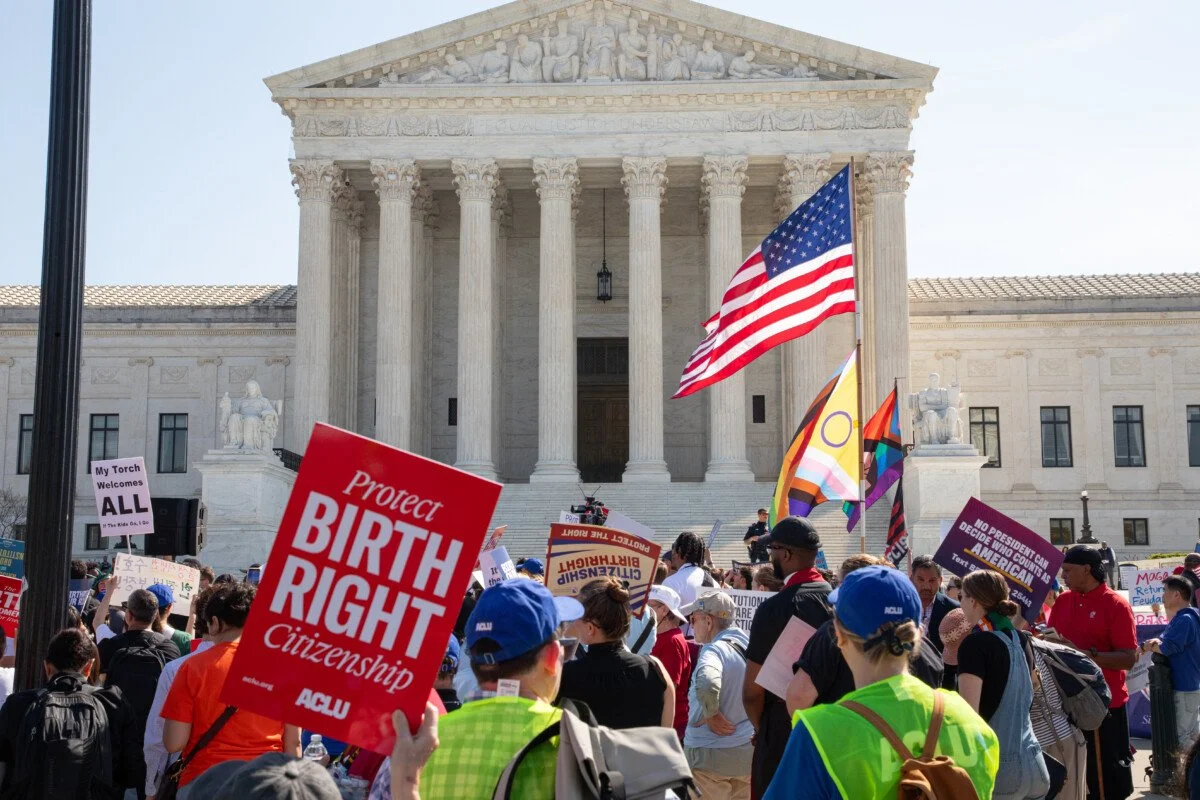
Protestors outside the Supreme Court on the day of oral arguments in Trump v. Barbara | Credit: Harvard University News Service/Keith Golden Jr./HUNewsservice.com
Background
In 1868, the Fourteenth Amendment to the Constitution was ratified as one of three Reconstruction Amendments enacted after the Civil War. The Citizenship Clause of the Fourteenth Amendment provides: “All persons born or naturalized in the United States and subject to the jurisdiction thereof, are citizens of the United States and of the State wherein they reside.”
On January 20, 2025, President Trump issued Executive Order No. 14160, titled “Protecting the Meaning and Value of American Citizenship.” The Order provided that children born of persons unlawfully or temporarily present in the United States aren’t “subject to the jurisdiction” of the United States and therefore don’t qualify for citizenship under the Fourteenth Amendment or the Immigration and Nationality Act, which uses the same language.
In response, the ACLU filed suit in the U.S. District Court for the District of New Hampshire, requesting a class-wide injunction covering those who would not qualify for birthright citizenship under the executive order. The representative plaintiff, Barbara, is a Honduran citizen known only by her first name. On July 10, 2025, the district court granted the ACLU’s request, certifying a class of born and unborn babies affected by the executive order and issuing a preliminary injunction blocking it from being enforced.
On September 26, the Trump administration petitioned the Supreme Court to challenge the district court’s injunction. Pursuant to Rule 11 of the Supreme Court’s Rules, certiorari before judgment may be granted “upon a showing that the case is of such imperative public importance as to justify deviation from normal appellate practice and to require immediate determination.” On December 5, the Supreme Court granted certiorari.
5 - 4 decision for Barbara
Trump
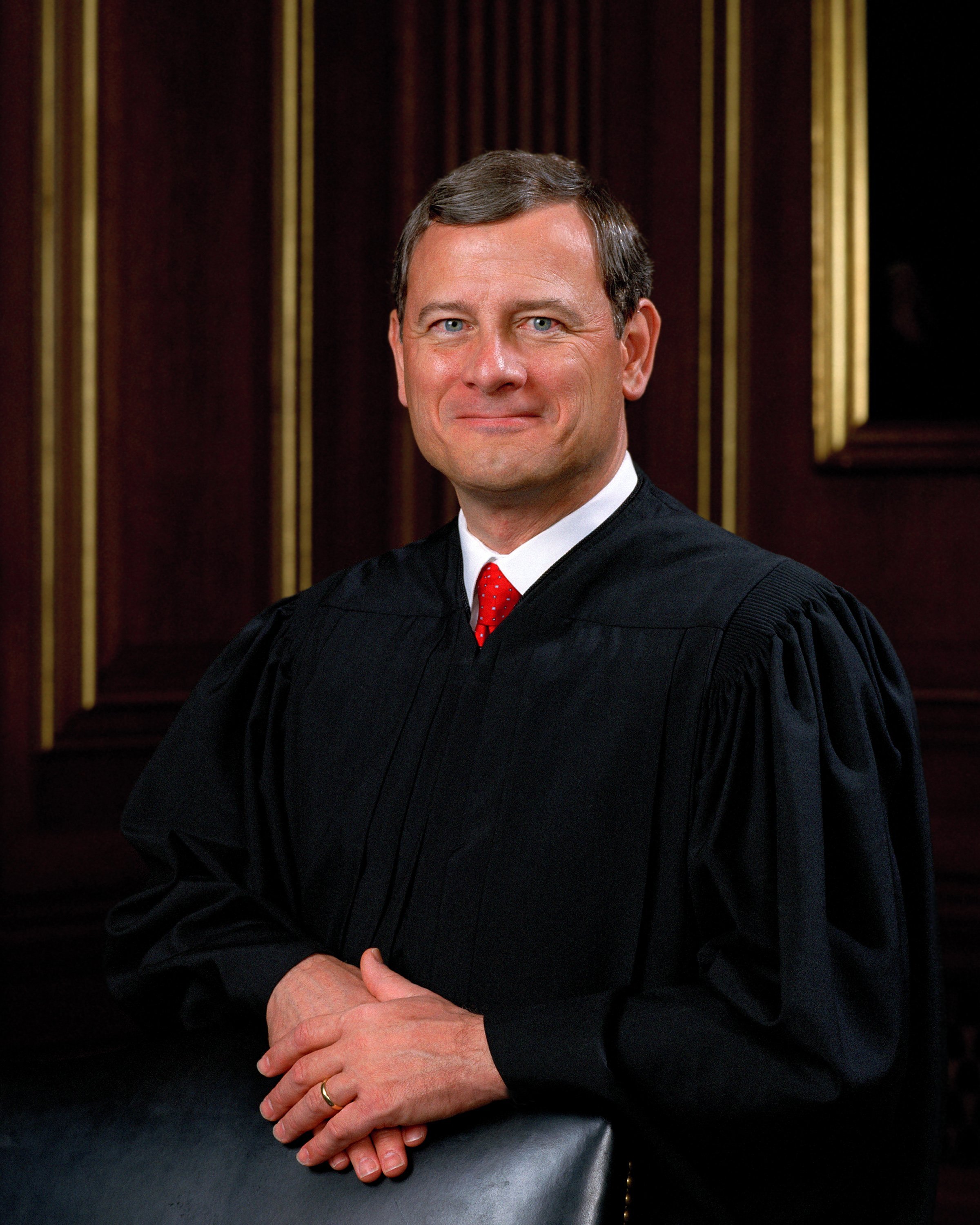
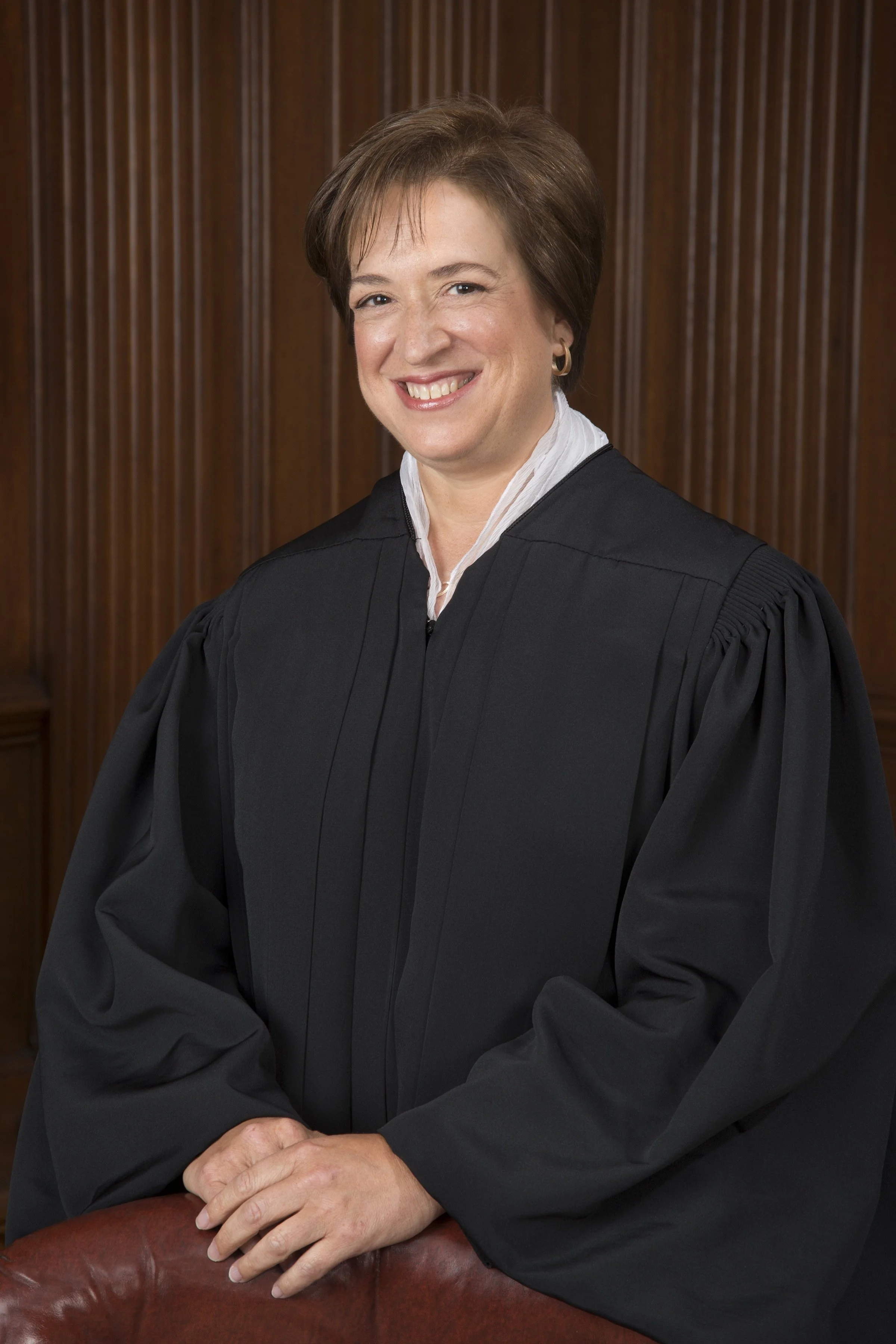

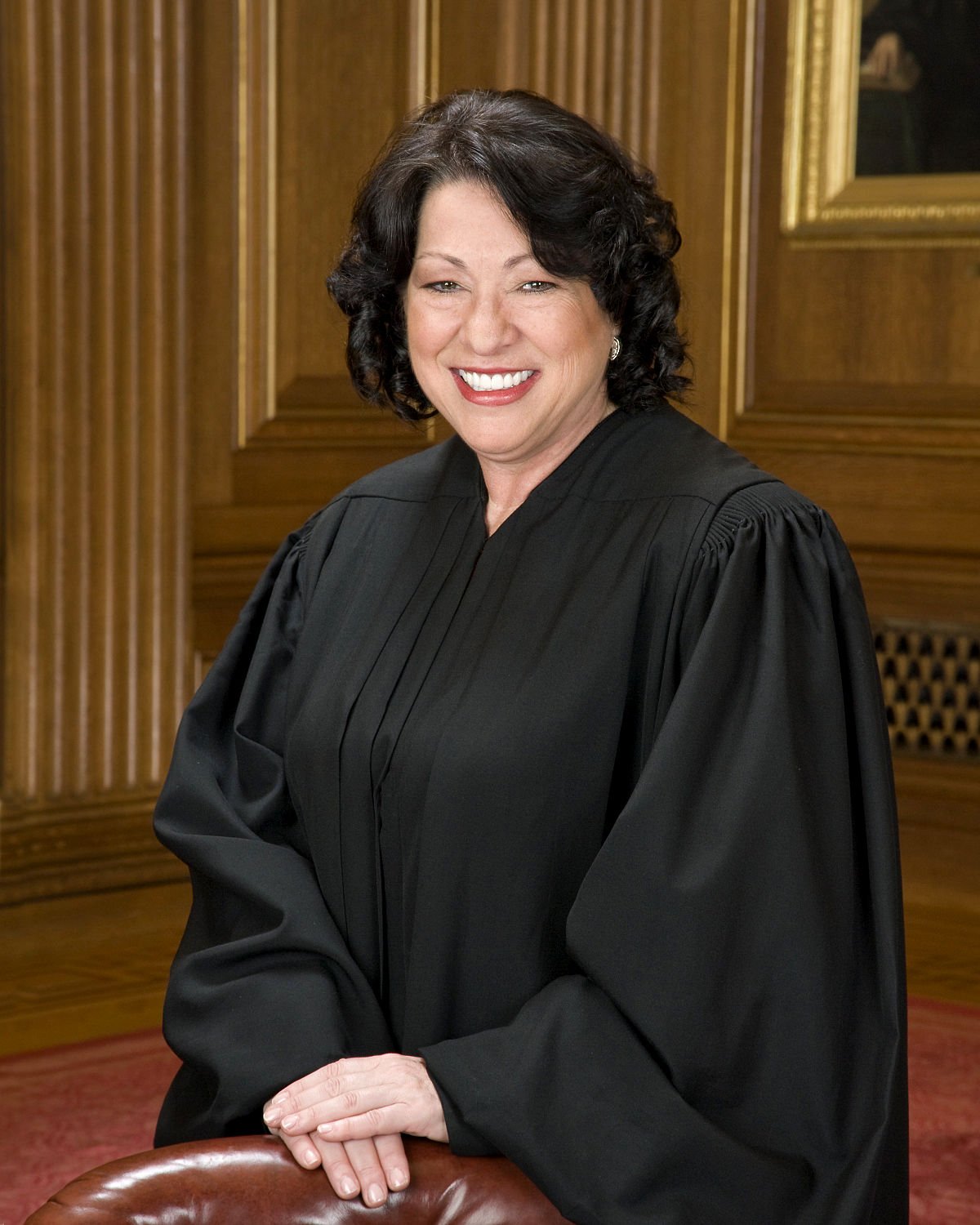
Barbara


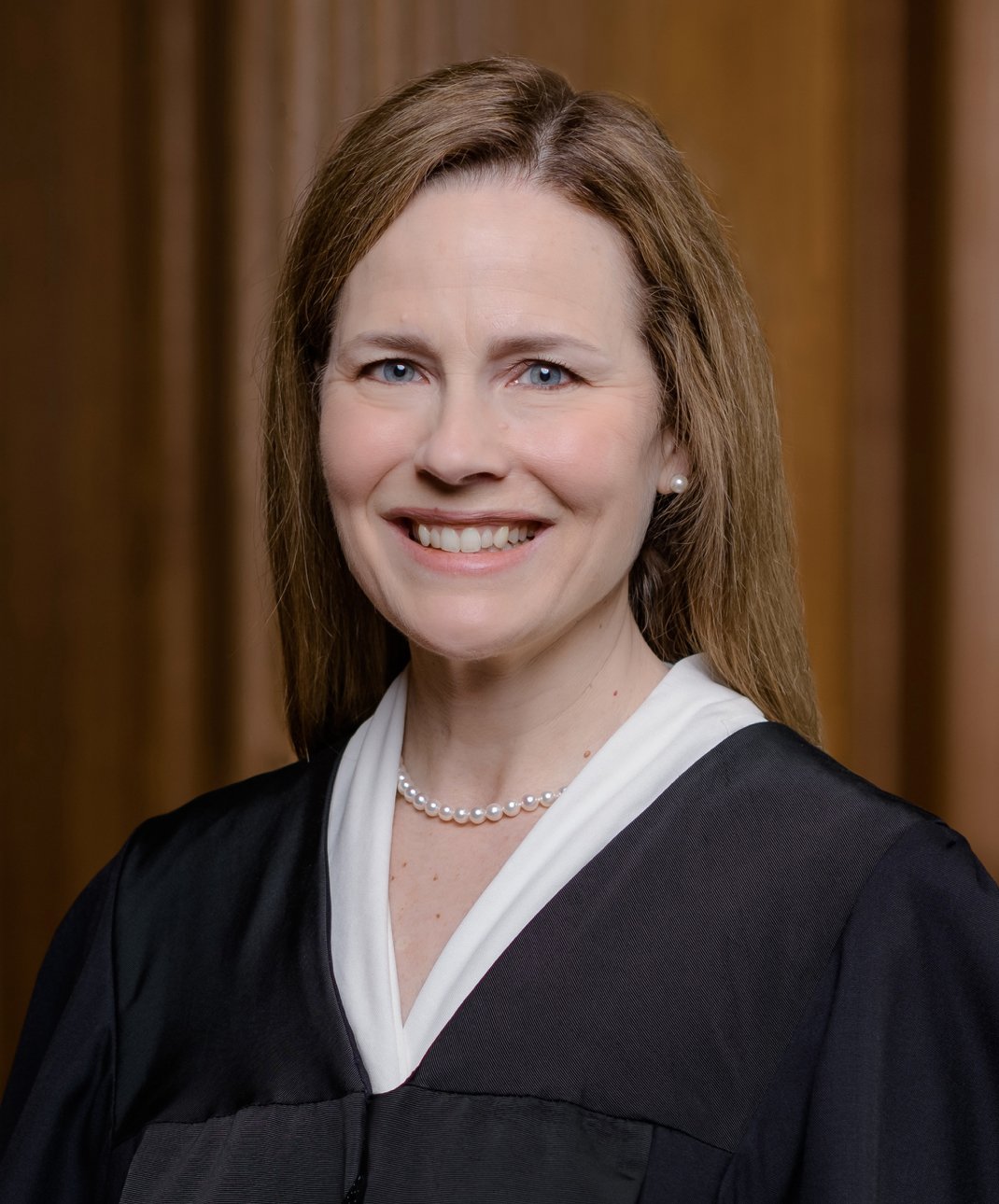
Barrett
Sotomayor
Jackson
Kavanaugh
Kagan
Roberts
Gorsuch
Alito
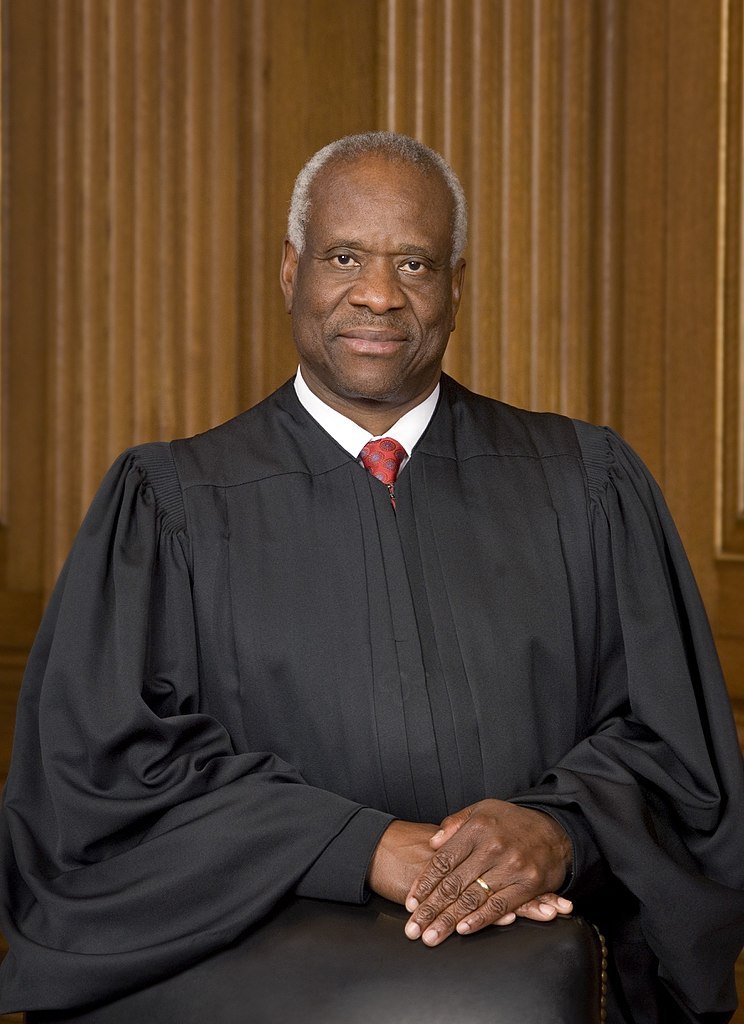
Thomas

-
Writing for the Court, Chief Justice John Roberts held that the Citizenship Clause of the Fourteenth Amendment guarantees birthright citizenship to children born in the United States, including those whose parents are unlawfully or temporarily present within the country. In invalidating Executive Order No. 14160, Roberts established the general rule that the Constitution incorporates the ancient common-law doctrine of jus soli, or “right of the soil”, under which virtually every person born within the sovereign’s territorial dominion and subject to its governing power is a citizen at birth.
Roberts began by tracing the context of American citizenship and the repudiation of Dred Scott v. Sandford (1858). Roberts started with English common law, which conceived the relationship between sovereign and subject as a reciprocal tie between the King’s duty of protection and the subject’s duty of allegiance. Roberts referenced Blackstone, who stated that anyone born within the sovereign’s realm owed natural allegiance to him and thus became a natural-born subject at birth. He also pointed to historical examples of this rule that demonstrated the broad reach of this rule. For example, a child born in Britain to a foreign mother during a one-day visit became a natural-born subject despite her momentary presence, and the rule applied equally to children of Romani “gypsies” who were statutory outlaws. Roberts explained that the only narrow exceptions to this rule in the common law involved discrete areas temporarily held by enemy forces or the children of foreign ambassadors. Roberts argued that this English rule was adopted in the American colonies and early Republic, where Justice Joseph Story affirmed that “[n]othing was better settled” than citizenship by birth alone.
Roberts explained that while the common law tradition was widely adopted at the founding, southern slave states rejected it to deny black Americans citizenship based on caste and blood over soil; and in Dred Scott, Chief Justice Roger Taney imposed this southern view nationwide. In response, President Lincoln’s Attorney General Edward Bates issued an 1862 opinion restoring common law jus soli. That was subsequently codified by Congress in the Civil Rights Act of 1866, which was explicitly intended by its sponsors to confer citizenship on children born to foreign visitors, Chinese immigrants, and Romani families.
Then, Roberts explained that to protect the common law rule of citizenship from being changed by statute or overruled by the Court like in Dred Scott, Congress drafted the Fourteenth Amendment to finish what the Civil Rights Act of 1866 began. Roberts asserted that the Citizenship Clause was simply an explicitly declaration of the existing common law, mirroring its use in antebellum legal cases such as Lynch v. Clarke (1844) by combining the birth by soil requirement with subjection to sovereign power. He explained that in 1868, “jurisdiction” meant the sovereign power of governing or legislating, referring to the “full and complete power of a nation within its own territories” described by Chief Justice John Marshall in Schooner Exchange v. McFaddon (1812). Under Marshall’s framework, private foreign individuals temporarily present for business or caprice are fully subject to the local jurisdiction, with the only exceptions being foreign ministers and certain Indian tribes. Roberts reasoned that because children born to parents unlawfully or temporarily present are born within U.S. territory and live under U.S. governing power without any intersovereign exceptions, they satisfy both requirements of the Citizenship Clause and are therefore citizens at birth.
Roberts turned to United States v. Wong Kim Ark (1898), which affirmed the common law rule and cemented birthright citizenship for children of foreign parents. Roberts asserted that following the Fourteenth Amendment’s ratification, there was universal agreement that the Fourteenth Amendment declared the common-law rule. He explained that toward the end of Reconstruction, however, amid the Chinese Exclusion Act of 1882, revisionist scholars like Francis Wharton introduced a novel theory based on international law which posited that jurisdiction turned on a parent’s domicile rather than the child’s place of birth. Roberts argued that Justice Horace Gray’s opinion in Wong Kim Ark explicitly rejected this international law argument, holding that the Fourteenth Amendment incorporated the ancient common law rule of citizenship by birth within the territory. Roberts explained that in relying on Lynch and Schooner Exchange, Gray confirmed that the Citizenship Clause grants citizenship at birth to children of aliens, whether they’re permanent residents or temporary visitors, and excluded only children of foreign diplomats and certain Indian tribes.
Finally, Roberts responded to the arguments of the government and Justice Clarence Thomas’ dissent. Thomas’ dissent and the government conceded that the common law rule of jus soli originally governed, but they asserted that American law replaced natural allegiance with a “primary allegiance” requirement rooted in permanent domicile. Roberts responded that domicile and national citizenship are distinct concepts in law, noting that while the Fourteenth Amendment explicitly requires residence for state citizenship, it deliberately omitted any residence or domicile requirement for national citizenship. Roberts argued that congressional debates from Reconstruction further disprove such a view, showing that Congress embraced the fixed common law rule and never considered a domicile-based carveout, which would introduce immense factual uncertainty. Roberts also rejected the government’s attempt to narrow Wong Kim Ark based on references to domicile in its facts, explaining that the core reasoning of Wong Kim Ark can’t be squared with a domicile requirement and that’s merely a resurrection Chief Justice Melville Fuller’s rejected 1898 dissent in the case.
Ultimately, Roberts concluded that “Citizenship, then and now, was the right to have rights—to freely participate in our political community. The Framers of the Fourteenth Amendment extended that promise to ‘every free-born person in this land’… We keep that promise today.”
-
Joined by: Justice Sonia Sotomayor (regarding the “universalist” view of the Fourteenth Amendment)
In her concurring opinion, Justice Ketanji Brown Jackson wrote that while she joined the Court’s opinion in full, she wrote separately to respond to some of the themes of Justice Clarence Thomas’ dissenting opinion. In Jackson’s view, the Reconstruction Amendment were “an anticaste, antisubordination reset for the Nation, not a mere spot treatment for the dark stain of slavery.”
Thomas’s dissent framed the Fourteenth Amendment as a narrow, race-conscious measure designed only for freed slaves and those in analogous situations with “no other homeland.” Jackson responded by explaining that in the aftermath of Emancipation, freed black Americans faced severe hostility, Black Codes, vigilante violence, and forced colonization efforts that treated them as unassimilable “strangers” in their own land. Instead of accepting self-deportation or seeking a unique set of privileges catered only to themselves, black Americans organized across more than 600 local and national Colored Conventions to debate the principles that would become the Fourteenth Amendment. Jackson highlighted the words of Frederick Douglass and other convention delegates, who insisted that they were already native-born citizens who offered their certificates of birth and nativity as their entitlement to protection. Jackson noted that Abraham Lincoln similarly recognized this universalist vision by linking the Declaration of Independence’s promise of equality as an “electric cord” uniting both descendants of the Founders and newly arriving immigrants.
Jackson turned next to the drafting history in Congress, and argued that the Reconstruction Framers intentionally chose universal language over a more narrow phrasing. Jackson pointed out that Senator Lyman Trumbull initially drafted the Civil Rights Act of 1866 to cover only “persons of African descent,” but withdrew that proposal the following day and replaced it with one including universal language covering “[a]ll persons born in the United States, and not subject to any foreign power.” Jackson detailed how congressional sponsors, such as Senator Trumbull and Senator John Conness of California, explicitly rejected anti-immigrant and anti-Romani prejudices voiced by opponents such as Senator Edgar Cowan. When opponents warned that the bill would grant birthright citizenship to Chinese immigrant children and Romani children, Trumbull and Conness confirmed that the law covered children of all parentage whatever. This was further confirmed by President Andrew Johnson’s veto message, which stated his opposition to extending citizenship to Chinese and Romani children. Jackson determined that the architects of the Fourteenth Amendment constitutionalized this universal view to transform the Constitution into an anticaste document ensuring equality before the law.
Jackson criticized the reliance on a “fought-and-bled-for-country” or domicile requirement for citizenship, arguing that hinging citizenship on parental status or bloodline distorts the historical record and pits black Americans against immigrant communities when the Reconstruction Framers did no such thing. She wrote that “this alternative account pitches Black Americans against immigrants when the advocates who promoted the Fourteenth Amendment did no such thing. Freed Blacks fought for the shared humanity of all people. And the Great Emancipator eventually foresaw that the only path forward that could prevent a return—in any form—to slavery and race-based subordination was to link the fates of all.” Jackson also challenged the Court’s broader color-blindness jurisprudence, explaining that the Fourteenth Amendment was never “color-blind” but rather was explicitly designed to eradicate the racial caste system that previously existed. Jackson argued while Thomas’ dissent professed to reject Dred Scott, its argument that birth on American soil is insufficient for certain groups resurrects Dred Scott’s rule that bloodline determines citizenship.
Ultimately, Jackson concluded, writing, “the Fourteenth Amendment’s universalist aims should forever be the death knell for this kind of claim—one that seeks to make bloodline the marker of birthright. The America that was reborn from the rubble of the Civil War simply does not countenance that inequitable result. Thankfully, a majority of the Court remembered this today, and has dutifully preserved the most basic animating principle of our Nation’s founding—that all human beings are created equal—once more.”
-
In his separate opinion, Justice Brett Kavanaugh explained that he agreed with the Court’s finding that Executive Order No. 14160 violated 8 U. S. C. §1401(a), he disagreed regarding its violation of the Fourteenth Amendment.
Kavanaugh began by addressing the statutory argument regarding §1401(a), noting that it used the exact same language of the Citizenship Clause. Kavanaugh explained that the Court’s decision in United States v. Wong Kim Ark (1898) adopted a general rule of birthright citizenship with four exceptions – (1) children of foreign sovereigns or their ministers, (2) children born on foreign public ships, (3) children born to enemies during a hostile occupation, (4) and children of members of the Indian tribes – which were considered to be a closed set. Kavanaugh noted that because the language used §1401(a) is the same used in the Fourteenth Amendment, it’s long been interpreted to adopt Wong Kim Ark’s general rule of birthright citizenship. He reasoned that if Congress had intended to create a new exception, that language wouldn’t have been used. Evaluating the Executive Order in light of §1401(a), Kavanaugh found that it exceeded the authority granted under the statute. He stated that Congress could pass legislation to enact the exceptions included in the Executive Order, but he ultimately found that “[u]nless and until Congress enacts such legislation, the Executive Order contravenes the federal statute, §1401(a).”
Regarding the Fourteenth Amendment issue, Kavanaugh began by acknowledging that it’s “not straightforward, as much as we might want it to be” and stating that “in my respectful view, the Court should have decided the case on the narrow and straightforward statutory ground.” Returning to Wong Kim Ark, Kavanaugh argued that treatment of the exceptions recognized in that case as a closed set is incorrect, writing that “[c]onsidering the four exceptions as a permanently frozen or closed set as of the Fourteenth Amendment’s ratification in 1868—such that there can be no subsequent exceptions recognized based on new developments after 1868—is inconsistent with the Court’s longstanding approach to constitutional interpretation in a variety of areas.”
On constitutional interpretation, Kavanaugh explained that “[t]he Constitution is an enduring document, and its principles were designed to, and do, apply to modern conditions and developments. The original constitutional principles do not change absent a constitutional amendment, but the relevant principles—both the rules and exceptions alike—must be faithfully applied not only to circumstances as they existed in 1787, 1791, and 1868, for example, but also to modern situations that were unknown or unanticipated by the Constitution’s Framers.” He added, “the ‘meaning of rules is constant. Only their application to new situations presents a novelty.’” Illustrating this principle, Kavanaugh pointed out the application of the First Amendment to the internet, the Second Amendment to semi-automatic handguns, and the Fourth Amendment to cars, none of which existed at the time the Bill of Rights was enacted. He noted that in addition to expansion of rights to modern technology, “this Court recognizes constitutional exceptions based on new circumstances when the new exception is relevantly similar to those exceptions that existed in 1791 or 1868.” He wrote, “[t]his Court’s constitutional precedents do not treat the 1791 or 1868 exceptions as a closed set ‘trapped in amber.’”
In light of these interpretive principles, Kavanaugh argued that the Citizenship Clause of the Fourteenth Amendment shouldn’t be treated differently. He stated that “other exceptions can be recognized when the new exceptions (i) are based on subsequent developments or circumstances that are new, i.e., largely unknown or unanticipated by the Framers of the Fourteenth Amendment, and (ii) are relevantly similar to the four previously recognized Wong Kim Ark exceptions.” In this case, Kavanaugh found first that the problem of illegal immigration was largely unknown to the Framers, presenting a new and different circumstance than what was present in 1868. Second, he found that the two categories of foreign citizens targeted by the Executive Order (those unlawfully or temporarily in the country) are relevantly similar to the categories of people recognized as exceptions in Wong Kim Ark. He explained that “the only apparent principle unifying the four disparate exceptions… is that the parents of all of those varied circumstances were not U.S. citizens and were citizens of other nations, whether tribal or foreign,” which he found to be consistent with those included by the Executive Order.
Ultimately, Kavanaugh concluded that while the Executive Order violated 8 U. S. C. §1401(a), it nonetheless violated the Fourteenth Amendment because while it could, Congress hasn’t enacted any legislation establishing exceptions to birthright citizenship for children born to foreign citizens unlawfully or temporarily in the country.