Richards v. Wisconsin
Home | All Cases | Criminal Procedure | Richards v. Wisconsin
Case Overview
CITATION
ARGUED ON
DECIDED ON
DECIDED BY
520 U.S. 385
Mar. 24, 1997
Apr. 28, 1997
Legal Issue
Does the Fourth Amendment permit a blanket, category-wide exception to the knock-and-announce requirement for felony drug investigations?
If not, was the officers’ entry into Richards’ hotel room valid under the Fourth Amendment?
Holding
No, the Fourth Amendment requires a case-by-case determination, and a no-knock entry is only justified if officers have a reasonable suspicion that, under the particular circumstances, knocking and announcing would be dangerous, futile, or inhibit the investigation of the crime by allowing the destruction of evidence.
Yes, while the officers lacked explicit no-knock authority, the particular circumstances provided reasonable suspicion that their investigation would be inhibited by the destruction of evidence.
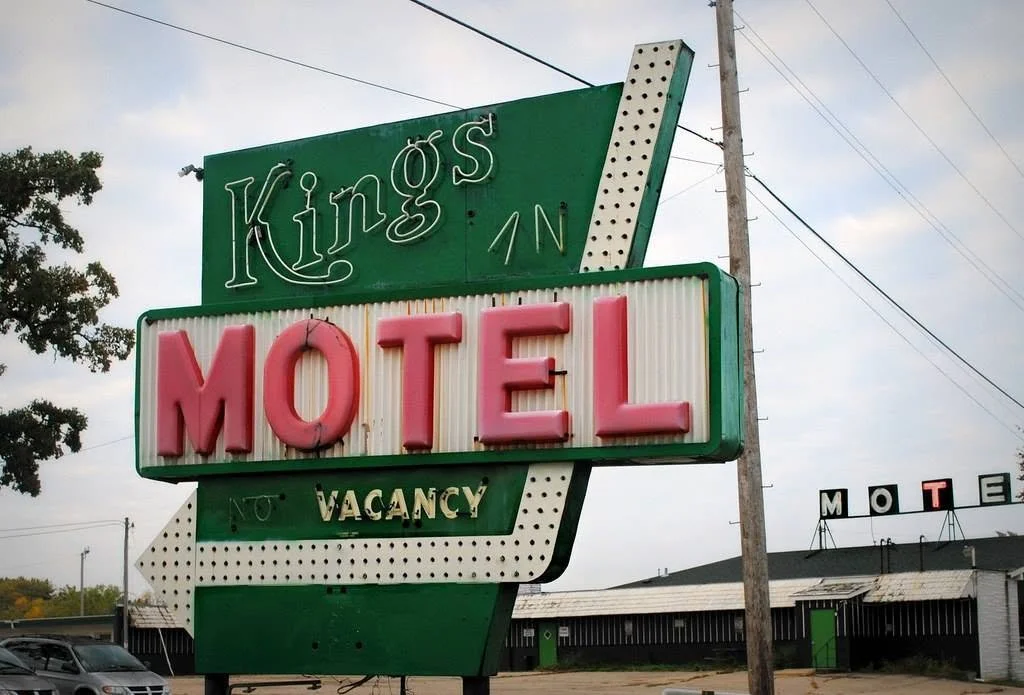
The King’s Inn Motel in Madison, Wisconsin | Credit: Lost Madison/Facebook
Background
In the early morning hours of December 31, 1991, officers from the Madison Police Department arrived at a local motel to execute a search warrant for Steiney Richards’ room. The warrant was the culmination of an investigation indicating that Richards was dealing drugs out of hotel rooms in Madison. Although the officers requested a warrant authorizing a no-knock entry to prevent the destruction of evidence, but the magistrate explicitly deleted those portions, denying them advance no-knock authorization. At 3:40 a.m., Officer Pharo led the entry team to the motel room dressed as a maintenance man, accompanied by several plainclothes officers and at least one uniformed officer. When Officer Pharo knocked on the door and claimed to be a maintenance man in response to a query from inside, Richards cracked the door open with the security chain still attached. Through the gap, Richards spotted the uniformed officer standing directly behind Officer Pharo and quickly slammed the door shut. After waiting just two or three seconds, the officers began kicking and ramming the door and identified themselves as police officers. When the officers finally broke into the room, they caught Richards attempting to escape through a window and discovered cash and cocaine hidden in plastic bags hidden in the bathroom’s ceiling tiles.
Richards was charged with possession with intent to deliver a controlled substance. At trial, Richards filed a motion to suppress the evidence, arguing that the officers’ forced entry announcing violated his Fourth Amendment rights. The trial court denied his motion, concluding that the officers could reasonably gather from his sudden slamming of the door that he knew they were police and might attempt to destroy evidence or escape. Richards appealed, but the Wisconsin Supreme Court affirmed, holding that police officers are never required to knock and announce when executing a search warrant in a felony drug investigation. The U.S. Supreme Court subsequently granted certiorari to determine whether the Fourth Amendment permits a blanket, category-wide exception to the knock-and-announce requirement.
Issue #1
Unanimous decision for Richards
Richards


Wisconsin
Thomas
Scalia
Kennedy
Rehnquist
Stevens
Souter
O’Connor
Ginsburg
Breyer
Issue #2
Unanimous decision for Wisconsin
Richards
Wisconsin
Thomas
Scalia
Kennedy
Rehnquist
Stevens
Souter
O’Connor
Ginsburg
Breyer
-
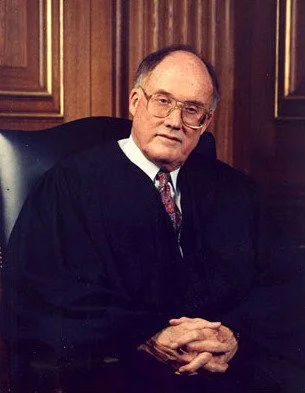
Writing for the Court, Justice John Paul Stevens held that the Fourth Amendment doesn’t permit a blanket, category-wide exception to the knock-and-announce requirement for felony drug investigations. Stevens recognized that felony drug investigations frequently involve threats of physical violence or the likelihood that evidence will be destroyed, but he noted that these risks are not present in every case and argued that creating a categorical exception presents two major concerns. First, such a rule “contains considerable overgeneralization” that would “impermissibly insulate from judicial review” cases that don’t present these risks. Second, the reasoning could, “relatively easily, be applied to others” such as armed bank robberies. Stevens warned that if a per se exception were permitted for every criminal category involving a risk of danger or destruction of evidence, “the knock-and-announce element of the Fourth Amendment’s reasonableness requirement would be meaningless.”
To strike the proper balance between law enforcement concerns and individual privacy, Stevens established that a no-knock entry is constitutionally justified only when police have “reasonable suspicion that knocking and announcing their presence, under the particular circumstances, would be dangerous or futile, or that it would inhibit the effective investigation of the crime by, for example, allowing the destruction of evidence.” Stevens acknowledged that such a standard isn’t high, but he emphasized that the police must meet it on a case-by-case basis whenever the reasonableness of a no-knock entry is challenged. Stevens added that individual privacy interests affected by a sudden, unannounced entry “should not be unduly minimized” because they provide the individual with an opportunity to prepare themselves and “comply with the law and to avoid the destruction of property.”
Applying this case-by-case standard, Stevens concluded that the officers’ unannounced entry into Richards’ motel room didn’t violate the Fourth Amendment. Stevens explained that while the officers’ proposed no-knock authorization was removed from the search warrant, their actions “must be evaluated as of the time they entered the motel room” because a magistrate cannot predict every circumstance that the officers will face on the scene. Stevens argued that once Officer Pharo knocked on the door and Richards cracked it open only to spot a uniformed officer and quickly slam it, the officers possessed a reasonable suspicion that Richards might destroy evidence if given the opportunity. Combined with the “easily disposable nature of the drugs,” these circumstances justified the officers’ decision to force immediate entry despite the lack of explicit authorization in the warrant. Ultimately, Stevens concluded that the Fourth Amendment prohibits a blanket exception to the knock-and-announce requirement for felony drug investigations, but the officers’ entry into Richards’ motel room was valid because they possessed reasonable suspicion.