Olmstead v. United States
Home | All Cases | Criminal Procedure | Olmstead v. United States
Case Overview
CITATION
ARGUED ON
DECIDED ON
DECIDED BY
OVERRULED BY
277 U.S. 438
Feb. 20-21, 1928
Jun. 4, 1928
Katz v. United States (1967)
Legal Issue
Does the use of evidence obtained by wiretapping private telephone conversations violate the Fourth Amendment’s protection from unreasonable search and seizure and Fifth Amendment’s protection from self-incrimination?
Holding
No, the warrantless interception of intangible telephone conversations over external wires without a physical invasion does not constitute a search or seizure because the Fourth Amendment protects only tangible material things and requires a physical trespass into a protected space, and the voluntary transmission of those messages doesn’t amount to self-incrimination under the Fifth Amendment.
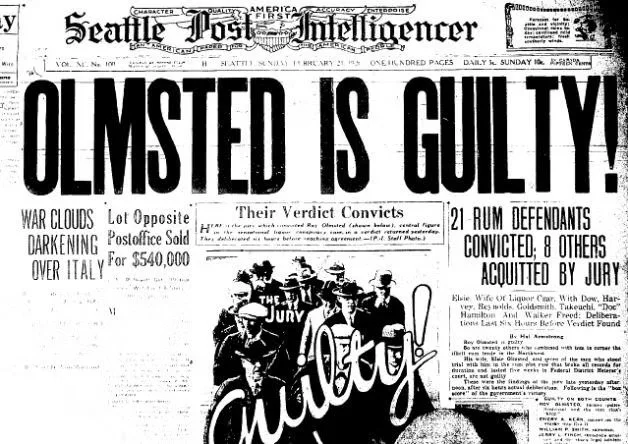
Newspaper coverage of the Supreme Court’s decision in Olmstead v. United States (1928) | Credit: JSTOR
Background
During Prohibition, Roy Olmstead served as the general manager and leading conspirator of a massive liquor trafficking operation based in Seattle, Washington. The syndicate employed over fifty people, operated seagoing vessels to import liquor from British Columbia, maintained underground storage caches, and generated annual sales exceeding two million dollars. The hub of the operation was a central Seattle office equipped with three telephone lines, where operators took customer orders and dispatched delivery crews, alongside additional telephone lines installed in Olmstead’s home and those of his primary associates, Charles S. Green and Edward H. McInnis. To uncover the conspiracy, four federal prohibition officers conducted a multi-month wiretapping operation. Without entering or trespassing on any private property, the federal prohibition agents inserted small tap wires along the main telephone lines in the basement of the office building and on public streets near their homes. Over nearly five months, the agents secretly overheard and transcribed thousands of pages of conversations detailing liquor shipments, sales transactions, smuggling routes, and payoffs to local police officers.
Based on these intercepted conversations, Olmstead, Green, McInnis, and dozens of co-conspirators were indicted for conspiracy to violate the National Prohibition Act. In the U.S. District Court for the Western District of Washington, the defendants moved to suppress the wiretap evidence, arguing that the federal prohibition officers conducted an unconstitutional search and seizure under the Fourth Amendment and compelled them to be witnesses against themselves under the Fifth Amendment. The district court denied the motions and the defendants were convicted. The U.S. Court of Appeals for the Ninth Circuit affirmed their convictions, holding that the interception of telephone communications without a physical trespass didn’t violate the Constitution. The U.S. Supreme Court subsequently granted certiorari.
5 - 4 decision for the United States
Olmstead


United States


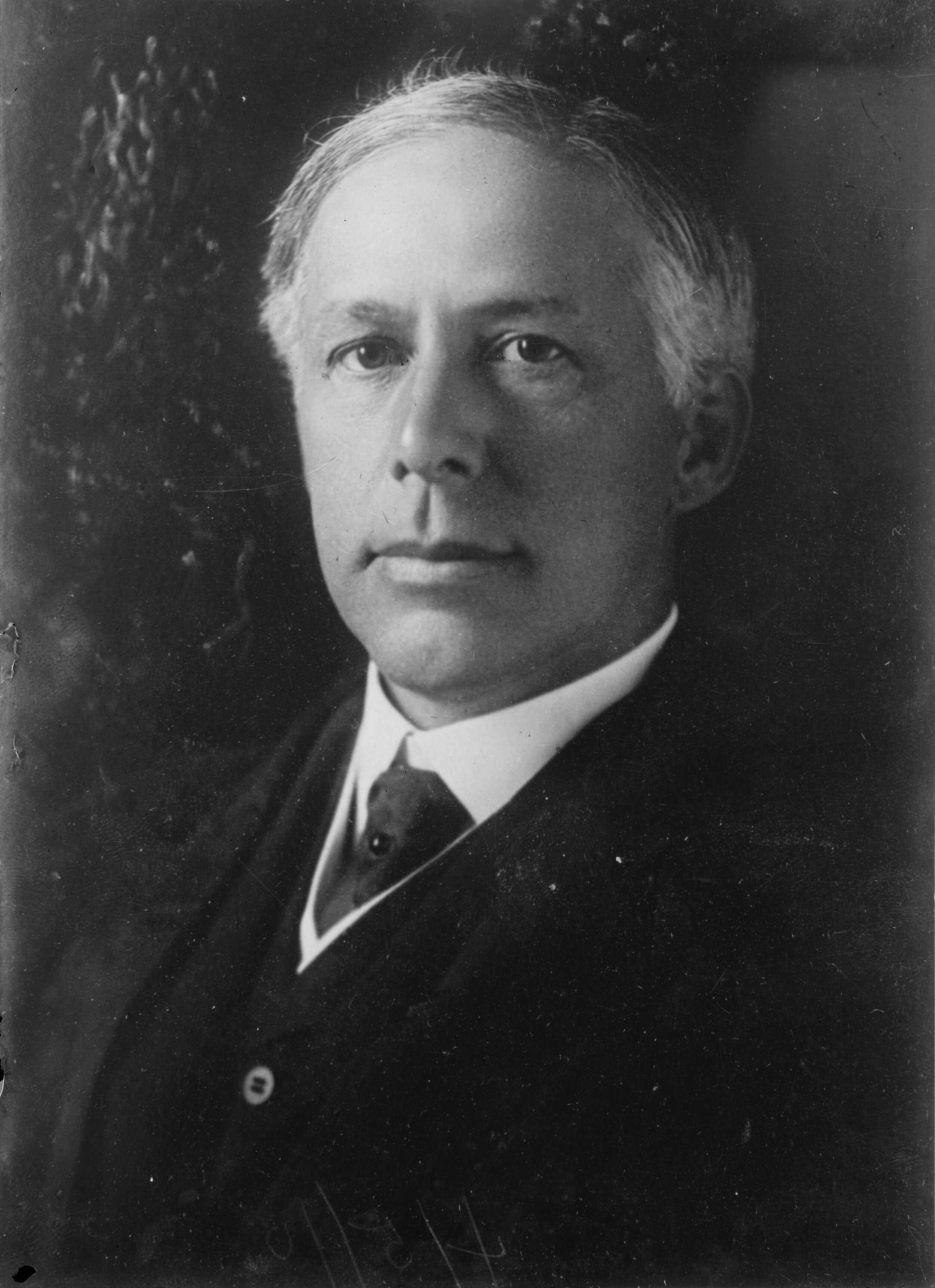

Taft
Sanford
Holmes
Van Devanter
Butler
McReynolds
Sutherland
Stone
Brandeis
-
Writing for the Court, Chief Justice William Howard Taft held that the warrantless wiretapping of private telephone conversations didn’t violate the Fourth or Fifth Amendments. First addressing the defendants’ Fifth Amendment argument, Taft asserted that there was no basis for applying the Fifth Amendment’s protection against self-incrimination given that there was no official compulsion because the defendants were “continually and voluntarily transacting business” over the telephone.
Regarding the defendants’ Fourth Amendment argument, Taft emphasized that its historical purpose was “to prevent the use of governmental force to search a man’s house, his person, his papers and his effects; and to prevent their seizure against his will.” Taft argued that while constitutional guarantees should be liberally construed, such a construction “can not justify enlargement of the language employed beyond the possible practical meaning of houses, persons, papers, and effects, or so to apply the words search and seizure as to forbid hearing or sight.” Taft stressed that the language of the Fourth Amendment demonstrates that a constitutionally protected search “is to be of material things—the person, the house, his papers or his effects.” He reasoned that since telephone conversations are intangible and travel across external wires, there was no search or seizure because the evidence “was secured by the use of the sense of hearing and that only.”
Turning to the prosecution of Olmstead and his co-conspirators, Taft found that the wiretapping was lawful because the taps were inserted in the basement of the office building and in the streets near the houses without committing any physical trespass onto private property. Taft reasoned that because the officers didn’t physically enter any house or office, nor did they seize any tangible physical effects, their actions amounted only to “voluntary conversations secretly overheard” over public and commercial lines. Ultimately, Taft concluded that the intercepted telephonic conversations were properly admitted into evidence at trial and affirmed the convictions of Olmstead and his co-conspirators.
-
Joined by: Justice Oliver Wendell Holmes Jr., Justice Pierce Butler, Justice Harlan Stone
In his dissenting opinion, Justice Louis Brandeis argued that the Fourth and Fifth Amendments prohibited the government’s warrantless wiretapping of private telephone communications. Brandeis asserted that constitutional provisions safeguarding individual liberties must adapt to technological advancement, writing that “a principle to be vital must be capable of wider application than the mischief which gave it birth.” He explained that while physical force and forced entry were historically the primary means of self-incrimination and unreasonable searches, “subtler and more far-reaching means of invading privacy have become available to the Government,” enabling it “by means far more effective than stretching upon the rack, to obtain disclosure in court of what is whispered in the closet.” Brandeis argued asserted that the Framers of the Constitution conferred “as against the Government, the right to be let alone—the most comprehensive of rights and the right most valued by civilized men,” meaning that “every unjustifiable intrusion by the Government upon the privacy of the individual, whatever the means employed, must be deemed a violation of the Fourth Amendment.”
Brandeis criticized the majority’s narrow and literal construction of the Fourth Amendment, noting that the Court had previously extended constitutional protections to unsealed letters in the mail without requiring a physical trespass. Brandeis pointed out that “as a means of espionage, writs of assistance and general warrants are but puny instruments of tyranny and oppression when compared with wire-tapping,” because tapping a single line invades the privacy of both parties to a call and everyone who calls or receives calls from that line. Additionally, Brandeis warned against sanctioning illegal acts committed by the government in the pursuit of law enforcement’s goals, writing that “experience should teach us to be most on our guard to protect liberty when the Government’s purposes are beneficent.” He further warned that when the government uses criminal acts to secure evidence, “the Government itself would become a lawbreaker.” On the duty of the state, Brandeis infamously wrote, “[o]ur Government is the potent, the omnipresent teacher. For good or for ill, it teaches the whole people by its example. Crime is contagious. If the Government becomes a lawbreaker, it breeds contempt for law; it invites every man to become a law unto himself; it invites anarchy.”
Turning to the prosecution of Olmstead and co-conspirators, Brandeis found that the wiretap evidence should’ve been excluded, underscoring that the federal prohibition agents violated Washington state law by tapping eight telephone lines over nearly five months and compiling 775 pages of transcribed private conversations. Brandeis insisted that because the government knowingly relied upon the fruits of its officers’ illegal acts to secure convictions, federal courts must refuse their aid under the doctrine of unclean hands “in order to maintain respect for law; in order to promote confidence in the administration of justice; in order to preserve the judicial process from contamination.”