Morrison v. Olson
Case Overview
CITATION
ARGUED ON
DECIDED ON
DECIDED BY
487 U.S. 654
Apr. 26, 1988
Jun. 29, 1988
Legal Issue
Do the procedures for the appointment, jurisdiction, and termination of independent counsel under the Ethics in Government Act of 1978 violate the Appointments Clause or impermissibly interfere with the President’s authority under Article II of the Constitution?
Holding
No, the procedures of the Ethics Act do not violate the Appointments Clause or impermissibly interfere with the President’s authority under Article II.
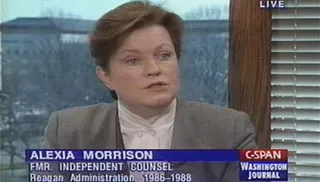
Alexia Morrison speaking on CSPAN (1997) | Credit: CSPAN
The Act defines the jurisdiction of the independent counsel as the “full power and independent authority to exercise all investigative and prosecutorial functions and powers of the Department of Justice, the Attorney General, and any other officer or employee of the Department of Justice.” Under §594(a)(9), the independent counsel’s powers include “initiating and conducting prosecutions in any court of competent jurisdiction, framing and signing indictments, filing informations, and handling all aspects of any case, in the name of the United States.”
Two provisions of the Act govern the length of an independent counsel’s tenure. First, §596(a)(1) defined the procedure for an independent counsel’s removal. It states that “[a]n independent counsel appointed under this chapter may be removed from office, other than by impeachment and conviction, only by the personal action of the Attorney General and only for good cause, physical disability, mental incapacity, or any other condition that substantially impairs the performance of such independent counsel’s duties.” Second, §596(b)(1) defined the procedures for terminating the independent counsel’s office. It states that the office terminates when the independent counsel notifies the Attorney General that the investigations or prosecutions undertaken are completed or substantially completed. Additionally, it states that the Special Division (independently or on the Attorney General’s recommendation) may terminate the office at any time if it finds that the investigation has “been completed or so substantially completed that it would be appropriate for the Department of Justice to complete” them.
In 1982, the House of Representatives issued two subpoenas to the Environmental Protection Agency (EPA), ordering the production of documents regarding the EPA and Land and Natural Resources Division of the Justice Department’s efforts to enforce the Superfund law. President Ronald Reagan ordered the EPA Administrator to withhold the documents on the grounds that they contained sensitive information related to enforcement, which prompted the House Judiciary Committee to open an investigation. The investigation later produced a report suggesting that Theodore Olson, the Assistant Attorney General for the Office of Legal Counsel, had given false and misleading testimony before a House subcommittee at a point early in the investigation.
The Chairman of the Judiciary Committee forwarded a copy of the report to Attorney General William F. Smith requesting that he seek the appointment of an independent counsel to investigate the allegations against Olson and two others. Alexia Morrison was subsequently appointed as independent counsel with jurisdiction to investigate whether Olson had violated federal law.
Olson filed a lawsuit in the U.S. District Court for the District of Columbia, suing Morrison in her official capacity. Olson sought to quash the subpoenas issued by the House and challenged the constitutionality of Morrison’s position as independent counsel. The District Court ruled in Morrison’s favor, upholding the constitutionality of her position. On appeal, the U.S. Court of Appeals for the District of Columbia Circuit reversed, finding that independent counsels acted as principal officers that must be appointed by the President and serve at his pleasure. The Supreme Court then granted certiorari.
Background
The Ethics in Government Act was signed into law by President Jimmy Carter on October 26, 1978.
Under Title VI of the Act, an independent counsel could be appointed to investigate and prosecute certain high-ranking Government officials for violations of federal criminal laws. When the Attorney General received information that he determines is “sufficient to constitute grounds to investigate whether any person [covered by the Act] may have violated any Federal criminal law,” he’s required to conduct a preliminary investigation. After the Attorney General completes the investigation, or after 90 days, he’s required to report to the Special Division (a special court created by the Act) for the appointment of an independent counsel.
If the Attorney General finds no reasonable grounds to support further investigation, then he must notify the Special Division, who “shall have no power to appoint an independent counsel” in such cases. However, if the Attorney General determines that there are “reasonable grounds to believe that further investigation or prosecution is warranted,” then he “shall apply to the division of the court for the appointment of an independent counsel.” After the Special Division receives the application, they “shall” appoint an independent counsel and define their jurisdiction. Congress may provide oversight of the independent counsel’s activities through statements or reports sent by the independent counsel to Congress from time to time.
7 - 1 decision for Morrison
Morrison


Olson
Brennan
Rehnquist
Scalia
Marshall
Blackmun
Stevens

O’Connor
White
-
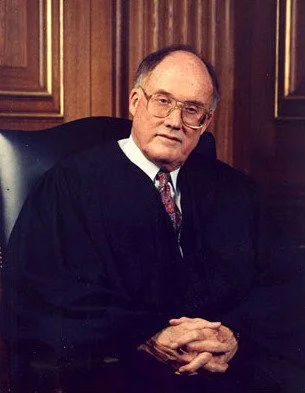
Writing for the Court, Chief Justice William Rehnquist first established the two classes of officers established under the Appointments Clause: principal officers and inferior officers. Rehnquist cited Buckley v. Valeo (1976) to explain that “principal officers are selected by the President with the advice and consent of the Senate.” On the other hand, inferior officers are those who “Congress may allow to be appointed by the President alone, by the heads of departments, or by the Judiciary.”
Rehnquist noted that the “line between ‘inferior’ and ‘principal’ officers is one that is far from clear,” but stated that the Court didn’t need to address that question to decide this case “because in out view [Morrison] clearly falls on the ‘inferior officer’ side of that line.” Rehnquist listed four reasons to support the Court’s conclusion.
First, Morrison is subject to removal by a higher-ranking official in the Executive Branch. Rehnquist explained that while Morrison may not be “subordinate” to the Executive “insofar as she possess a degree of independent discretion ... the fact that she can be removed by the Attorney General indicates that she is to some degree ‘inferior’ in rank and authority.”
Second, Morrison is only empowered to perform “certain, limited duties.” Rehnquist acknowledged that the Act grants an independent counsel the “full power and independent authority to exercise all investigative and prosecutorial functions and powers of the Department of Justice,” but he explained that this authority doesn’t include any power to create policy or perform any administrative duties outside of those necessary to operate the office. He noted that the Act also “specifically provides” that the independent counsel comply with the policies of the DOJ in policy matters.
Third, Morrison’s office is “limited in jurisdiction.” Rehnquist pointed out that “the Act itself [is] restricted in applicability to certain federal officials suspected of certain serious federal crimes,” and “an independent counsel can only act within the scope of the jurisdiction that has been granted by the Special Division pursuant to a request by the Attorney General.”
Lastly, Morrison’s office is “limited in tenure.” Rehnquist found that while there is no time limit on the appointment of a particular counsel, “the office of independent counsel is ‘temporary’ in the sense that an independent counsel is appointed essentially to accomplish a single task, and when that task is over the office is terminated.” He added that “[u]nlike other prosecutors, [Morrison] has no ongoing responsibilities that extend beyond the accomplishment of the mission that she was appointed for and authorized by the Special Division to undertake.”
Rehnquist ultimately concluded that Morrison’s position as independent counsel was constitutional, finding that the factors he discussed “relating to the ‘ideas of tenure, duration . . . and duties’ of the independent counsel are sufficient to establish that [Morrison] is an ‘inferior’ officer in the constitutional sense.”
-
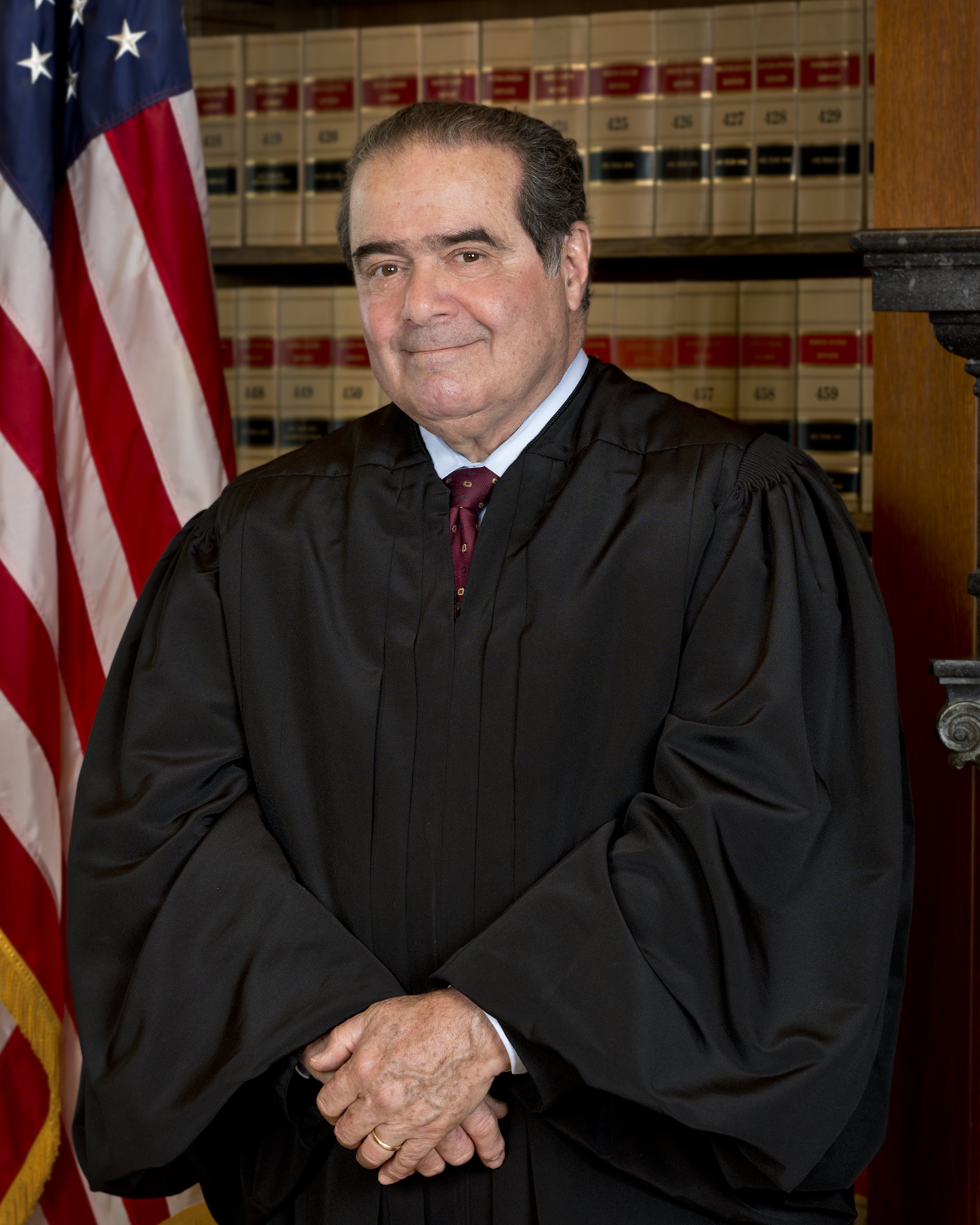
In his solo dissent, Justice Antonin Scalia warned that the majority’s decision had dangerous implications for the “equilibrium of power” established by the Constitution. He wrote that “[f]requently an issue of this sort will come before the Court clad, so to speak, in sheep’s clothing ... But this wolf comes as a wolf.”
Scalia began by arguing the vesting of executive power “in a President of the United States” under Article II “does not mean some of the executive power, but all of the executive power.” Scalia explained that the independent counsel must be found unconstitutional if these two questions were answered affirmatively: “(1) Is the conduct of a criminal prosecution (and of an investigation to decide whether to prosecute) the exercise of purely executive power? (2) Does the statute deprive the President of the United States of exclusive control over the exercise of that power?”
On the first question, Scalia explained that the Court conceded that the functions performed by the independent counsel were executive, but qualified that concession by arguing that the functions are related to law enforcement and have typically been undertaken by officials within the Executive branch. In response, he wrote that “[t]he qualifier adds nothing but atmosphere. In what other sense can one identify ‘the executive Power’ that is supposed to be vested in the President (unless it includes everything the Executive Branch is given to do) except by reference to what has always and everywhere—if conducted by government at all—been conducted never by the legislature, never by the courts, and always by the executive.” Scalia ultimately found that “investigation and prosecution of crimes is a quintessentially executive function.”
Regarding the second question, Scalia asserted that depriving the President of exclusive control over the executive activity “is indeed the whole object of the statute.” Scalia dismissed the Court’s argument that the President retains some control over the independent counsel through his Attorney General, writing that the “concession is alone enough to invalidate the statute.” He added that he “[could not] refrain from pointing out that the Court greatly exaggerates the extent of ... Presidential control.” The Court had reasoned that the Attorney General’s power to remove the counsel for “good cause” was significant, but Scalia responded that "[t]his is somewhat like referring to shackles as an effective means of locomotion.”
Scalia concluded this analysis by noting that while the Court seemed to “concede an affirmative answer to both,” it “seeks to avoid the inevitable conclusion that since the statute vests some purely executive power in a person who is not the President of the United States it is void.”
Scalia then illustrated the “utter incompatibility” of the Court’s approach by applying it to two examples involving the powers of the other branches. First, regarding the Legislative Branch, Scalia posited that “if Congress passed a statute depriving itself of less than full and entire control over some insignificant area of legislation, we would inquire whether the matter was ‘so central to the functioning of the Legislative Branch’ as really to require complete control, or whether the statute gives Congress ‘sufficient control over the surrogate legislator to ensure that Congress is able to perform its constitutionally assigned duties’? Of course we would have none of that.”
In a second example involving the Judicial Branch, Scalia wrote, “consider a statute giving to non-Article III judges just a tiny bit of purely judicial power in a relatively insignificant field, with substantial control, though not total control, in the courts ... Is there any doubt that we would not pause to inquire whether the matter was ‘so central to the functioning of the Judicial Branch’ as really to require complete control, or whether we retained ‘sufficient control over the matters to be decided that we are able to perform our constitutionally assigned duties’? We would say that our ‘constitutionally assigned duties’ include complete control over all exercises of the judicial power.”
Scalia finished by asking, “[i]s it unthinkable that the President should have such exclusive power, even when alleged crimes by him or his close associates are at issue?” He responded to that proposition by pointing out that both the Legislative and Judicial branches have exclusive power over areas in which they have special interests (legislation and cases involving their power). However, he wrote, “[a] system of separate and coordinate powers necessarily involves an acceptance of exclusive power that can theoretically be abused ... While the separation of powers may prevent us from righting every wrong, it does so in order to ensure that we do not lose liberty.”
Scalia ultimately found that the Ethics Act deprived the President of substantial control over the independent counsel, which has a substantial affect on the balance of powers. He concluded by writing that the Court’s decision “demonstrates both the wisdom of our former constitutional system, in which the degree of reduced control and political impairment were irrelevant, since all purely executive power had to be in the President; and the folly of the new system of standardless judicial allocation of powers we adopt today.”