Katzenbach v. McClung
Case Overview
CITATION
ARGUED ON
DECIDED ON
DECIDED BY
379 U.S. 294
Oct. 5, 1964
Dec. 14, 1964
Legal Issues
Does the Commerce Clause grant Congress the authority to prohibit racial discrimination from restaurants that serve interstate travelers or serve food of which a substantial amount comes from interstate commerce?
Holding
Yes, Congress may prohibit racial discrimination from restaurants participating in interstate commerce under the authority granted to them by the Commerce Clause.
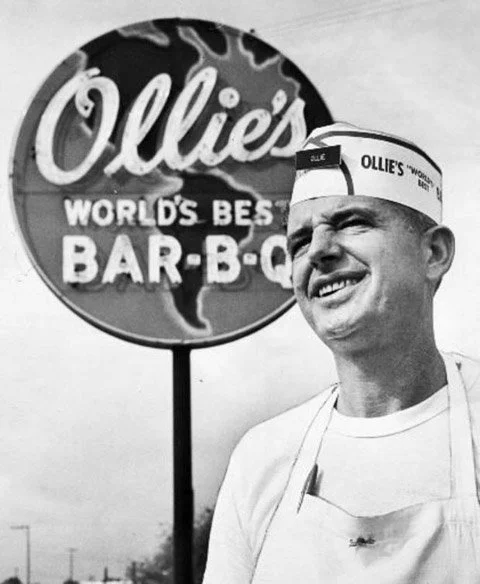
Ollie McClung, Sr., outside his restaurant | Credit: BhamWiki
Background
During the Civil Rights Movement, Congress enacted the Civil Rights Act of 1964. Title II of the Act aimed to prohibit racial discrimination in public accommodations, and the relevant part of Title IIreads as follows:
All persons shall be entitled to the full and equal enjoyment of the goods, services, facilities, privileges, advantages, and accommodations of any place of public accommodation, as defined in this section, without discrimination on the ground of race, color, religion, or national origin.
Ollie’s Barbecue was a family-run restaurant in Birmingham, Alabama, located on a state highway and near an interstate, railroad, and bus stations. Ollie’s primarily served families and white-collar customers, while offering only take-out service for black customers. At the time of the case, two-thirds of the restaurant’s employees were black. In the 12 months before the Act’s passage, the restaurant bought about $150,000 worth of food locally, and $69,683 of that total was meat purchased from a local supplier who had sourced it from outside the State. Since opening in 1927, the restaurant refused to admit black customers to its dining room, and it operated in violation of the Act once it was enacted.
The U.S. District Court for the Northern District of Alabama initially issued an injunction preventing enforcement of the Act, finding that a significant portion of the food served at Ollie’s had been a part of interstate commerce, but that if the they were required to serve black customers, they’d suffer a substantial loss of business.
Unanimous decision for Katzenbach
Katzenbach



McClung
Black
Warren
Clark
Harlan II
Douglas
Goldberg
White
Brennan
Stewart
-
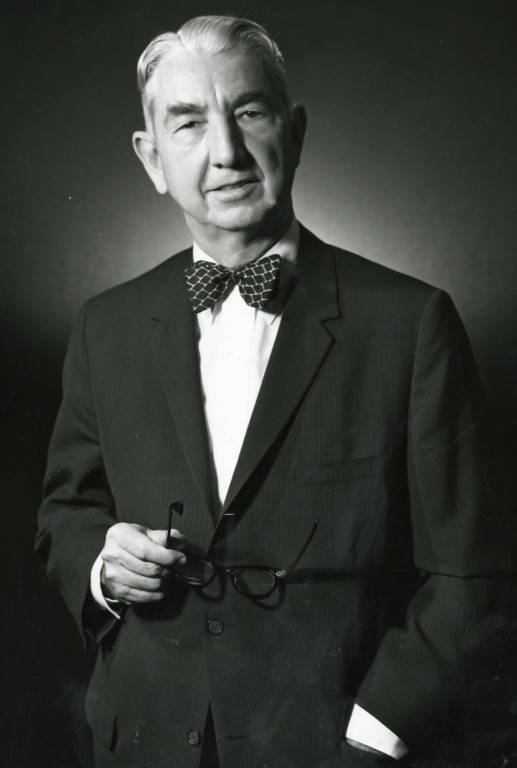
Writing for the Court, Justice Tom C. Clark first stated that many of the answers to arguments raised by the parties in this case were settled by the Court’s ruling in Heart of Atlanta Motel, Inc. V. United States(1964), which was released during the same term. He explained that in this case, the Court was tasked with determining whether Title II of the Civil Rights Act of 1964 could be applied to restaurants if a substantial portion of the food they serve has been moved in commerce.
Clark then explained the connection between racial discrimination and interstate commerce, writing that the testimony given before Congress regarding the effects of discrimination by restaurants “ afforded ample basis for the conclusion that established restaurants in such areas sold less interstate goods because of the discrimination, that interstate travel was obstructed directly by it, that business in general suffered and that many new businesses refrained from establishing there as a result of it.”
Clark acknowledged that the volume of food purchased by Ollie’s from out of state vendors was “insignificant” when compared to the entire amount of food moving in commerce. However, Clark relied on the Court’s holding in Wickard v. Filburn(1937), where Justice Robert Jackson wrote a"[t]hat appellee’s own contribution to the demand for wheat may be trivial by itself is not enough to remove him from the scope of federal regulation where, as here, his contribution, taken together with that of many others similarly situated, is far from trivial.”
Regarding the argument that the restaurant business is local and therefore out of the scope of Congress’ power under the Commerce Clause, Clark again relied on the holding in Wickard that “even if appellee’s activity be local and though it may not be regarded as commerce, it may still, whatever its nature, be reached by Congress if it exerts a substantial economic effect on interstate commerce.”
Clark then established that Congress’ commerce power extends to retail establishments, including restaurants, that “directly or indirectly burden or obstruct interstate commerce.” He explained that the only remaining question for the Court was whether Ollie’s serves interstate travelers or a substantial portion of the food they serve has been moved in interstate commerce. Clark ultimately concluded Congress “had a rational basis for finding that racial discrimination in restaurants had a direct and adverse effect on the free flow of interstate commerce” and upheld the application of Title II of the Civil Rights Act of 1964.