Dunaway v. New York
Home | All Cases | Criminal Procedure | Dunaway v. New York
Case Overview
CITATION
ARGUED ON
DECIDED ON
DECIDED BY
442 U.S. 200
Mar. 21, 1979
Jun. 5, 1979
Legal Issue
Does the detention of a suspect into custody for questioning without probable cause violate the Fourth Amendment’s protection from unreasonable search and seizure?
Holding
Yes, detaining a suspect for questioning at a police station without probable cause violates the Fourth Amendment, and the resulting confessions must be suppressed because the administration of Miranda warnings alone does not break the causal connection between the illegal seizure and the statements.
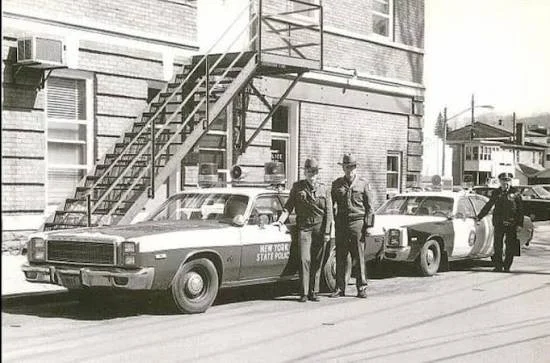
Rochester Police Department Officers photographed in 1975 | Credit: COPS/Facebook
Background
On March 26, 1971, the owner of a pizza parlor in Rochester, New York was killed during an attempted robbery. Months later, on August 10, 1971, Detective Anthony Fantigrossi of the Rochester Police Department was told by a fellow officer that an informant had supplied a possible lead implicating Ira Dunaway in the crime. The informant reported that an inmate named James Cole had claimed that he and someone named ‘Irving’ were involved, and the informant subsequently identified Dunaway’s picture from a police file. Detective Anthony Fantigrossi questioned Cole, who was awaiting trial for burglary, but Cole denied any involvement, instead claiming that another inmate, Hubert Adams, had told him that his younger brother, ‘Ba Ba’ Adams, and someone named ‘Irving’ (who was also known as ‘Axelrod’) were the individuals actually involved in the attempted robbery.
Detective Anthony Fantigrossi realized that this information didn’t supply enough information to get a warrant, but he nonetheless ordered other detectives from the Rochester Police Department to bring Dunaway in for questioning. On the morning of August 11, 1971, three detectives located Dunaway at a neighbor’s house and took him into custody. Although the detectives did not tell Dunaway he was under arrest, he would’ve been physically restrained if he attempted to leave. Dunaway was driven to police headquarters in a police car, placed in an interrogation room, and questioned after being given Miranda warnings. Dunaway waived his right to counsel and eventually made incriminating statements and drew sketches that implicated him in the crime.
At trial in the Monroe County Court, Dunaway filed a motion to suppress his statements and sketches. Dunaway’s motions were denied and he was convicted of attempted robbery and felony murder. Dunaway’s conviction was initially affirmed by the Appellate Division of the Supreme Court of New York and the New York Court of Appeals. After the U.S. Supreme Court granted certiorari, vacated the judgment, and remanded the case, the Monroe County Court held a supplementary suppression hearing and granted Dunaway’s motion to suppress. However, the Appellate Division reversed the trial court’s suppression order, and after the New York Court of Appeals dismissed Dunaway’s application for leave to appeal, the U.S. Supreme Court again granted certiorari.
6 - 2 decision for Dunaway
Dunaway


* Justice Powell took no part in the consideration or decision of this case.
New York
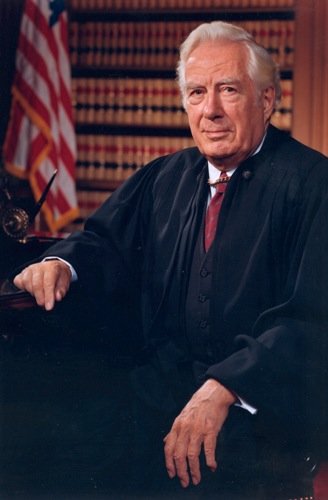
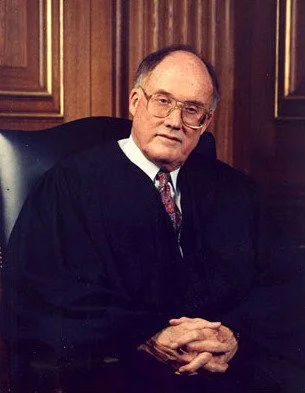
Stevens
Rehnquist
Marshall
White
Stewart
Burger
Brennan
Blackmun

-
Writing for the Court, Justice William Brennan held that law enforcement officers violate the Fourth and Fourteenth Amendments when they seize a suspect and transport them to the police station for interrogation without probable cause. Brennan first established that “there can be little doubt that petitioner was ‘seized’ in the Fourth Amendment sense when he was taken involuntarily to the police station.” Rejecting New York’s argument that reasonable suspicion was sufficient to justify Fantigrossi’s order to pick up Dunaway for questioning under a flexible balancing test, Brennan emphasized that the Fourth Amendment’s probable-cause requirement is an absolute standard. He explained that “for all but those narrowly defined intrusions, the requisite ‘balancing’ has been performed in centuries of precedent and is embodied in the principle that seizures are ‘reasonable’ only if supported by probable cause.”
Brennan distinguished Dunaway’s involuntary detention from the limited street encounters authorized under Terry v. Ohio (1968), noting that Terry created a very narrow exception to the probable-cause requirement for swift, on-the-spot actions like weapons frisks that fell “far short of the kind of intrusion associated with an arrest.” In contrast, Brennan found that the treatment of Dunaway in this case was “in important respects indistinguishable from a traditional arrest” because he “was taken from a neighbor’s home to a police car, transported to a police station, and placed in an interrogation room.” Brennan warned that extending the Terry exception to encompass such severe, involuntary detentions would have dangerous consequences, writing that “any ‘exception’ that could cover a seizure as intrusive as that in this case would threaten to swallow the general rule that Fourth Amendment seizures are ‘reasonable’ only if based on probable cause.” Brennan asserted that “detention for custodial interrogation—regardless of its label—intrudes so severely on interests protected by the Fourth Amendment as necessarily to trigger the traditional safeguards against illegal arrest.”
Turning to the admissibility of Dunaway’s confessions, Brennan rejected the argument that providing Dunaway with Miranda warnings made up for the illegal seizure. Citing Brown v. Illinois (1975), he explained that “the exclusionary rule, . . . when utilized to effectuate the Fourth Amendment, serves interests and policies that are distinct from those it serves under the Fifth.” Brennan further explained that while satisfying Miranda and proving that a confession is voluntary is a mandatory threshold requirement under the Fifth Amendment, Fourth Amendment analysis requires evaluating the causal connection between the illegal arrest and the confession. Brennan warned that “[i]f Miranda warnings, by themselves, were held to attenuate the taint of an unconstitutional arrest, regardless of how wanton and purposeful the Fourth Amendment violation, the effect of the exclusionary rule would be substantially diluted.” Under such a relaxed standard, Brennan argued that police would be encouraged to execute arrests without warrants or probable cause “for questioning or ‘investigation,’” knowing that any derived evidence could be made admissible at trial “by the simple expedient of giving Miranda warnings.”
Applying the multi-factor attenuation test from Brown, Brennan analyzed “the temporal proximity of the arrest and the confession, the presence of intervening circumstances, . . . and, particularly, the purpose and flagrancy of the official misconduct.” Brennan asserted that the Rochester detectives’ actions had a clear “quality of purposefulness” because they embarked on an “expedition for evidence” and admittedly seized Dunaway without probable cause “in the hope that something might turn up.” Furthermore, because Dunaway made his first incriminating statement within an hour after he reached the police station and “confessed without any intervening event of significance,” there was no break in the causal chain. Ultimately, Brennan concluded that allowing the admission of Dunaway’s statements under these circumstances would essentially permit “law enforcement officers to violate the Fourth Amendment with impunity, safe in the knowledge that they could wash their hands in the ‘procedural safeguards’ of the Fifth.”