Draper v. United States
Home | All Cases | Criminal Procedure | Draper v. United States
Case Overview
CITATION
ARGUED ON
DECIDED ON
DECIDED BY
358 U.S. 307
Dec. 11, 1958
Jan. 26, 1959
Legal Issue
Does the Fourth Amendment prohibit information provided to law enforcement by an informant from being used to establish probable cause to arrest a suspect without a warrant?
Holding
No, the Fourth Amendment does not prohibit law enforcement from using information provided by an informant to establish probable cause to arrest a suspect without a warrant.

Denver Union Station photographed in 1958 | Credit: John Pawlyshyn/Facebook
Background
James Hereford was a confidential informant, or “special employee, ” of the Denver Bureau of Narcotics who provided law enforcement with information regarding narcotics-related crimes. In Hereford’s experience working with law enforcement, he had a track record of providing credible information. On September 3, 1956, Hereford told Officer John Marsh, a federal narcotic agent stationed in Denver, that James Draper had recently moved to Denver and was “peddling narcotics.” On September 7, Hereford told Marsh that Draper had left for Chicago the day before and would return to Denver by train on the morning of September 8 or 9 with three ounces of heroin. Hereford also provided a physical description of Draper and stated that he’d be carrying a tan zipper bag and habitually “walked real fast.”
On the morning of September 8, Marsh and a Denver police officer went to the Denver Union Station to watch for Draper’s arrival. Draper didn’t show, but the pair returned on September 9. That morning, they observed an individual matching Hereford’s description exiting an incoming train from Chicago, carrying a tan zipper bag, and walking fast toward the exit. Marsh stopped Draper and arrested him, and a subsequent search revealed two envelopes with heroin and a syringe in the tan zipper bag. Hereford died four days after the arrest and was thus unable to testify.
Before his trial in the District Court for the District of Ohio, Draper filed a motion to suppress the evidence seized during his arrest, arguing that he was subject to an unlawful search and seizure because the officer lacked probable cause. The District Court denied his motion, finding that the officer had probable cause to arrest Draper without a warrant. At trial, the evidence was admitted over Draper’s objection, and he was ultimately convicted. On appeal, the U.S. Court of Appeals for the Eleventh Circuit affirmed Draper’s conviction. The U.S. Supreme Court then granted certiorari.
6 - 1 decision for the United States
Draper

United States


Black
Whittaker
Brennan
* Chief Justice Warren and Justice Frankfurter took no part in the consideration or decision of this case.


Stewart
Clark
Douglas
Harlan II

-
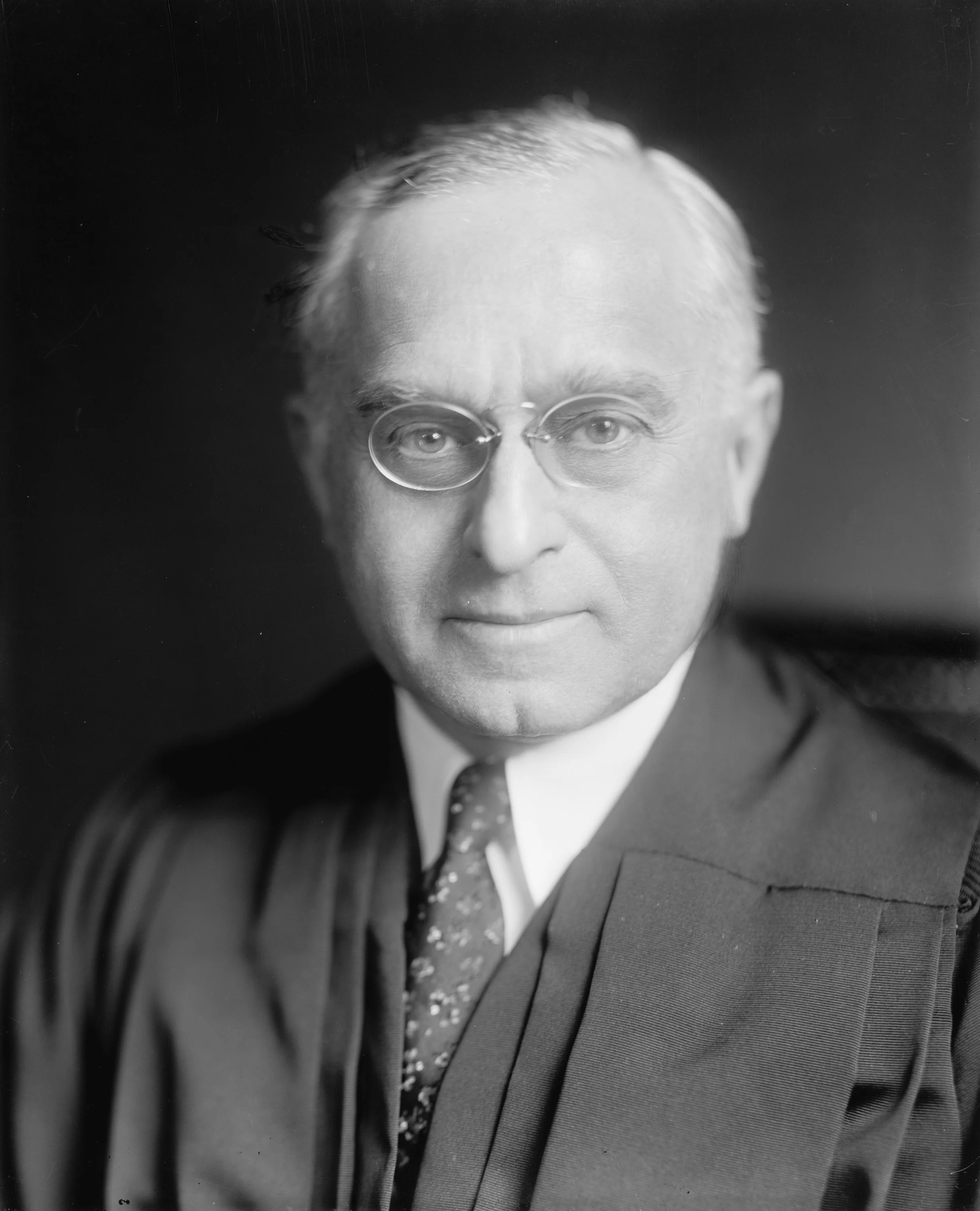
Writing for the Court, Justice Charles Evans Whittaker found that a Officer Marsh had probable cause and reasonable grounds to arrest Draper without a warrant based on Hereford’s tip, which was subsequently verified in every detail except for the actual possession of narcotics. Whittaker first addressed the Draper’s argument that Hereford’s tip was hearsay that couldn’t be legally considered in determining probable cause. Relying on Brinegar v. United States (1949), Whittaker explained that there is a major distinction between the admissibility of evidence to prove guilt at trial and the facts relied upon to show probable cause, writing that there is “a like difference in the quanta and modes of proof required to establish them.” He emphasized that requiring technically competent evidence to show probable cause would be a “wholly unwarranted emphasis” that would practically require proof sufficient to establish guilt in order to justify an arrest or search.
Regarding whether Hereford’s tip provided Marsh with sufficient information, Whittaker emphasized that Hereford had been employed by law enforcement, who had always found his information to be accurate and reliable. Whittaker asserted that Marsh “would have been derelict in his duties had he not pursued it.” By observing a man matching the exact physical attributes, wearing the precise clothing, carrying a tan zipper bag, and walking at a fast pace from the location Hereford said Draper was traveling from, Whittaker argued that Marsh “personally verified every facet of the information given him by Hereford except whether petitioner had accomplished his mission and had the three ounces of heroin on his person or in his bag.” With every other detail verified, Whittaker found Marsh possessed reasonable grounds to believe that Draper would have the heroin with him.
To define the constitutional standard, Whittaker explained that “[i]n dealing with probable cause, . . . as the very name implies, we deal with probabilities. These are not technical; they are the factual and practical considerations of everyday life on which reasonable and prudent men, not legal technicians, act.” Whittaker emphasized that probable cause is established when “the facts and circumstances within [the arresting officers’] knowledge and of which they had reasonably trustworthy information [are] sufficient in themselves to warrant a man of reasonable caution in the belief that’ an offense has been or is being committed.” Ultimately, Whittaker concluded that Hereford’s tip met this standard, meaning that the warrantless arrest of Draper was lawful and the subsequent search was validly made incident to that lawful arrest.