California v. Hodari D
Home | All Cases | Criminal Procedure | California v. Hodari D
Case Overview
CITATION
ARGUED ON
DECIDED ON
DECIDED BY
499 U.S. 621
Jan. 14, 1991
Apr. 23, 1991
Legal Issue
Does a police officer’s show of authority to a fleeing suspect constitute a seizure under the Fourth Amendment if the suspect does not yield or submit to that authority before discarding evidence?
Holding
No, the seizure of a person requires either the application of physical force or submission to an officer’s show of authority, meaning that a fleeing suspect who has not yielded is not seized and discarded evidence is abandoned property lawfully recoverable by police.
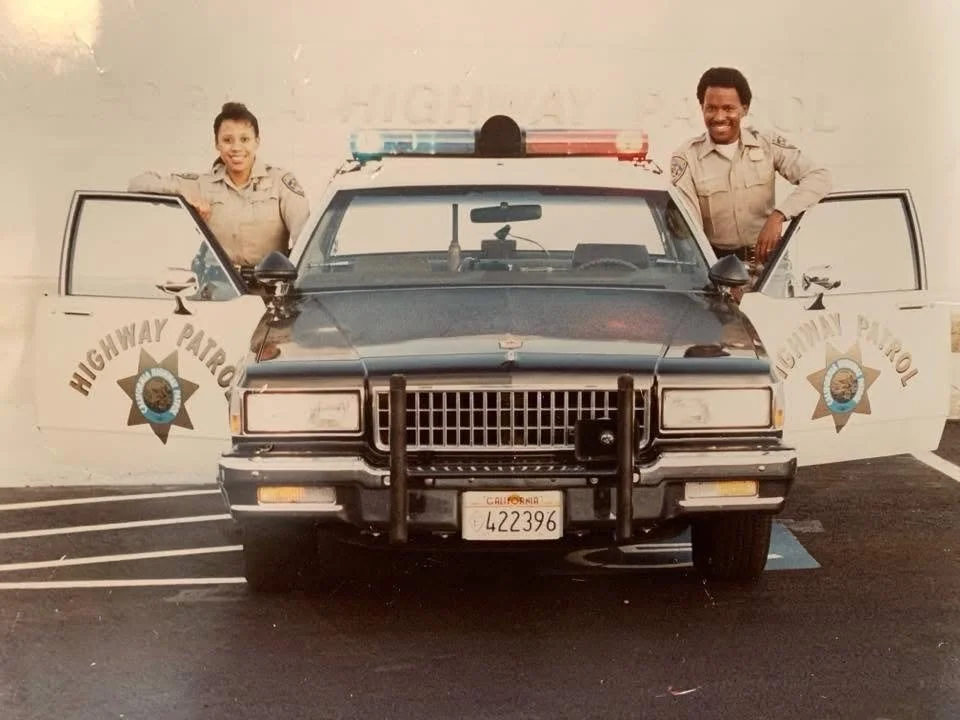
Officers of the California Highway Patrol, Oakland Area Office | Credit: Michael S Champion/Old School COPS/Facebook
Background
Late one evening in April 1988, Officers Brian McColgin and Jerry Pertoso were patrolling a high-crime area of Oakland, California, in an unmarked car while wearing street clothes and jackets with police markings on the front and back. As their vehicle turned onto 63rd Avenue, they observed four or five youths huddled around a small red car parked at the curb. Upon seeing the officers approach, the youths panicked and fled in different directions. Officer Pertoso left the police vehicle on foot to head off the fleeing suspects and eventually ran into one of the suspects, Hodari D., on 62nd Avenue. As Officer Pertoso approached, Hodari, who was looking behind him while running, turned to see the officer right in front of him and discarded a small rock. Officer Pertoso immediately tackled and handcuffed Hodari, discovering cash and a pager on him, and recovered the discarded rock, which was crack cocaine.
In the juvenile court proceeding against him, Hodari moved to suppress the cocaine evidence, arguing that it was the fruit of an unlawful seizure under the Fourth Amendment. The juvenile court denied the motion to suppress, but the California Court of Appeal reversed the decision, ruling that Hodari had been seized when he saw Officer Pertoso running toward him, the seizure was unreasonable because the officer lacked reasonable suspicion, and the evidence therefore had to be suppressed as the fruit of an illegal detention. The Supreme Court of California denied the State’s application for review, and the U.S. Supreme Court subsequently granted certiorari.
7 - 2 decision for California
California


Hodari D


Blackmun
Scalia
Kennedy
Stevens
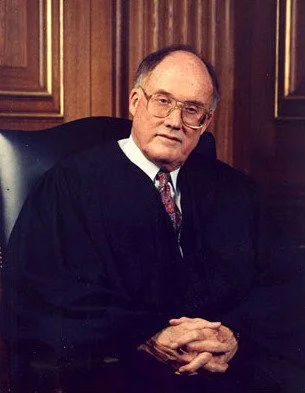
Rehnquist
Souter
White
Marshall
O’Connor
-
Writing for the Court, Justice Antonin Scalia held that a police chase or show of authority doesn’t constitute a seizure under the Fourth Amendment unless the suspect submits or physical force is applied. Scalia framed the sole issue as whether Hodari had been seized at the moment he dropped the drugs while fleeing from an approaching officer. Looking to the common law of arrest, which Scalia identified as the “quintessential ‘seizure of the person,’” he established that a constitutional seizure requires “either the application of physical force, however slight, or, where that is absent, submission to an officer’s ‘show of authority’ to restrain the subject’s liberty.” While common law recognized that physical touching could constitute an arrest even if the suspect subsequently broke away, Scalia asserted that an uncomplied-with order to freeze, such as an officer shouting at a fleeing individual to stop, cannot sustain a seizure. Responding to Hodari’s reliance on United States v. Mendenhall (1980), Scalia clarified the proper application of the rule that a person is seized if a reasonable person would believe they are not free to leave. Scalia stated that Mendenhall sets forth a “necessary, but not a sufficient, condition for seizure . . . effected through a ‘show of authority.’” He explained that while an officer’s conduct must convey to a reasonable person that they are not free to leave, a seizure doesn’t occur until the individual actually yields to that show of authority.
Applying this framework to the facts, Scalia found that Hodari was untouched by Officer Pertoso when he threw away the crack cocaine. Scalia explained that even assuming arguendo that the officer’s head-on pursuit constituted a show of authority, Hodari failed to comply and was therefore not seized within the meaning of the Fourth Amendment until he was tackled. As a result, Scalia held that the discarded cocaine was abandoned property lawfully recovered by police rather than the fruit of an illegal detention, and the officer’s observation of the abandoned drugs supplied the requisite reasonable suspicion for the physical tackle that followed.