Brown v. Texas
Case Overview
CITATION
ARGUED ON
DECIDED ON
DECIDED BY
443 U.S. 47
Feb. 21, 1979
Jun. 25, 1979
Legal Issue
Does Texas’ statute making it illegal for a person to refuse identifying themselves to a police officer violate the Fourth Amendment’s protection from unreasonable search or seizure?
Holding
Yes, Texas’ statute is unconstitutional. The Fourth Amendment requires that any seizure of a person, including brief detentions, be based on specific, objective facts indicating criminal activity.
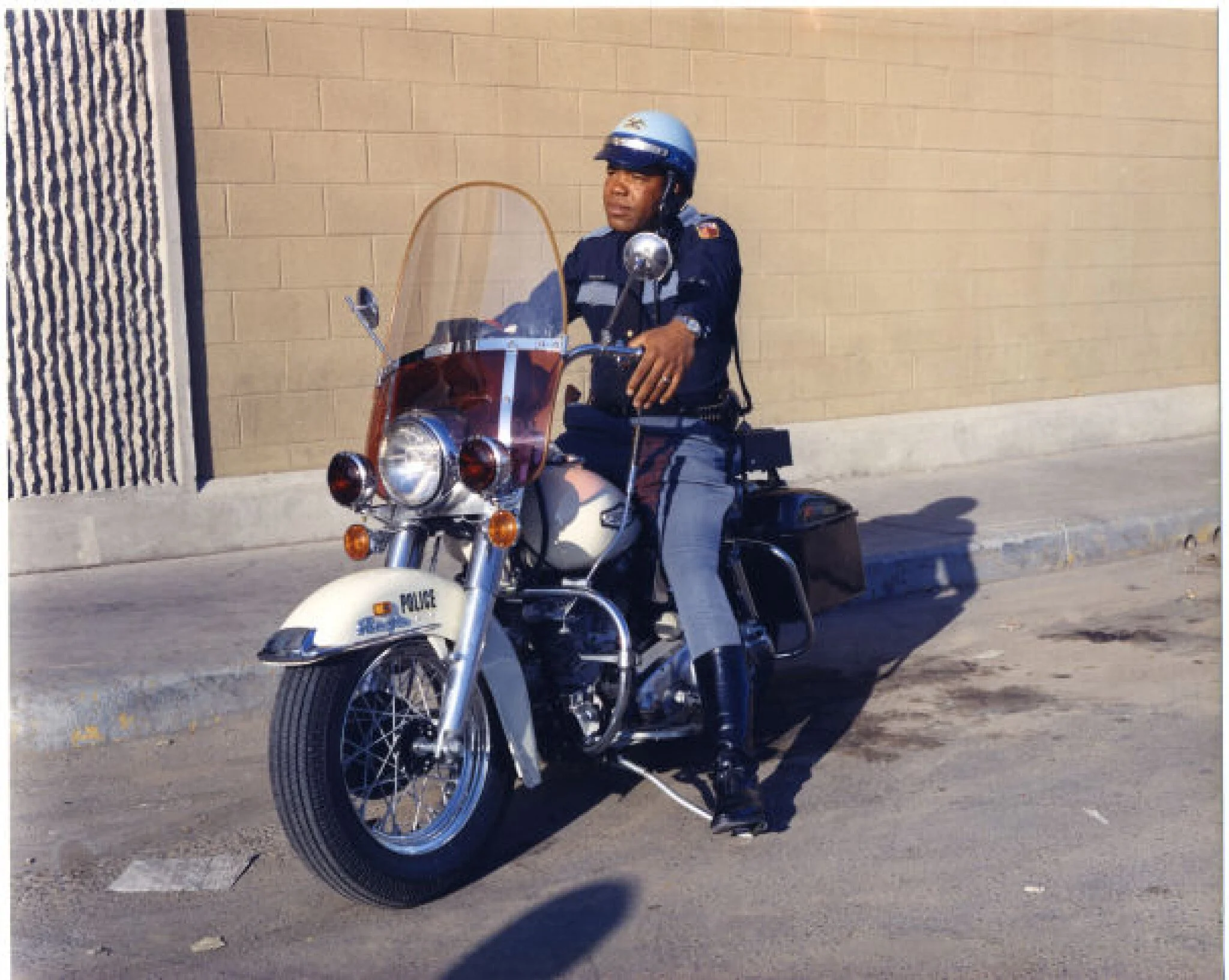
El Paso Police Department Officer photographed in 1975 | Credit: El Paso Museum of History
Background
On the afternoon of December 9, 1977, officers Venegas and Sotelo of the El Paso Police Department observed Zachary Brown and another man walking away from each other in an alley. Officer Venegas testified that both officers believed the two had been together or were about to meet until the patrol car appeared. Officer Venegas asked Brown to identify himself and explain what he was doing there, but the other man was not questioned or detained. Venegas testified that he stopped Brown because the situation “looked suspicious and we had never seen that subject in that area before.” The area of El Paso where appellant was stopped has a high incidence of drug traffic, but neither officer claimed to suspect Brown of any specific misconduct, nor did they believe he was armed.
Brown refused to identify himself and told the officers that they had no right to stop him. Venegas told Brown that he was in a “high drug problem area,” and Sotelo frisked him to no avail. When Brown continued to refuse to identify himself, he was arrested under Texas Penal Code Ann. Tit. 8. § 38.02(a) (1974), which makes it a criminal act for a person to refuse to give his name and address to an officer “who has lawfully stopped him and requested the information.” When Brown was search after being arrested, the officers found nothing. Brown identified himself on the way to jail, but he was ultimately charged, booked, and searched a third time.
Brown was convicted in the El Paso Municipal Court and fined $20 plus court costs. Brown subsequently sought a trial de novo in the El Paso County Court, where he moved to set aside the verdict on the grounds that § 38.02(a) violated the First, Fourth, and Fifth Amendments and was unconstitutionally vague in violation of the Fourteenth Amendment, but his motion was denied. Brown then waived a jury trial, and the court convicted him and imposed a fine of $45 plus court costs.
Unanimous decision for Brown
Brown
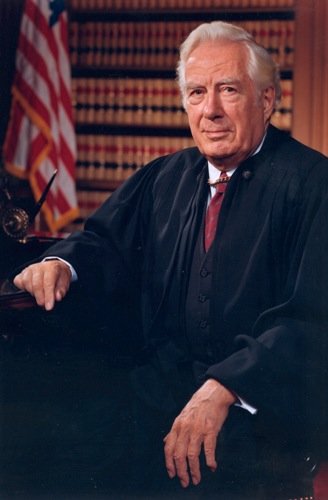


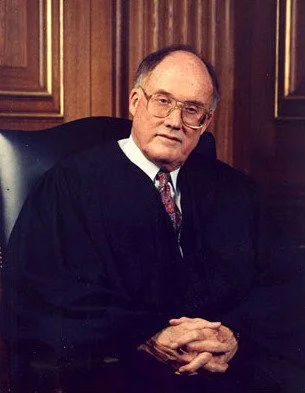


Texas
Powell
Stevens
Rehnquist
Marshall
White
Stewart
Burger
Brennan
Blackmun
-
Writing for the Court, Justice William Brennan reaffirmed the Court’s previous holdings that, in some circumstances, police officers may briefly detain suspects for questioning without probable cause. However, as held in Delaware v. Prouse (1978), the Court “require[s] the officers to have a reasonable suspicion, based on objective facts, that the individual is involved in criminal activity.”
Here, Brennan found that “none of the circumstances preceding the officers’ detention of [Brown] justified a reasonable suspicion that he was involved in criminal conduct.” He noted that Venegas testified at trial that Brown looked suspicious, but he couldn’t provide any facts to support that conclusion.
Brennan added that the neighborhoods reputation for being frequented by drug users was, at least alone, not sufficient to prove that Brown was engaged in criminal conduct. He noted Venegas’ acknowledgement that the only reason he stopped Brown was to ascertain his identity and that Brown’s activity was no different than that of other pedestrians in the neighborhood. Brennan wrote that the “understandable desire to assert a police presence… does not negate Fourth Amendment guarantees.”
Brennan acknowledged the “weighty social objective” of crime prevention, but he asserted that “[i]n the absence of any basis for suspecting…misconduct, the balance between the public interest and [the] right to personal security and privacy tilts in favor of freedom from police interference.” He added that “even assuming that purpose is served to some degree by stopping and demanding identification from an individual without any specific basis for believing he is involved in criminal activity, the guarantees of the Fourth Amendment do not allow it. When such a stop is not based on objective criteria, the risk of arbitrary and abusive police practices exceeds tolerable limits.”
Ultimately, Brennan concluded that “[t]he application of Texas Penal Code Ann. Tit. 8, $ 38.02 (1974), to detain appellant and require him to identify himself violated the Fourth Amendment because the officers lacked any reasonable suspicion to believe appellant was engaged or had engaged in criminal conduct. Accordingly, appellant may not be punished for refusing to identify himself, and the conviction is reversed.”