Delaware v. Prouse
Case Overview
CITATION
ARGUED ON
DECIDED ON
DECIDED BY
440 U.S. 648
Jan. 17, 1979
Mar. 27, 1979
Legal Issue
Does a police officer violate the Fourth Amendment when they stop a vehicle and detain the driver only to check their driver’s license and registration and not based on any articulable and reasonable suspicion?
Holding
Yes, a suspicionless stop of a vehicle and detention of the driver in order to check the driver’s license and registration are unreasonable under the Fourth Amendment.
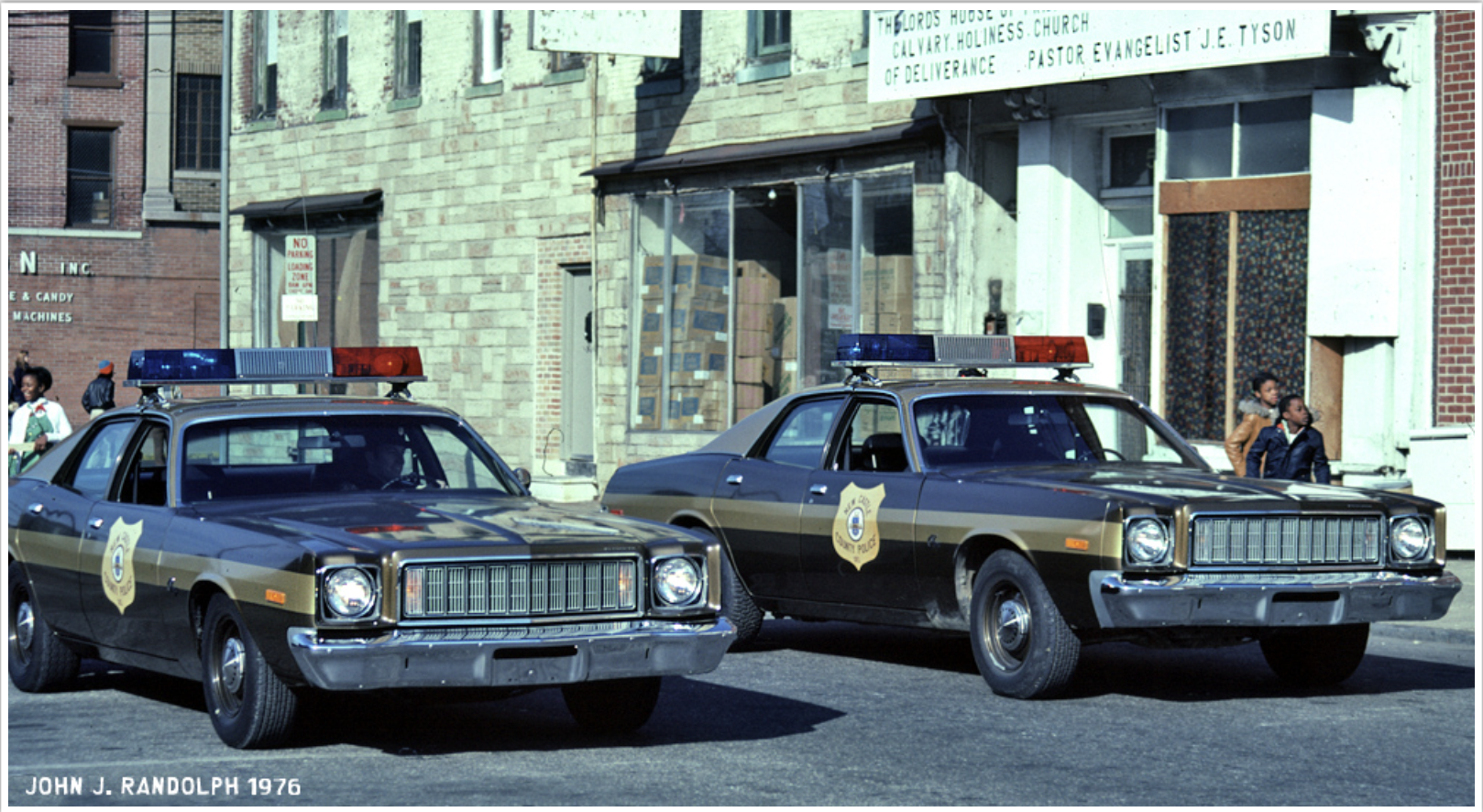
New Castle County police cruisers photographed in 1976 | Credit: John Randolf/Fotki
Background
On November 30, 1976, a New Castle County, Delaware, patrolman stopped William Prouse’s vehicle. As the patrolman approached the vehicle, he smelled “marihuana” smoke and he seized what was in plain view on the car floor. Prouse was arrested and subsequently indicted for illegal possession of a controlled substance.
At a hearing on Prouse’s motion to suppress the drugs seized during the stop, the patrolman testified that he made the stop only to check the driver’s license and registration of the driver and not for any observed traffic or equipment violations, nor any suspicious activity. The patrolman stated that the stop was “routine,” explaining that he “saw the car in the area and wasn’t answering any complaints, so I decided to pull them off.” The trial court granted the motion to suppress, finding the stop and detention to have been violative of the Fourth Amendment. On appeal, the Delaware Supreme Court affirmed, and the U.S. Supreme Court subsequently granted certiorari.
8 - 1 decision for Prouse
Delaware
Prouse
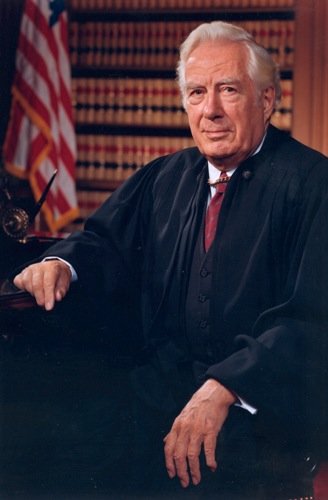


Marshall
Stewart
Brennan


Powell
Stevens
Rehnquist
White
Burger
Blackmun

-
Writing for the Court, Justice Byron White explained that constitutional issues are implicated in this case because stopping a vehicle and detaining its occupants constitute a seizure within the meaning of the Fourth and Fourteenth Amendments, even if the purpose of the stop is limited and the detention is brief. White emphasized that the Fourth Amendment demands “reasonableness” in the exercise of discretion by public officials, writing “the permissibility of a particular law enforcement practice is judged by balancing its intrusion on the individual’s Fourth Amendment interests against its promotion of legitimate governmental interests.” He asserted that at a minimum, an objective standard should be used.
Addressing the issue of investigatory stops, White recalled that in United States v. Brignoni-Ponce (1975), the Court previously found that random stops by roving patrols of Border Patrol agents to search for smuggled illegal aliens was unconstitutional, but noted that the Court didn’t invalidate all warrantless vehicle stops based on a standard less than probable cause. There, the Court held that “a requirement of reasonable suspicion for stops allows the Government adequate means of guarding the public interest and also protects residents of the border areas from indiscriminate official interference.” White added that the Court “cannot agree that stopping or detaining a vehicle on an ordinary city street is less intrusive than a roving-patrol stop on a major highway and that it bears greater resemblance to a permissible stop and secondary detention at a checkpoint near the border.”
While White agreed that States have a “vital interest” in ensuring that vehicle safety standards are being followed and only qualified drivers are operating vehicles, he pointed out that there are numerous alternatives to achieve those goals. These include driver’s licenses, registration, and vehicle inspections, which White described as “essential elements in a highway safety program.” Regarding whether the government’s interest in road safety justified the intrusion upon the Fourth Amendment right, White found that “[g]iven the alternative mechanisms available, both those in use and those that might be adopted, we are unconvinced that the incremental contribution to highway safety of the random spot check justifies the practice under the Fourth Amendment.” He added that “[a]n individual operating or traveling in an automobile does not lose all reasonable expectation of privacy simply because the automobile and its use are subject to government regulation.” White explained that the contribution to highway safety made by discretionary stops of all drivers is “marginal at best” and “does not appear sufficiently productive to qualify as a reasonable law enforcement practice under the Fourth Amendment.”
White argued that requiring an objective standard of law enforcement was essential, writing that “[t]o insist neither upon an appropriate factual basis for suspicion directed at a particular automobile nor upon some other substantial and objective standard or rule to govern the exercise of discretion ‘would invite intrusions upon constitutionally guaranteed rights based on nothing more substantial than inarticulate hunches.’” He asserted that “[t]his kind of standardless and unconstrained discretion is the evil the Court has discerned when in previous cases it has insisted that the discretion of the official in the field be circumscribed, at least to some extent.” White concluded, affirming the judgment of the Delaware Supreme Court and holding that “persons in automobiles on public roadways may not for that reason alone have their travel and privacy interfered with at the unbridled discretion of police officers.”
-
In his brief concurrence, Justice Harry Blackmun noted that the Court’s ruling protects less intrusive spot checks that don’t involve “the unconstrained exercise of discretion” and added that he “assume[s] that the Court’s reservation also includes other not purely random stops…that equate with, but are less intrusive than, a 100% roadblock stop.” Blackmun concluded that “[w]ith this understanding, I join the Court’s opinion and its judgment.”
-
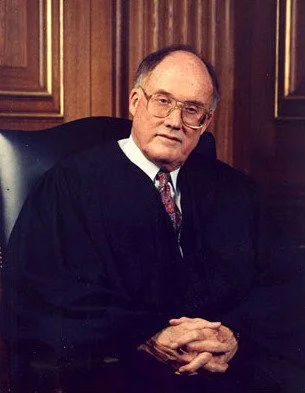
In his dissenting opinion, Justice William Rehnquist