Payton v. New York
Home | All Cases | Criminal Procedure | Payton v. New York
Case Overview
CITATION
ARGUED ON
REARGUED ON
DECIDED ON
DECIDED BY
445 U.S. 573
Mar. 26, 1979
Oct. 9, 1979
Apr. 15, 1980
Legal Issue
Does the Fourth Amendment prohibit police officers from making a warrantless and nonconsensual entry into a suspect’s home to make a routine felony arrest?
Holding
Yes, because the Fourth Amendment protects the sanctity of the home, law enforcement officers enter a suspect’s home to make a routine felony arrest without a warrant unless they have consent to enter or exigent circumstances exist.
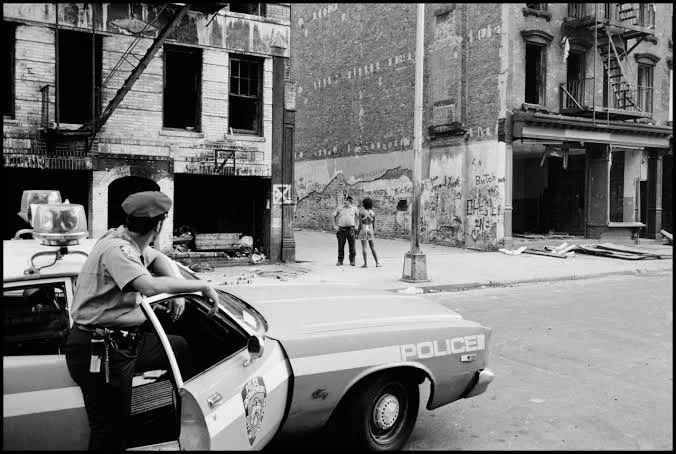
NYPD officer photographed in the 1970s as part of Leonard Freed’s Police Work | Credit: Leonard Freed/Magnum Photos
Background
On January 15, 1970, six detectives from the New York City Police Department went to the Bronx apartment of Theodore Payton to arrest him for the murder of a gas station manager three days prior. While the detectives had probable cause, they didn’t obtain an arrest warrant. The officers arrived around 7:30 a.m. and heard light and music coming from inside, but they received no response to their knocks. After waiting about thirty minutes, they called emergency assistance and used crowbars to break open the metal door. Payton wasn’t home, but the detectives spotted a .30-caliber shell casing in plain view and seized it. Payton eventually surrendered to the police and was indicted for murder.
On March 14, 1974, detectives from the New York City Police Department went to a Queens house to arrest Obie Riddick for two armed robberies committed in 1971. While the victims identified Riddick in June of 1973 and the police had known his address since January, they didn’t seek an arrest warrant. Around noon, a detective and three other officers knocked on the door, which was opened by Riddick’s three-year-old son. The officers saw Riddick sitting in bed covered by a sheet, so they entered the house without consent, placed him under arrest, and searched a chest of drawers near his bed, uncovering a weapon, narcotics, and drug paraphernalia. As a result, Riddick was indicted on narcotics charges.
In separate New York state trial courts, both Payton and Riddick moved to suppress the evidence seized during their warrantless arrests. In Payton’s case, the trial court denied the motion, holding that New York’s Code of Criminal Procedure authorized the warrantless entry and that the shell casing was properly seized in plain view. Payton was subsequently convicted of felony murder affirmed on appeal. In Riddick’s case, the trial court also denied the motion to suppress, finding that the warrantless entry was authorized by state law and the search valid as incident to arrest. The appellate court affirmed the denial of his motion, and Riddick was convicted. The New York Court of Appeals consolidated the appeals and affirmed both convictions in a single opinion, and the U.S. Supreme Court subsequently granted certiorari.
6 - 3 decision for Payton
Payton


New York
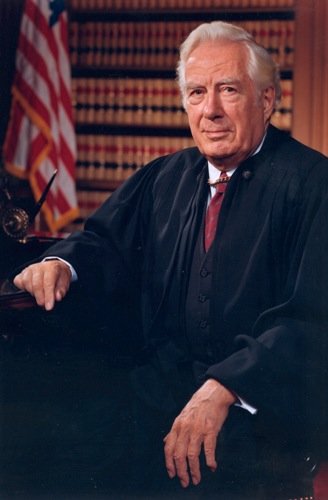

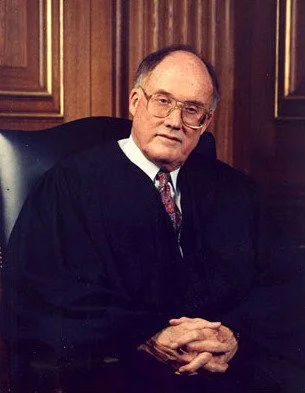
Powell
Stevens
Rehnquist
Marshall
White
Stewart
Burger
Brennan
Blackmun
-
Writing for the Court, Justice John Paul Stevens held that the Fourth Amendment prohibits the police from making a warrantless and nonconsensual entry into a suspect’s home in order to make a routine felony arrest. Stevens asserted that the “physical entry of the home is the chief evil against which the wording of the Fourth Amendment is directed.” He explained that while a warrantless arrest in a public place is historically and constitutionally permissible, an arrest inside the home involves not only the invasion attendant to all arrests but also a substantial invasion of the sanctity of the home. Stevens emphasized that the Fourth Amendment has drawn a “firm line at the entrance to the house” and, absent exigent circumstances, “that threshold may not reasonably be crossed without a warrant.”
Stevens rejected the argument that the common-law rules permitting public arrests should extend to warrantless home entries, noting that the historical authority on home arrests was deeply divided and lacked any clear “congressional determination” of reasonableness. To protect the sanctity of the home, Stevens found that an arrest warrant founded on probable cause “implicitly carries with it the limited authority to enter a dwelling in which the suspect lives when there is reason to believe the suspect is within.” He explained that while an arrest warrant may provide less protection than a search warrant, the neutral probable cause determination of a magistrate is a sufficient safeguard between a potentially zealous officer and the citizen.
Turning to the circumstances of Payton and Riddick’s cases, Stevens determined that the police overstepped in both. In Payton’s case, New York detectives had probable cause to believe he committed a murder, but they went to his apartment without a warrant and used crowbars to break down his door, and seizing a .30-caliber shell casing in plain view. In Riddick’s case, detectives arrested him for armed robbery after his young son opened the door, entering before Riddick had an opportunity “either to object or to consent.” Ultimately, Stevens found that both cases involved routine felony arrests where officers had ample time to secure a warrant, meaning that the warrantless, nonconsensual entries were unconstitutional.