NYC Transit Authority v. Beazer
Case Overview
CITATION
ARGUED ON
DECIDED ON
DECIDED BY
440 U.S. 568
Dec. 6, 1978
Mar. 21, 1979
Legal Issue
Does a State’s refusal to hire people who use methadone violate the Equal Protection Clause of the Fourteenth Amendment by creating an impermissible bias against a special class?
Holding
No, the hiring restriction was a matter of policy that didn’t implicate the Equal Protection Clause.

NYC subway train photographed in the 1970s | Credit: Alan McWeeny/Daily Mail
Background
Methadone, a long-acting and synthetic opioid, has been utilized as an effective cure for the physical aspects of heroin addiction. The majority of patients who receive treatment for more than a year are free from illicit drug use, but a significant portion are not. In New York City, approximately 40,000 people receive methadone treatment. Approximately 26,000 individuals participate in five major public or semipublic programs, and approximately 14,000 are involved in about 25 private programs.
The New York City Transit Authority (TA) refused to employ people who use methadone, regardless of whether they’re enrolled in a treatment program. A group of applicants and former employees who were denied employment or fired as a result of methadone use, including Carla Beazer, challenged the TA’s policy under the Equal Protection Clause in the U.S. District Court for the Southern District of New York. On appeal, the district court’s holding was affirmed by the U.S. Court of Appeals for the Second Circuit. The Supreme Court the granted certiorari.
6 - 3 decision for NYC Transit Authority
NYC Transit Authority
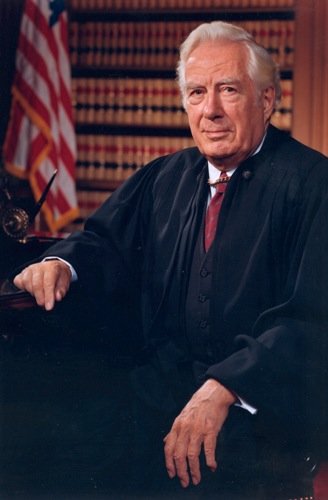

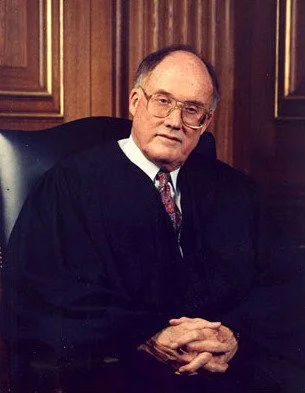


Beazer


Stewart
Rehnquist
Burger
White
Powell
Marshall
Stevens
Brennan
Blackmun
-
Writing for the Court, Justice John Paul Stevens began by stating that since the TA’s rule places a meaningful restriction on all of its employees and applicants, it’s a rule of general applicability and therefore satisfies the principle of equal protection “without further inquiry.” However, since the District Court interpreted the requirement as applicable to the limited class of those regularly using narcotic drugs, the Court must address whether it “reflects an impermissible bias against a special class.”
Responding to the argument that methadone users are entitled to be treated like most other applicants rather than users of narcotics, Stevens argued that the District Court’s findings unequivocally establish relevant differences between those who regularly use methadone and those who don’t use narcotics of any kind. While some on methadone as a part of a treatment program succeed, Stevens noted that “a substantial percentage” won’t successfully complete the program.
The District Court held that it would permit the TA to create a special rule denying employment to methadone users unless they had been undergoing treatment for at least a year (except for dangerous jobs). Stevens argued that the creation of “any special rule short of total exclusion” is likely to be more costly and less precise than the TA’s current rule. He explained that “[i]f eligibility is marked at any intermediate point … the classification will inevitably discriminate between employees or applicants equally or almost equally apt to achieve full recovery.”
Stevens defended the TA’s current rule as “supported by the legitimate inference that as long as a treatment program (or other drug use) continues, a degree of uncertainty persists.” Thus, a rule postponing eligibility until treatment is completed is rational. He noted, “[i]t is neither unprincipled nor invidious in the sense that it implies disrespect for the excluded subclass.”
In response to the District Court’s holding that TA’s rule was broader than necessary to exclude methadone users who aren’t actually qualified, Stevens agreed, noting that it’s “probably unwise” for a large employer to rely on a general rule rather than individualized consideration of each applicant. However, he asserted that “these assumptions concern matters of personnel policy that do not implicate the principle safeguarded by the Equal Protection Clause.”
On the constitutionality of the TA’s rule, Stevens found that “[b]ecause it does not circumscribe a class of persons characterized by some unpopular trait or affiliation, it does not create or reflect any special likelihood of bias on the part of the ruling majority. Under these circumstances, it is of no constitutional significance that the degree of rationality is not as great with respect to certain ill-defined subparts of the classification as it is with respect to the classification as a whole.” He concluded, “[n]o matter how unwise it may be for TA to refuse employment to individual car cleaners, track repairmen, or bus drivers simply because they are receiving methadone treatment, the Constitution does not authorize a federal court to interfere in that policy decision.”