National Federation of Independent
Business v. Sebelius
Case Overview
CITATION
ARGUED ON
DECIDED ON
DECIDED BY
567 U.S. 519
Mar. 26-28, 2012
Jun. 28, 2012
Legal Issue
Can the individual mandate be challenged in light of the Tax Anti-Injunction Act’s prohibition of cases that would obstruct the collection of taxes?
Does Congress have the authority to enact an individual mandate that imposes a penalty for not obtaining minimum essential health care coverage?
Does Congress have the authority to withhold all Medicaid funding from states who don’t enact additional requirements to expand the program?
Holding
Yes, the statutory language uses “penalty” to describe the individual mandate, so it is not a tax for the purposes of the Tax Anti-Injunction Act.
Yes, Congress has the authority under the Taxing and Spending Clause to enact the individual mandate.
No, Congress cannot coerce states to expand Medicaid by threatening to withhold all federal funding.
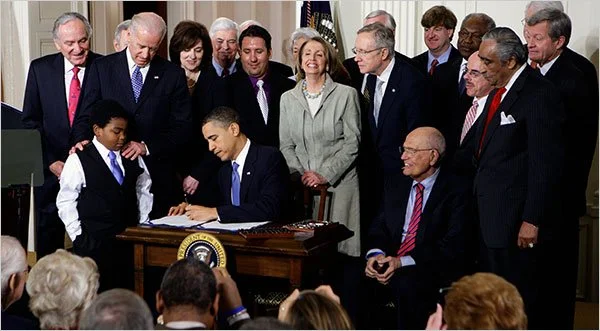
President Obama signing Obamacare into law | Credit: Doug Mills/The New York Times
Background
In March 2010, President Barack Obama signed the Patient Protection and Affordable Care Act into law. Among its over 900 provisions are the individual mandate and Medicaid expansion. The individual mandate required most Americans to maintain “minimum essential” health insurance coverage, and beginning in 2014, those who don’t comply must make a shared responsibility payment (§5000A) to the federal government. That “penalty”, as the Act describes it, is calculated as a percentage of household income, paid to the IRS with an individual’s taxes, and “shall be assessed and collected in the same manner” as tax penalties. The Medicaid expansion expands the scope of the Medicaid program and increases the number of individuals the States must cover, and if a State doesn’t comply with the new coverage requirements, it’s subject to losing all federal Medicaid funds, not just those for the new requirements.
After the law was enacted, 26 states and a number of organizations filed lawsuits against it, primarily arguing that the penalty for the individual mandate was an unconstitutional exercise of the Commerce Clause and that the threat to withdraw funds for not adopting the Medicaid expansion requirements was unconstitutionally coercive. Florida Attorney General Pam Bondi sued U.S. Department of Health and Human Services in the District Court for the Northern District of Florida, which held the individual mandate unconstitutional and struck down the entire law, finding that provision wasn’t severable. On appeal to the Eleventh Circuit Court of Appeals, a three-judge panel ruled 2–1 to affirm the District Court’s decision, but reversed regarding its severability, thus reinstating the rest of the law. Rather than seek en banc review, the government appealed to the Supreme Court. The Supreme Court granted certiorari and consolidated Florida’s lawsuit, the government’s appeal from that lawsuit, and another from the National Federation of Independent Business against Kathleen Sebelius, the Secretary of Health and Human Services.
Unanimous decision for the NFIB regarding the application of the Tax Anti-Injunction Act.
NFIB

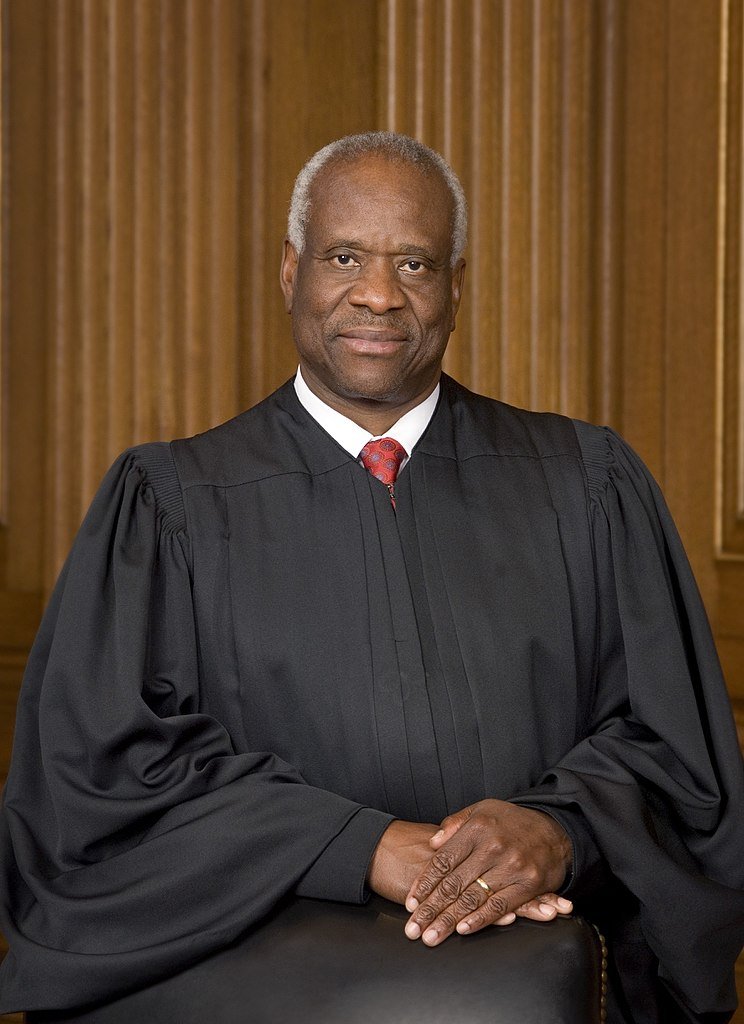



Sebelius
Scalia
Ginsburg
Roberts
Thomas
Alito
Kennedy
Kagan
Sotomayor
Breyer
5 - 4 decision for the NFIB regarding the use of the Commerce Clause to impose an individual mandate.
NFIB
Sebelius
Scalia
Ginsburg
Roberts
Thomas
Alito
Kennedy
Kagan
Sotomayor
Breyer
5 - 4 decision for Sebelius regarding the use of the Taxing and Spending Clause to impose an individual mandate.
NFIB
Scalia
Ginsburg
Thomas
Kennedy
Roberts
Alito
Sebelius
Kagan
Sotomayor
Breyer
7 - 2 decision for the NFIB regarding the Medicaid expansion’s threat to withdraw all federal funding.
NFIB
Sebelius
Scalia
Ginsburg
Roberts
Thomas
Alito
Kennedy
Kagan
Sotomayor
Breyer
5 - 4 decision for Sebelius regarding the severability of the Medicaid expansion’s threat to withdraw all federal funding.
NFIB
Scalia
Ginsburg
Thomas
Kennedy
Roberts
Alito
Sebelius
Kagan
Sotomayor
Breyer
-
Writing for the Court, Chief Justice John Roberts presided over a splintered opinion covering three primary issues. On the first issue, the ability for the Court to even hear the case, Roberts explained that since Congress chose to describe the shared responsibility payment as a “penalty” instead of a “tax”, “[t]here is no immediate reason to think that a statute applying to ‘any tax’ would apply to a “penalty.” Therefore, the Court was permitted to proceed to the merits of the case.
On the constitutionality of the individual mandate, Roberts first stated that the individual mandate couldn’t be justified under the Commerce Clause because the power to regulate commerce “presupposes the existence of commercial activity to be regulated.” He explained, “[c]onstruing the Commerce Clause to permit Congress to regulate individuals precisely because they are doing nothing would open a new and potentially vast domain to congressional authority.” Such an authority would allow the government to “justify a mandatory purchase to solve almost any problem”, which Roberts argued is a slippery slope. Further, Roberts found that the Necessary and Proper Clause couldn’t justify the mandate, writing that the Court’s precedent upholding laws under the Clause “involved exercises of authority derivative of, and in service to, a granted power. The individual mandate, by contrast, vests Congress with the extraordinary ability to create the necessary predicate to the exercise of an enumerated power.”
Roberts then addressed whether the individual mandate could be upheld under the Taxing and Spending Clause, finding that it could. Roberts first established that the Court’s task isn’t to determine if the individual mandate is most naturally interpreted as a tax, only whether its a “fairly possible” one. Roberts explained that the individual mandate looks like a tax in “many respects”, but most importantly that the process it implements “yields the essential feature of any tax: it produces at least some revenue for the Government.” He also explained that taxes that seek to influence conduct are not new to the country, and pointed to some of the earliest federal taxes that were enacted to deter the purchase of imported goods. Roberts addressed the contradiction between this finding and the Court’s finding on the Tax Anti-Injunction Act, stating that the “penalty” label is fatal to the application of the Act because it’s “up to Congress whether to apply the Anti-Injunction Act to any particular statute, so it makes sense to be guided by Congress’s choice of label on that question.” Roberts concluded his discussion of the individual mandate, writing “[t]he Federal Government does not have the power to order people to buy health insurance… The Federal Government does have the power to impose a tax on those without health insurance.”
Moving on to Congress attempt to expand Medicaid by threatening to withhold all Medicaid funding from states who didn’t comply with new requirements, Roberts found that Congress had overstepped their constitutional authority. Roberts argued that allowing the federal government to force the implementation of federal programs would threaten political accountability key to our federal system, since state officials would face public opinion for carrying out plans created by federal officials. Roberts explained that Spending Clause programs are permitted when they offer a State a legitimate choice to accept the conditions and funding, because state officials can be properly held accountable for the decision to accept. However, Roberts wrote that when the conditions imposed are more akin to threats to terminate other independent grants, they can be properly viewed as “a means of pressuring the States to accept policy changes.” He found that in this case, Congress’ threats were a “gun to the head.” Roberts rejected the government’s argument that they were merely tweaking a program the States had already agreed to rather than forcing them to accept a radically different version of it. He explained that the Medicaid expansion is a shift in “kind, not merely degree” and that under the new law, Medicaid “is no longer a program to care for the neediest among us, but rather an element of a comprehensive national plan to provide universal health insurance coverage.”
Roberts concluded that the Affordable Care Act was both constitutional and unconstitutional in part, but emphasized the Court’s deference to the legislative branch on matters of policy. Thus, the portions of the Act found unconstitutional were deemed severable, and the rest was upheld.
-
In her dissenting opinion, Justice Ruth Bader Ginsburg strongly dissented from the Court’s conclusion that the individual mandate exceeded Congress’ authority under Commerce Clause authority, characterizing the Chief Justice Roberts’ reading of the Clause as “stunningly retrogressive” and contrary to how the Court has recognized Congress’ authority since 1937. Ginsburg argued that the health care market is uniquely expansive and inevitable, as virtually everyone will eventually require medical care at an unpredictable time in their lives. Ginsburg also pointed out that because federal and state laws require hospitals to provide emergency care regardless of a patient’s ability to pay, the uninsured inevitably shift billions of dollars in uncompensated care costs onto health-care providers, which eventually result in higher premiums. Therefore, Ginsburg argued that the decision to not obtain insurance is an economic act that substantially affects interstate commerce. Ginsburg also found that the individual mandate was easily sustained under the Necessary and Proper Clause, since Congress enacted the mandate as an essential component to ensure the survival of the Affordable Care Act’s guaranteed-issue and community-rating provisions. She explained that these provisions prohibited insurers from denying coverage or charging higher premiums based on preexisting conditions, so those reforms couldn’t survive without the mandate to bring healthy individuals into the insurance pool. While Ginsburg concurred with the ultimate judgment upholding the mandate under Congress’ taxing power, she found the effort to hem in the commerce power “puzzling”.
Ginsburg also strongly dissented from the Court’s holding that the Medicaid expansion was unconstitutionally coercive under the Spending Clause, rejecting the premise that the expansion constituted a brand-new program and instead viewing it as a permissible amendment to a single, ongoing program aimed at providing basic health care to the needy. Ginsburg argued that since Congress had expressly reserved the right to alter or amend the Medicaid program upon its creation, the States had notice of potential changes. Ginsburg noted that the Constitution doesn’t entitle the States to federal funds, so Congress has the power to attach new conditions to the continued receipt of federal funds. Ginsburg concluded, warning that the majority’s definition of coercion and likening it to a “gun to the head” would prove unworkable for courts to measure and ultimately hinder Congress’ ability to work with the States in administering federal spending programs.