Hiibel v. Sixth Judicial Court of Nevada
Home | All Cases | Criminal Procedure | Hiibel v. Sixth Judicial Court of Nevada
Case Overview
CITATION
ARGUED ON
DECIDED ON
DECIDED BY
542 U.S. 177
Mar. 22, 2004
Jun. 21, 2004
Legal Issue
Does the arrest of a suspect for refusing to identify themselves during a Terry stop violate the Fourth Amendment’s protection from unreasonable search or seizure or the Fifth Amendment’s protection from self-incrimination?
Holding
No, the arrest didn’t violate the Fourth Amendment because the officer had reasonable suspicion and the investigation was minimally intrusive, nor did it violate the Fifth Amendment because disclosure of the suspect’s name presented no reasonable danger of incrimination.
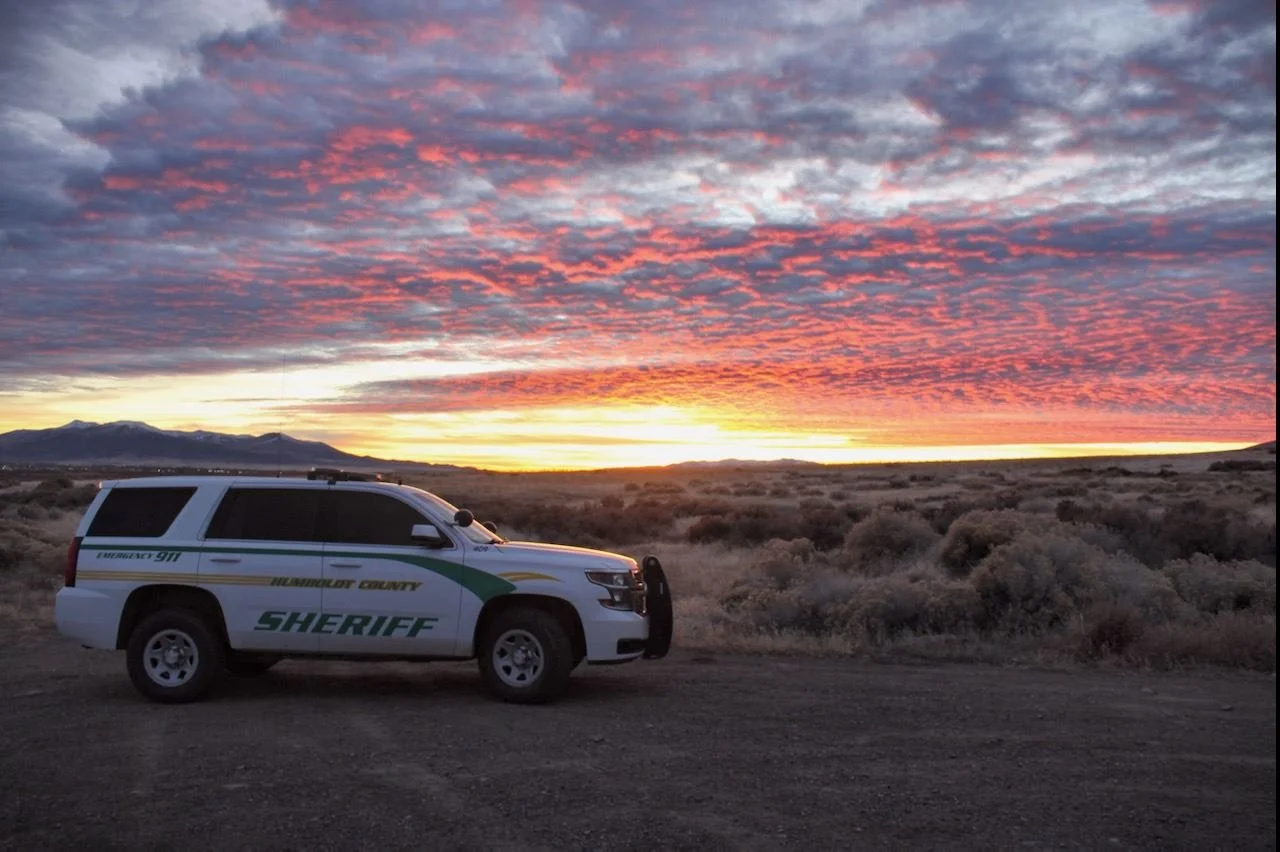
Photograph of a vehicle from the Humboldt County Sheriff’s Department | Credit: Humboldt County
Background
The Humboldt County, Nevada, Sheriff’s Department received a call reporting an assault. The caller reported seeing a man assault a woman in a red and silver GMC truck on Grass Valley Road. Deputy Sheriff Lee Dove was dispatched to investigate and found the described truck parked on the side of the road. Larry Dudley Hiibel was standing by the truck, and a young woman was sitting inside it. Dove observed skid marks in the gravel behind the vehicle, leading him to believe it had come to a sudden stop.
Dove approached Hiibel and explained that he was investigating a report of a fight. Hiibel appeared to be intoxicated and Dove asked Hiibel for his identification. Hiibel refused and asked why he wanted to see identification, to which Dove responded that he was conducting an investigation and needed to see some identification. Hiibel became agitated and insisted he had done nothing wrong. After continued refusals to comply with Dove’s request for identification, Hiibel began to taunt the officer by placing his hands behind his back and telling Dove to arrest him and take him to jail. Throughout the encounter, Dove asked for identification 11 times and Hiibel refused each time. After warning Hiibel that he would be arrested if he continued to refuse to comply, Dove arrested him for violating Nev. Rev. Stat. § 199.280 (2003), which makes it illegal to willfully resist, delay, or obstruct an officer discharging any legal duty of their office.
Hiibel was tried in the Justice Court of Union Township, where he was convicted and fined $250. The Sixth Judicial District Court affirmed, rejecting Hiibel’s Fourth and Fifth Amendment arguments. On appeal, the Supreme Court of Nevada rejected Hiibel’s Fourth Amendment challenge in a divided opinion. Hiibel petitioned for rehearing but was denied. The U.S. Supreme Court then granted certiorari.
5 - 4 decision for the Sixth Judicial District
Hiibel


Sixth Judicial District
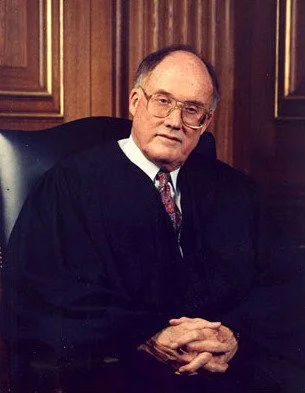


Thomas
Scalia
Kennedy
Rehnquist
Stevens
Souter
Brennan
Ginsburg
Breyer
-
Writing for the Court, Justice Anthony Kennedy rejected Hiibel’s claim that his conviction violated the Fourth and Fifth Amendments and held that a suspect can be arrested and prosecuted under a State’s law for refusing to identify themselves during a Terry stop.
Hiibel’s argument relied on the Court’s previous holdings, including Justice Byron White’s concurrence in Terry v. Ohio (1968) stating that a detainee is not required to answer questions, and subsequent dicta in Berkemer v. McCarty (1984), which noted that Terry stops maintain a nonthreatening character because suspects aren’t required to respond. Kennedy responded, finding that these statements “need not be controlling.” Kennedy distinguished these precedents from the case at hand by explaining that while the Fourth Amendment itself doesn’t require citizens to answer questions from the police, it also doesn’t prohibit states from creating such an obligation through statute. In Hiibel’s case, the duty arises under Nevada state law and is narrowly confined to disclosing one’s name.
Applying the balancing test from Delaware v. Prouse (1979), which weighs the intrusion on individual Fourth Amendment interests against legitimate government interests, Kennedy found that the Nevada statute was constitutional. He explained that compelling an individual’s identity is directly tied to the purpose, rationale, and practical needs of a Terry stop, and the availability of criminal sanctions prevents the statutory requirement from “becoming a legal nullity.” Kennedy emphasized that the statute doesn’t alter the fundamental nature of the stop by extending its duration or changing its location.
Kennedy addressed the argument that the statute circumvents Fourth Amendment probable cause protections by enabling arbitrary arrests based solely on suspicion. Kennedy underscored that existing constraints on Terry stops mitigate the risk of arbitrary police conduct. He explained that an investigative stop must be justified at its inception and reasonably related in scope to the circumstances prompting the stop, an officer cannot arrest an individual for refusing to identify themselves unless the request for identification is reasonably related to the initial basis for the detention.
Regarding Hiibel’s contention that requiring an individual to identify himself to the police violated the Fifth Amendment prohibition against self-incrimination, the Court rejected such an argument, finding that it “must fail because in this case disclosure of his name presented no reasonable danger of incrimination.”