Griswold v. Connecticut
Case Overview
CITATION
ARGUED ON
DECIDED ON
DECIDED BY
381 U.S. 479
Mar. 29-30, 1965
Jun. 7, 1965
Legal Issue
Does the Constitution grant a right of privacy that protects the use of contraceptives by married couples?
Holding
Yes, the Constitution contains many explicit rights, which themselves create other “penumbral rights”. Of these is a right to privacy, which itself has “zones of privacy”, including a married couple’s ability to use contraceptives and a physician’s ability to provide medical advice regarding them.

Estelle Griswold and Ernest Jahncke reacting to the Supreme Court’s ruling | Credit: The Granger Collection, New York
Background
In Poe v. Ullman (1961), the Supreme Court heard three combined actions from Dr. Buxton, a licensed physician who wanted to give contraceptives as medical advice, and two married couples who had experienced serious issues with childbirth. The suit challenged the constitutionality of Connecticut's state law, which prevented the use of contraceptives and a doctor’s ability to prescribe the use of these devices to patients. Writing for the Court, Justice Felix Frankfurter held that the constitutional challenge to the Connecticut statute was not ripe for judicial review. The court held that this controversy lacked the immediacy required for constitutional review, as Connecticut had no record of prosecuting people under this statute. Justice William Douglas, in his dissenting opinion, stated, “What are these people… to do? Flout the law and go to prison… we leave them no other alternatives.”
After the disappointing decision, Dr. Buxton partnered with Estelle Griswold, the director of Planned Parenthood, to test whether the majority opinion in Poe v. Ullman was correct. Together they opened up a Planned Parenthood center in New Haven, CT, on November 1, 1961, and began giving information and medical advice to married couples promoting the use of contraceptive devices. On November 10, 1961, Buxton and Griswold were arrested and convicted under the Connecticut statute at issue in Poe v. Ullman. The pair brought suit against Connecticut, challenging the constitutionality of the State’s statute under the Fourteenth Amendment.
7 - 2 decision for Griswold
Goldberg
Griswold
Stewart
Black
Douglas
Harlan II
Clark
White
Warren
Brennan

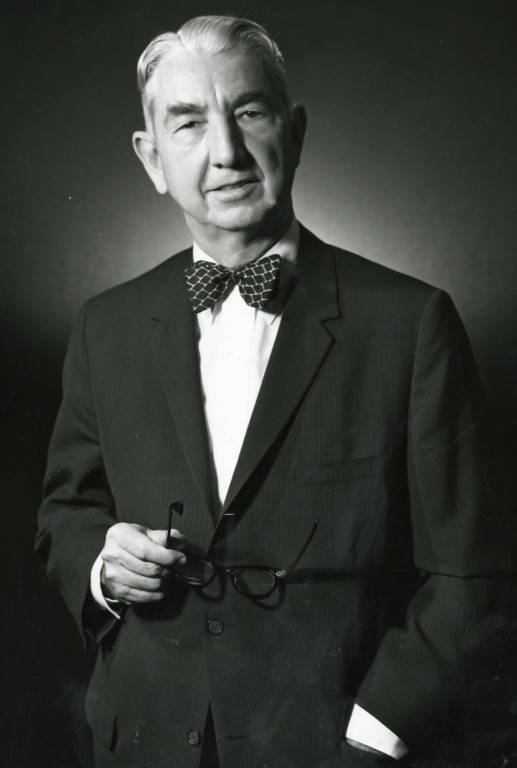

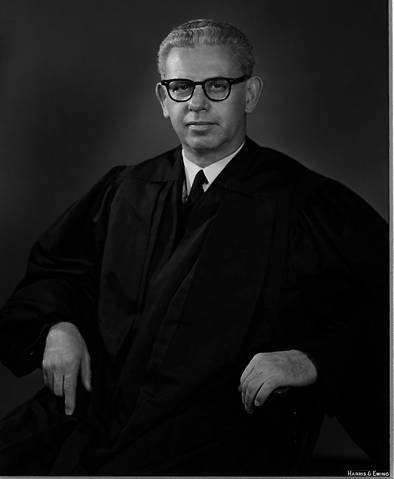


Connecticut


Opinion of the Court
Unlike in Poe v. Ullman, the Court felt that this case met the strict requirements of standing required by Article III of the Constitution. Writing for the court, Justice William Douglas held that some rights, while not expressly granted by the Bill of Rights, have been derived from the Constitution.
In Pierce v. Society of Sisters (1925), the Court held that the right to educate one’s children as one chooses is derived from the First and Fourteenth Amendments. In Meyer v. Nebraska (1923), the Court defended right to study the German language in a private school, holding that “[t]he State may not, consistently with the spirit of the First Amendment, contract the spectrum of available knowledge.” Justice Douglas famously remarked “[t]he First Amendment has a penumbra where privacy is protected from government intrusion.” [1]
Ultimately, Douglas held that a “zone of privacy” was formed by these penumbral rights “created by several other fundamental constitutional guarantees,” including the First, Third, Fourth, Ninth, and Fourteenth Amendments. This zone of privacy contains the Connecticut law since it “seeks to achieve its goals by means having a maximum destructive impact upon that relationship.” Justice Goldberg, joined by Chief Justice Warren and Justice Brennan, argued that the use of constitutional penumbras was not needed, due to the history and precedents deriving from the Ninth and Fourteenth Amendments.
[1] Penumbra refers to the outside part of a shadow where part of the light breaks through. The legal use of the word was coined by Justice Oliver Wendell Holmes, who used it to refer to implied rights derived from other constitutional guarantees. Justice Clarence Thomas is famous for having a sign in his office that reads: “Please do not emanate in the penumbras”, which is both a funny sentence and a jab at the idea of judicial activism. The sentence is telling judges to please not invent new constitutional rights from the shadows.
Dissenting Opinion by Justice Black
Justice Hugo Black, joined by Justice Potter Stewart, wrote in his dissenting opinion that he felt “constrained to add that the law is every bit as offensive to me as it is to my Brethren of the majority.” Even calling it “silly, unenforceable, and unwise.” However, he felt that the Constitution had no protection for a “right of privacy”. He wrote, “I like my privacy as well as the next one, but I am nevertheless compelled to admit that government has a right to invade it unless prohibited by some specific constitutional provision.”