Craig v. Boren
Case Overview
CITATION
ARGUED ON
DECIDED ON
DECIDED BY
429 U.S. 190
Oct. 5, 1976
Dec. 20, 1976
Legal Issue
Did Oklahoma’s law establishing different drinking ages for men and women violate the Equal Protection Clause of the Fourteenth Amendment?
Holding
Yes, the distinction violated the Equal Protection Clause of the Fourteenth Amendment.

Plaintiffs of the landmark Supreme Court case Craig v. Boren together to celebrate its 40th anniversary at Oklahoma State University | Credit: Aubrie Bowlan/O'Colly
Background
In Oklahoma, a statute was enacted prohibiting the sale of “nonintoxicating” 3.2% beer to males under the age of 21 and to females under the age of 18. In response, Mark Walker, a 20 year old freshman at Oklahoma State University, and Carolyn Whitener, the owner of a convenience store and a licensed vendor in the state, brought a lawsuit against the statute in federal court. While the case proceeded through the court, Walker turned 21, so 18 year old Curtis Craig, also a student at Oklahoma State, joined the case as the third co-plaintiff.
The district court dismissed the initial complaint, finding that the law was a reasonable exercise of the state’s power under the 21st Amendment. The decision was appealed and heard by a three-judge panel of the U.S. Court of Appeals for the Tenth Circuit, who unanimously upheld the district court’s ruling. After this setback, future Justice Ruth Bader Ginsburg reached out to the plaintiffs’ lawyer on behalf of the ACLU to offer to file an amicus curiae in their favor. The lawyer accepted, and the case was granted certiorari by the U.S. Supreme Court.
7 - 2 decision for Craig
Craig


Boren
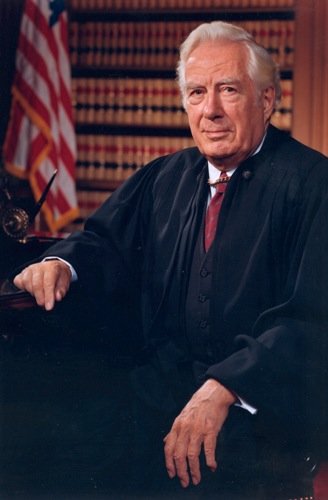

Brennan
Stewart
Marshall
Burger
Powell
Rehnquist
Stevens
Blackmun
White
-
Writing for the Court, Justice William Brennan began by accepting the underlying purpose of Oklahoma’s statute as enhancing traffic safety. While Brennan acknowledged that the protection of public health and safety is an important function of state and local governments, the evidence put forth by the State “cannot support the conclusion that the gender-based distinction closely serves to achieve that objective.”
Brennan argued that even if the State’s statistical evidence were accepted, “it nevertheless offers only a weak answer to the equal protection question presented” and noted that “prior cases have consistently rejected the use of sex as a decisionmaking factor even though the statutes in question certainly rested on far more predictive empirical relationships than this.” Brennan criticized some of the cited studies for not adequately justifying the features of Oklahoma’s law and not relating their findings to age-sex differentials. Ultimately, Brennan concluded that “the gender-based differential … constitutes a denial of the equal protection of the laws to males aged 18-20.”