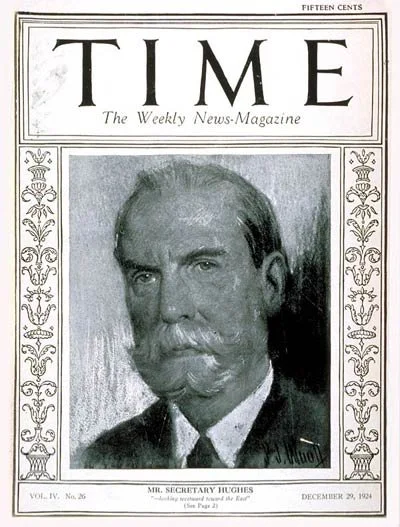
CHARLES EVANS HUGHES
Chief Justice (1930 - 1941) | Associate Justice (1910 - 1916)

QUICK FACTS
BIRTHPLACE
New York
CHIEF JUSTICE
APPOINTED BY
Herbert Hoover
PRECEDED BY
ASSOCIATE JUSTICE
APPOINTED BY
PRECEDED BY
LAW SCHOOL
Columbia
SWORN IN
February 24, 1930
SUCCEEDED BY
SWORN IN
October 10, 1910
SUCCEEDED BY
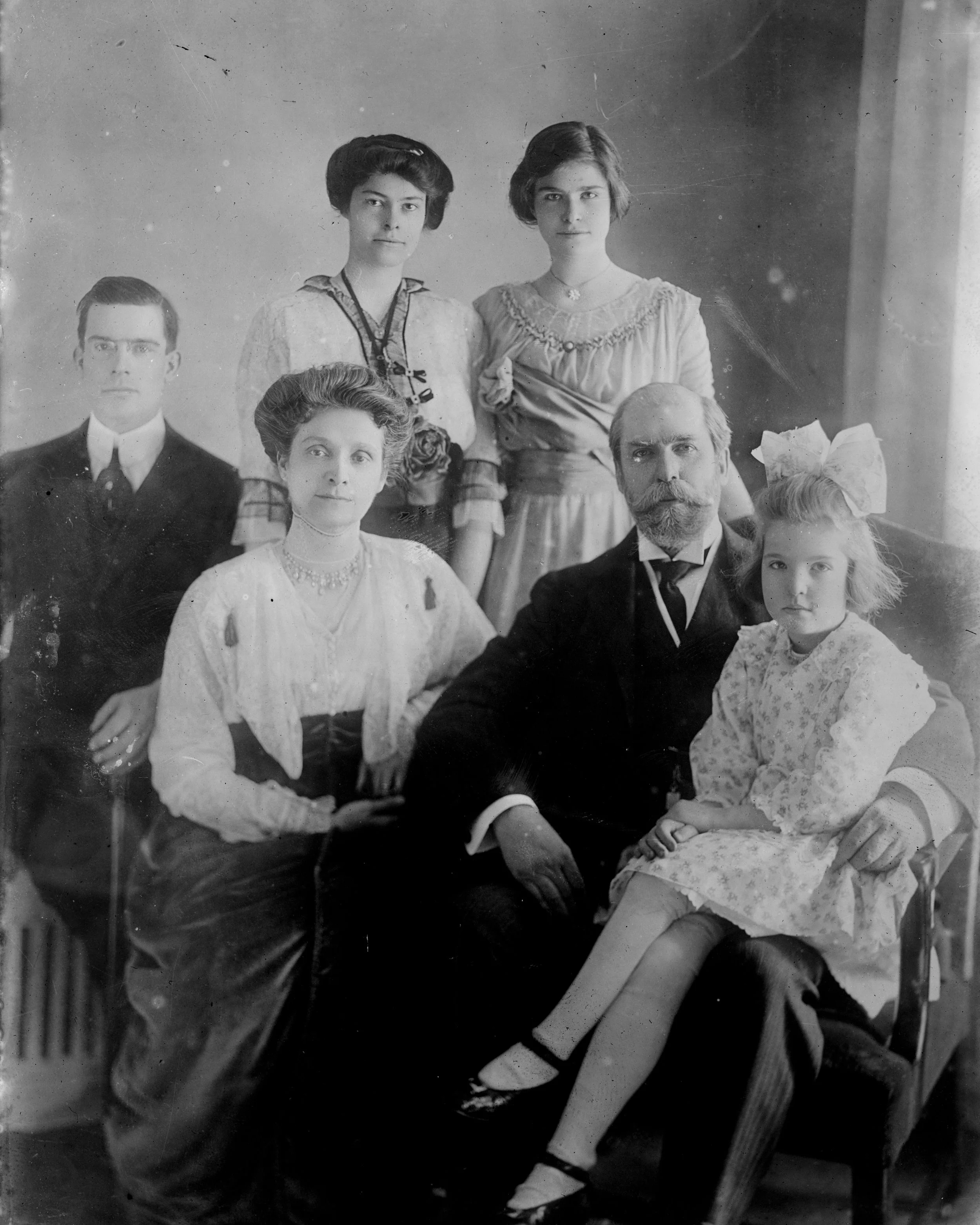
Hughes with his wife and children (1916) | Credit: Library of Congress (Public Domain)
Personal Life and Education
Charles Evans Hughes was born on April 11, 1862, in Glens Falls, New York, to David Charles Hughes and Mary Catherine Connelly Hughes. His father was a Baptist minister that had immigrated to the United States from Wales after being inspired by The Autobiography of Benjamin Franklin.
Hughes was homeschooled by his parents until he enrolled at New York City’s prestigious Public School 35 in 1874. Hughes graduated the following year and enrolled at Madison University (now Colgate University) the following year at the age of 14. Hughes eventually transferred to Brown University, where he graduated third in his class in 1881. While at Brown, he was a member of the Delta Upsilon fraternity and Phi Beta Kappa Society. He also volunteered for the successful campaign for James Garfield in the 1880 presidential election.
After graduating, Hughes taught Greek and mathematics at Delaware Academy in Delhi, New York, for a year to save money for law school. In 1882, Hughes enrolled at Columbia Law School, where he graduated with honors and was admitted to the New York bar in 1884.
On December 5, 1888, Hughes married Antoinette Carter, the daughter of a senior partner at his law firm. Together they had one son and three daughters. His youngest daughter, Elizabeth, later became the President of the Supreme Court Historical Society.
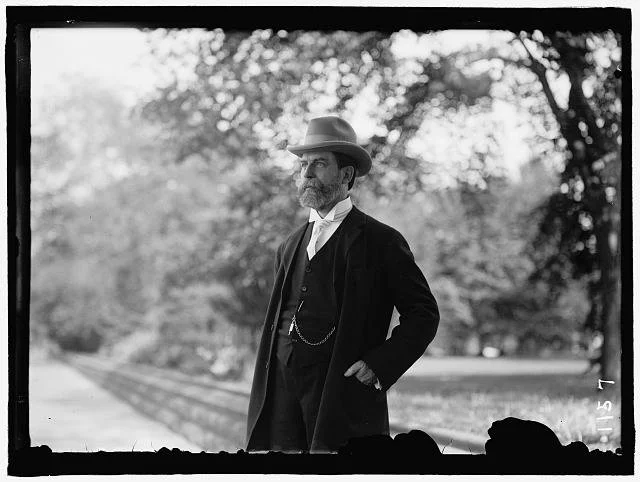
Hughes pictured in 1912 | Credit: Library of Congress
Early Career
After graduating from Columbia in 1884, Hughes joined the Wall Street firm of Chamberlain, Carter, & Hornblower & Byrne. He was made partner in 1888, and the firm renamed to Carter, Hughes, & Cravath.
In 1891, Hughes became a professor at Cornell Law School, where he taught until 1893. He returned to private Carter, Hughes, & Cravath, but remained a special lecturer at Cornell and the New York Law School. At this time, Hughes also joined the board of Brown University and served on a special committee that recommended revisions to New York’s Code of Civil Procedure.
In 1905, Hughes was appointed to investigate corruption in public utilities by a legislative committee created by Governor Frank Higgins. The legislature nominated him based off the recommendation who was impressed by Hughes’ performance in court. Hughes’ success on the committee led to his appointment to a committee to investigate life insurance companies. His investigation was again a success, and he convinced the state legislature to prohibit insurance companies from owning corporate stock, underwriting securities, or engaging in other banking practices.
In 1906, President Theodore Roosevelt nominated Hughes to be the Republican candidate for Governor of New York. Hughes won with 50.5% of the vote, defeating newspaper mogul William Randolph Hearst. As Governor, he established the state’s Public Service Commissions and oversaw the passage of significant labor and anti-corruption laws.
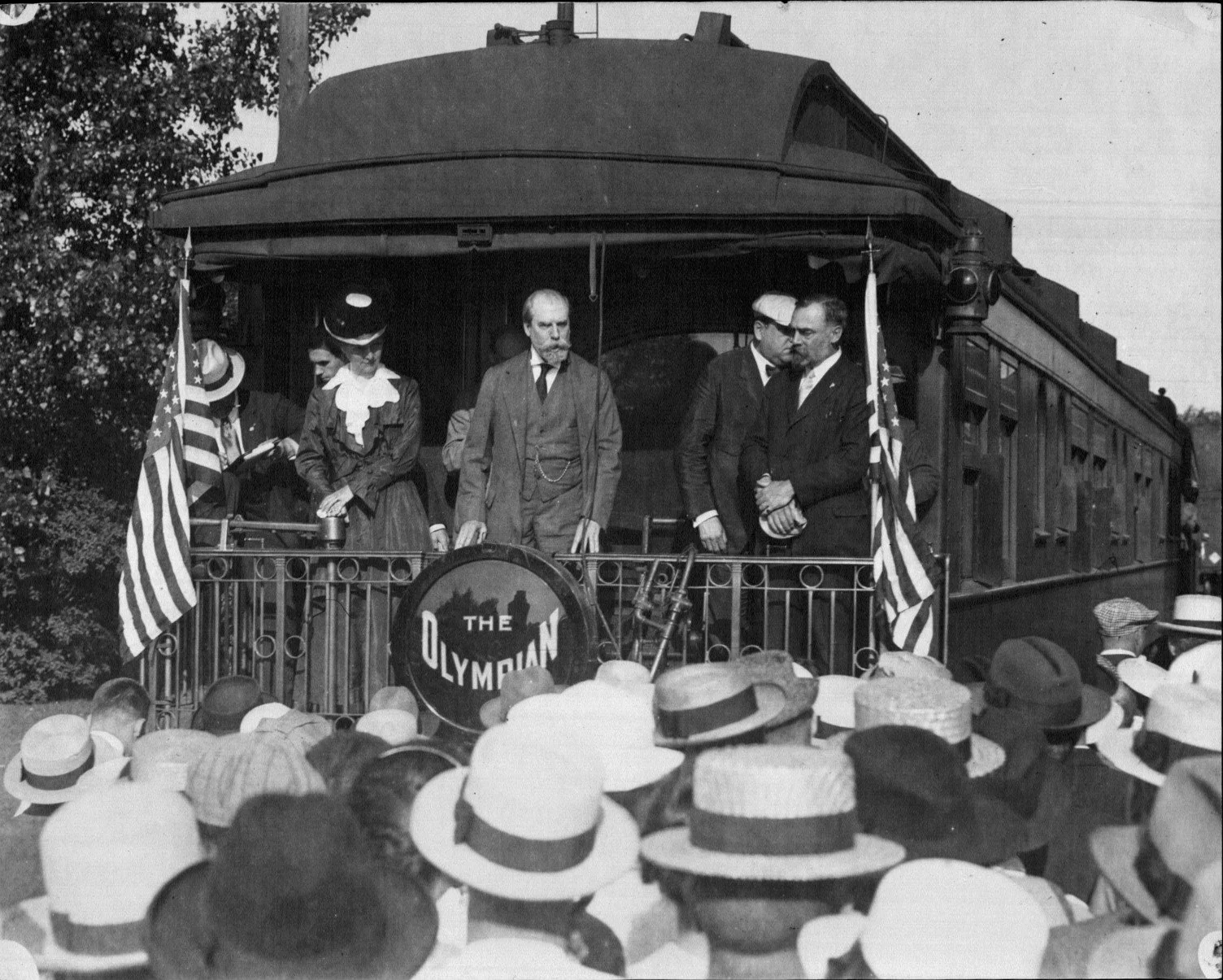
Hughes campaigning in Winona, Minnesota, during the 1916 presidential campaign | Credit: (Public Domain)
Supreme Court Career, Presidential Campaign, & Secretary of State Tenure
Associate Justice
On March 18, 1910, Justice David Brewer died, creating a vacancy on the Court. President William Howard Taft offered Hughes the position, which he quickly accepted since he was unlikely to run for reelection as Governor. His nomination was formally submitted to the Senate on April 25, 1910. The Senate reported his nomination favorably on May 2, and the Senate unanimously confirmed him the same day. Hughes served as an Associate Justice until 1916, when he resigned to run for President as the Republican nominee.
1916 Presidential Campaign
Hoping to bridge the divides in the party created by the split between Theodore Roosevelt and Howard Taft in 1912, Republican party leader asked Hughes to run in the 1916 election. Hughes rejected the idea, but his potential candidacy garnered widespread speculation and he led in several polls.
By the time of the Republican National Convention in June, Hughes had won two presidential primaries and led the first ballot of the convention. Hughes clinched the nomination on the third ballot, and ultimately accepted it. He subsequently submitted his resignation to President Woodrow Wilson, becoming the first Supreme Court Justice to serve as a major party’s nominee for President. Hughes narrowly lost the election after Wilson won California by less than 4,000 votes.
After the election, Hughes returned to his former firm, now known as Hughs, Rounds, Schurman, & Dwight. In 1917, he joined with a number of Republican leaders to demand that President Wilson declare war on the Central Powers after Germany sank several American merchant vessels. During World War I, Hughes served as the chairman of New York City’s draft appeals board and investigated the aircraft industries on behalf of the Wilson administration. At the end of the war, Hughes played a role in attempting to convince the Senate to approve the League of Nations, but they ultimately rejected the League and the Treaty of Versailles.
Secretary of State
Hughes remained popular nationally, and many wanted him to run for President again in the 1920 election. However, he refused to allow his name on the ballot after the death of his daughter from tuberculosis in 1920. Republican Warren Harding ultimately won the election, and on the day of his inauguration, he selected Hughes to serve as his Secretary of State. He was confirmed by the Senate by a voice vote on the same day. As Secretary of State, Hughes organized the Washington Naval Conference between the U.S., Britain, and Japan resulting in the Five-Power Treaty; organized the creation of the Dawes plan; and was considered the “intellectual anchor” of Harding’s cabinet. When Chief Justice Edward Douglass White died in 1921, Harding offered Hughes the position, but he declined to he could stay at the State Department.
Hughes remained the Secretary of State under President Calvin Coolidge, but he left to return to his former law firm in 1925. Republican party leader in New York asked him to run against Democrat Al Smith in the 1926 gubernatorial election, and national party leaders asked him to run in the 1928 presidential election. Hughes declined, but he campaigned across the country for Republican nominee Herbert Hoover’s successful campaign. After Hoover won the election, he asked Hughes to serve as his Secretary of State, but Hughes declined to keep his commitment to serve as a judge on the Permanent Court of International Justice
Chief Justice
Following the death of Chief Justice William Howard Taft, Hoover nominated Hughes to return to the Court as Chief Justice on February 3, 1930. Hughes' nomination faced significant opposition in the Senate from both Progressive and Southern Democrats, who criticized Hughes for his ties to corporate interests during his years at a Wall Street law firm.
Nonetheless, the Senate Judiciary Committee didn't hold any hearings, and Hughes’ nomination was reported favorably by a 10-2 vote on February 10, 1930. The Senate confirmed his nomination on February 13, 1930, by a vote of 52–26. Hughes was sworn as the 10th Chief Justice on February 24, 1930. He retired on June 30, 1941, at the age of 79.
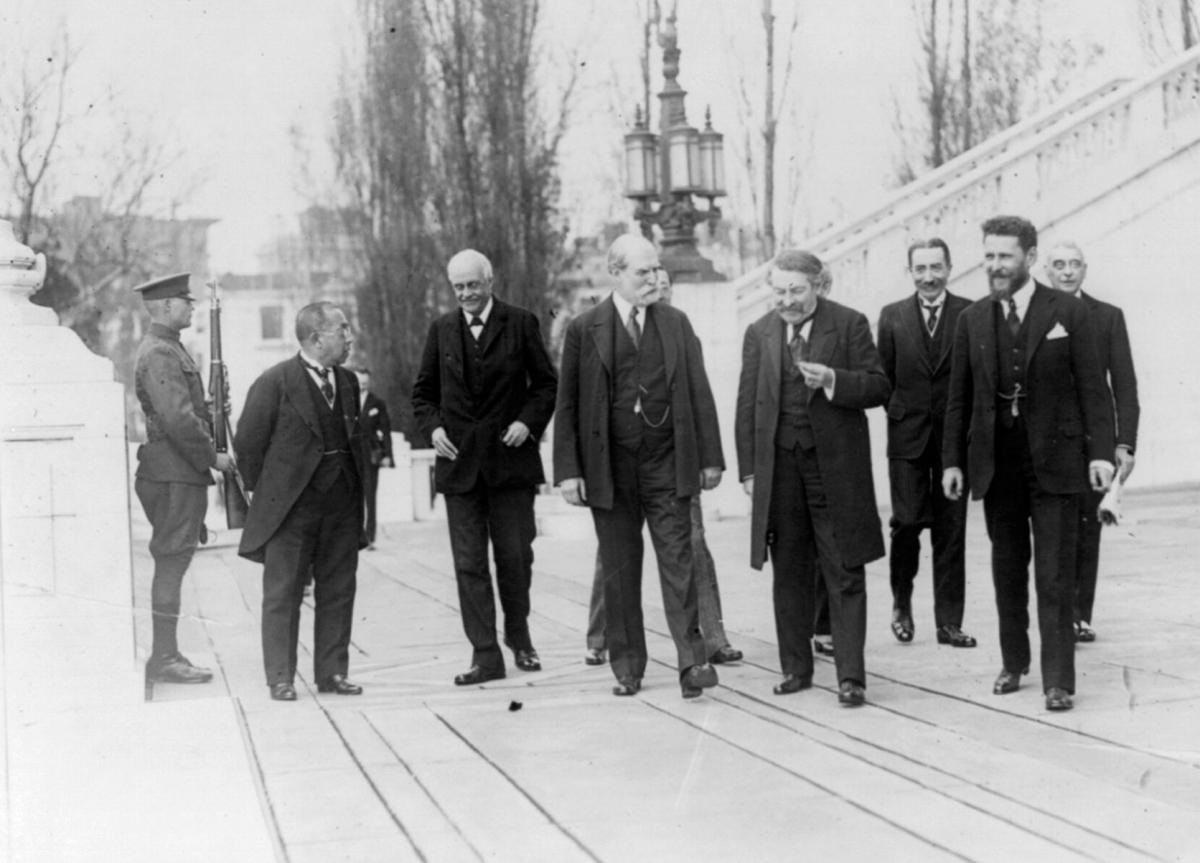
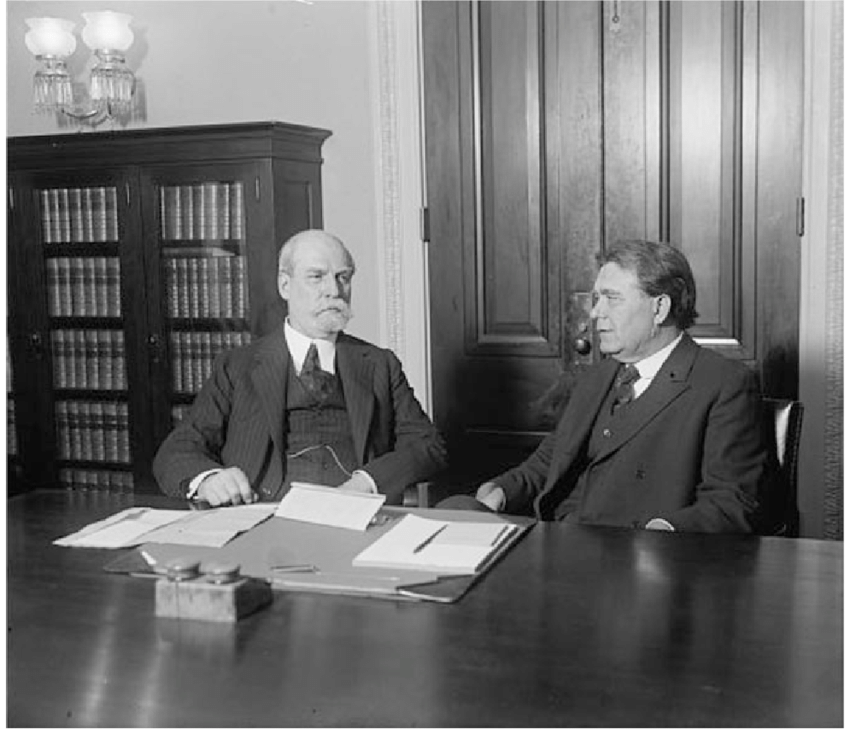
Hughes, as Secretary of State, with foreign leaders during the World Disarmament Conference in Washington, D.C. (November 1921) | Credit: Library of Congress
What the Court looked like during Chief Justice Hughes’ tenure.