West Lynn Creamery, Inc. v. Healy
Case Overview
CITATION
ARGUED ON
DECIDED ON
DECIDED BY
512 U.S. 186
Mar. 2, 1994
Jun. 17, 1994
Legal Issues
Does Massachusetts’ pricing regulation place an unconstitutional burden on interstate commerce in violation of the Commerce Clause?
Holding
No, the Gun Free School Zones Act is an unconstitutional exercise of Congress’ commerce power because possession of a firearm near a school isn’t an economic activity and doesn’t have a substantial effect on interstate commerce.
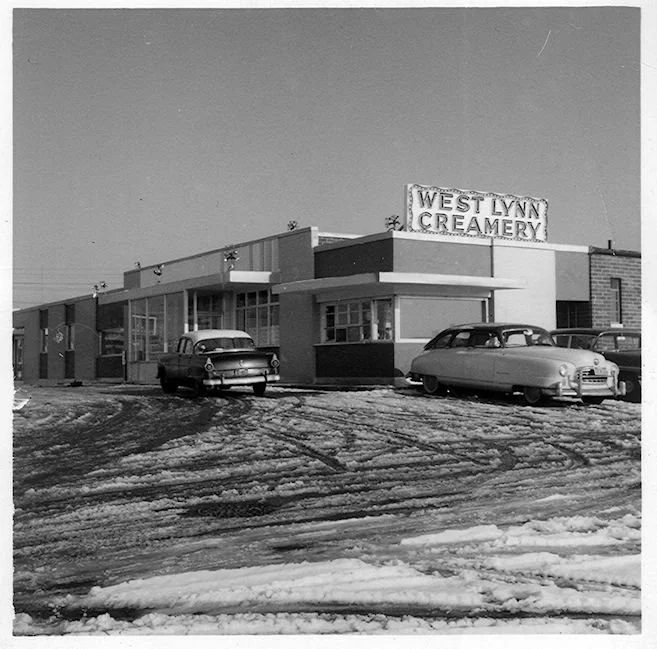
West Lynn Creamery in Lynn, Massachusetts | Credit: Lynn Legacies
Background
In the 1980s and early 1990s, Massachusetts dairy farmers began to lose market share to lower cost producers in neighboring States. Massachusetts Governor Bill Weld appointed a Special Commission to study the dairy industry. The commission’s report found that a significant number of dairy farmers had sold their farms in the past decade and that if prices paid to farmers for their milk weren’t significantly increased, a majority of the remaining farmers in Massachusetts would be forced out of business in a year.
Relying on the commission’s findings, the Commissioner of the Massachusetts Department of Food and Agriculture, Jonathan Healy, declared a State of Emergency on January 28, 1992. The declaration stated, “[r]egionally, the industry is in serious trouble and ultimately, a federal solution will be required. In the meantime, we must act on the state level to preserve our local industry, maintain reasonable minimum prices for the dairy farmers, thereby ensure a continuous and adequate supply of fresh milk for our market, and protect the public health.” He noted that the average federal price had declined from $14.67 per hundred pounds of raw milk in 1990 to $12.64 in 1991, while costs of production for Massachusetts farmers had risen to an estimated average of $15.50 per hundred pounds.
After the declaration of emergency, Healy issued a pricing order requiring every dealer in the State to make a monthly premium payment into the Massachusetts Dairy Equalization Fund. The amount of the monthly payment is determined by a formula that considers the federally set price and the amount (in pounds) of the dealer’s sales in the State. Each month the fund is distributed to Massachusetts producers, who receive a share of the total fund equal to their proportionate contribution to the State's total production of raw milk.
West Lynn Creamery, Inc., was a licensed milk dealer that purchased raw milk, which it processed, packaged, and sold in Massachusetts. About 97% of the raw milk it purchased was produced out-of-state. LeComte’s Dairy, Inc., is also a licensed Massachusetts milk dealer, and it purchased all of its milk from West Lynn and distributed it to customers in Massachusetts.
For two months, West Lynn and LeComte’s complied with the pricing order, paying almost $200,000 into the Massachusetts Dairy Equalization Fund. Starting in July 1992, however, they refused to make the payments, so Healy began the process to revoke their licenses. West Lynn and LeComte then filed an action in Superior Court of Suffolk County, Massachusetts, which denied their request for an injunction. Their licenses were conditionally revoked while they appealed. The parties agreed to an expedited appellate procedure, and the Supreme Judicial Court of Massachusetts transferred the cases to its own docket. The state Supreme Court affirmed, finding that the pricing order only burdened interstate commerce incidentally and didn’t facially discriminate against out-of-state dealers. The Supreme Court then granted certiorari.
7 - 2 decision for West Lynn Creamery
West Lynn Creamery




Lopez


Rehnquist
Kennedy
Stevens
Blackmun
Scalia
O’Connor
Ginsburg
Thomas
Souter