Roe v. Wade
Case Overview
CITATION
ARGUED ON
REARGUED ON
DECIDED ON
DECIDED BY
OVERRULED (IN PART) BY
OVERRULED (IN FULL) BY
410 U.S. 113
Dec. 13, 1971
Oct. 11, 1972
Jan. 22, 1973
Planned Parenthood v. Casey (1992)
Legal Issue
Does the constitutional “right to privacy” protect a woman’s right to attain an abortion?
Holding
Yes, the right of personal privacy extends to a woman’s right to consult her physician and choose to have an abortion through the first trimester of pregnancy. However, the State does have a legitimate interest in preserving potential life, and therefore may make some regulations on abortions, with specific exceptions.
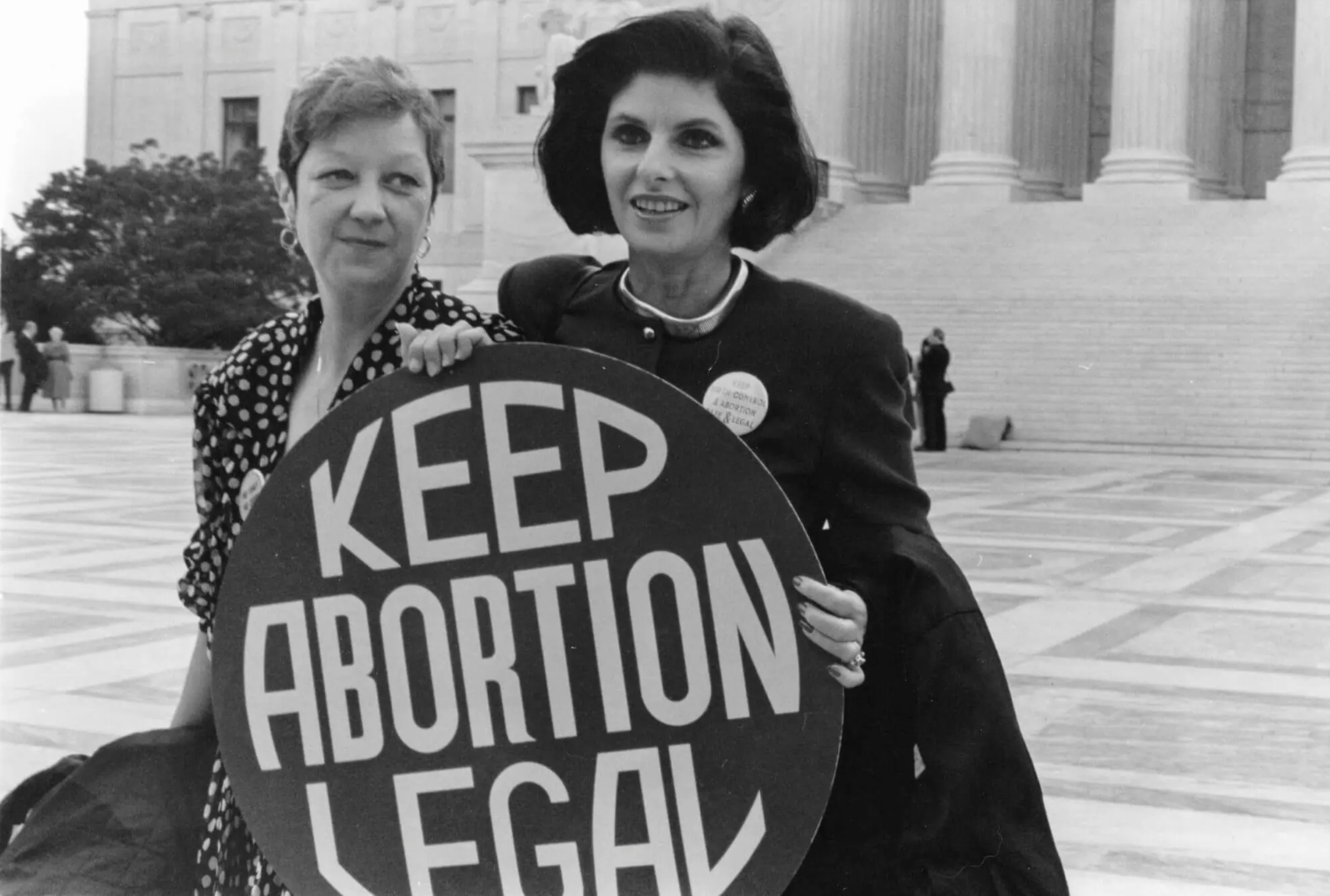
Norma McCorvey (Jane Roe) and Gloria Allred (her lawyer) on the steps of the Supreme Court | Credit: Lorie Shaull (St. Paul, MN)
Background
In 1970, the Texas Penal Code contained a series of articles seeking to place heavy restrictions on abortion. Articles 1191-1196 set out to end all abortions other than for the purpose of saving a mother’s life. Administering, procuring, furnishing the means of, or attempting an abortion were all considered illegal. Furthermore, the death of a mother “occasioned by an abortion” is considered murder, and anybody who destroys the vitality of an unborn child would be confined for not less than five years.
Norma McCorvey, a single, pregnant woman going by the pseudonym of “Jane Roe,” sought an abortion in Dallas County, TX. She sued the district attorney for Dallas County, Henry Wade, and petitioned the U.S. District Court for the Northern District of Texas to halt enforcement of Texas’ abortion law. The District Court agreed with Roe that the Penal Code was “too vague” and infringed on her Ninth Amendment rights. However, they stopped short of issuing an injunction preventing enforcement of Texas’ abortion law because Roe lacked standing to request injunctive relief, even though Wade stated he would continue prosecuting abortions. Since Roe had not received any true relief, she appealed directly to the Supreme Court.
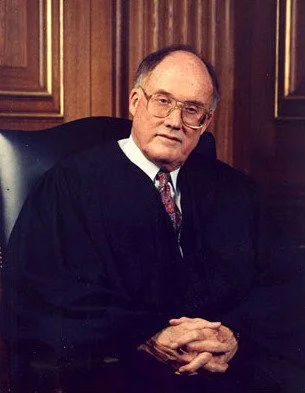
7 - 2 decision for Roe
Powell
Roe
Rehnquist
Blackmun
Douglas
Stewart
Brennan
White
Burger
Marshall
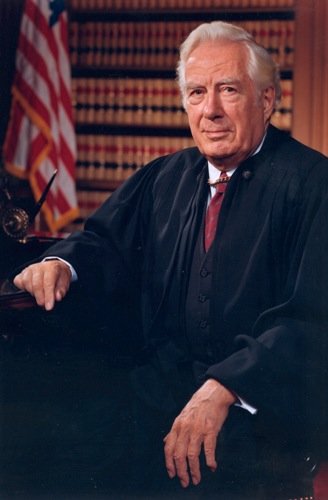


Wade

-
Writing for the Court, Justice Harry Blackmun prefaced the opinion by acknowledging the sensitive and emotional nature of the issue of abortion. He wrote, “[o]ne’s philosophy, one’s experiences, one’s exposure to the raw edges of human existence, one’s religious training, one’s attitudes toward life and family and their values, and the moral standards one establishes and seeks to observe, are all likely to influence and to color one’s thinking and conclusions about abortion.” Blackmun went on to quote a section of Justice Holmes’ dissent in Lochner v. New York, in which he wrote that “[The Constitution] is made for people of fundamentally differing views, and the accident of our finding certain opinions natural and familiar or novel and even shocking ought not to conclude our judgment upon the question whether statutes embodying them conflict with the Constitution of the United States."
Regarding the right to personal privacy under the Constitution, Blackmun cited the First Amendment, Fourth Amendment, Fifth Amendment, Ninth Amendment, and Fourteenth Amendment as support. He explained that there already exists a precedent that extends this right to marriage in Loving v. Virginia (1967) and contraception in Griswold v. Connecticut (1965), among other areas. Blackmun argued that there is a legitimate interest in both protecting the health of the pregnant woman and the potential of human life, but he held that the state may not override the rights of the pregnant woman which are at stake.
After establishing the right to privacy under the Constitution, Blackmun summarized the new trimester system:
~ First Trimester: The right to privacy outweighs the State’s interest in maternal health, so regulation is prohibited.
~ Second Trimester: The State’s interest in protecting the health of the mother grows and can justify increased regulation in ways that are reasonably related to maternal health.
~ Third Trimester: The State’s interest in protecting the health of the mother is compelling and can justify strict regulation or prohibition.
Ultimately, the Court held that Texas’ abortion law was unconstitutional and struck it down.