Printz v. United States
Home | All Cases | Congressional Authority | Printz v. United States
Key Principles
Congress cannot circumvent the 10th Amendment by conscripting State officers directly.
The Federal Government may neither issue directives requiring the States to address particular problems, nor command the States’ officers, or those of their political subdivisions, to administer or enforce a federal regulatory program.
Case Overview
CITATION
ARGUED ON
DECIDED ON
DECIDED BY
521 U.S. 898
Dec. 3, 1996
Jun. 27, 1997
Legal Issues
Do provisions of the Brady Handgun Violence Prevention Act commanding State and local law enforcement officers to conduct background checks and to perform other tasks violate the Constitution?
Holding
Yes, Congress’ conscription of State officers under the Act violated the 10th Amendment.
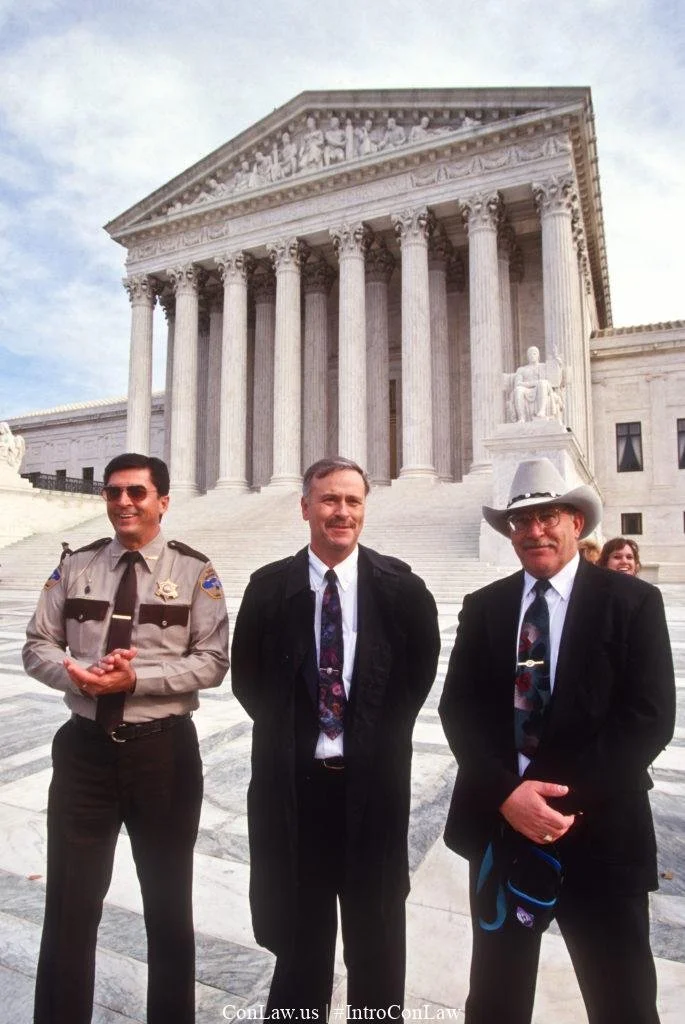
Sheriffs Jay Printz and Richard Mack outside the Supreme Court | Credit: An Introduction to Con Law
Background
The Gun Control Act of 1968 (GCA) established a detailed federal scheme governing the distribution of firearms.
In 1993, Congress amended the GCA by enacting the Brady Handgun Violence Prevention Act. The Act requires the Attorney General to establish a national instant background check system by November 30, 1998, and immediately puts in place certain interim provisions until that system becomes operative. Under the interim provisions, state and local law enforcement officers were required conduct background checks before issuing permits for firearms.
Sheriff Jay Printz of Ravalli County, Montana and Richard Mack of Graham County, Arizona filed separate actions in federal court challenging the Brady Act’s conscription of State officers to execute federal law.
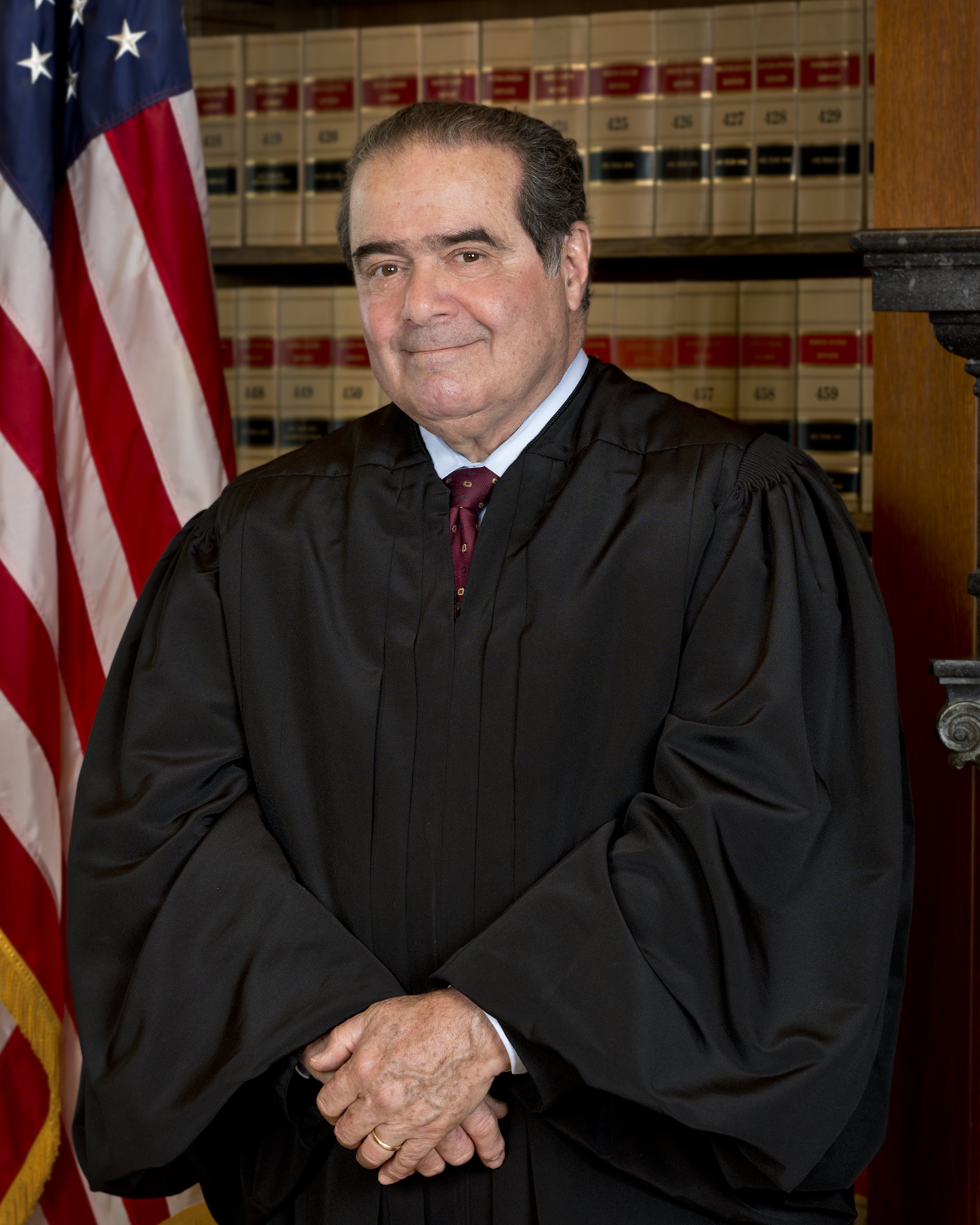
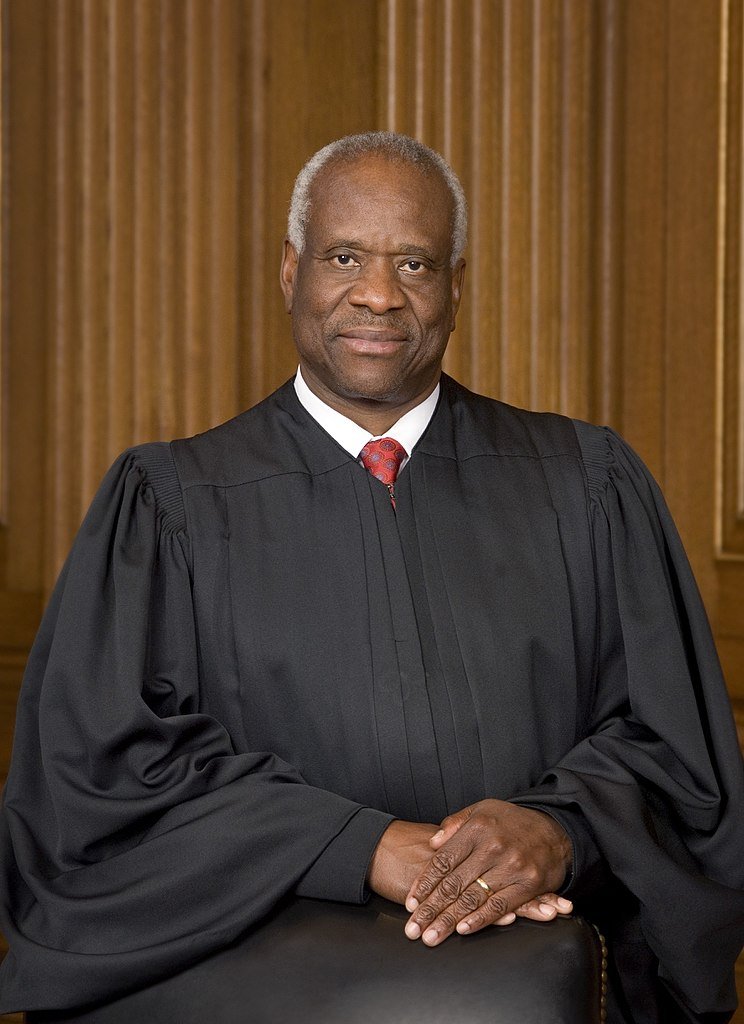
5 - 4 decision for Printz
Printz



U.S.


Rehnquist
Scalia
Kennedy
Breyer
O’Connor
Stevens
Ginsburg
Thomas
Souter
