Pacific Gas & Electric Co. v. State
Energy Resources Conservation & Development Commission
Case Overview
CITATION
ARGUED ON
DECIDED ON
DECIDED BY
461 U.S. 190
Jan. 17, 1983
Apr. 20, 1983
Legal Issues
Are the 1976 amendments to California’s Warren-Alquist Act, which condition construction of nuclear plants on findings by a State commission, preempted by the Atomic Energy Act of 1954, which was enacted by Congress?
Holding
No, California was not preempted by because the State’s justification for enacting the Act related to economic issues and not nuclear safety, which is what the federal Act sought to regulate.
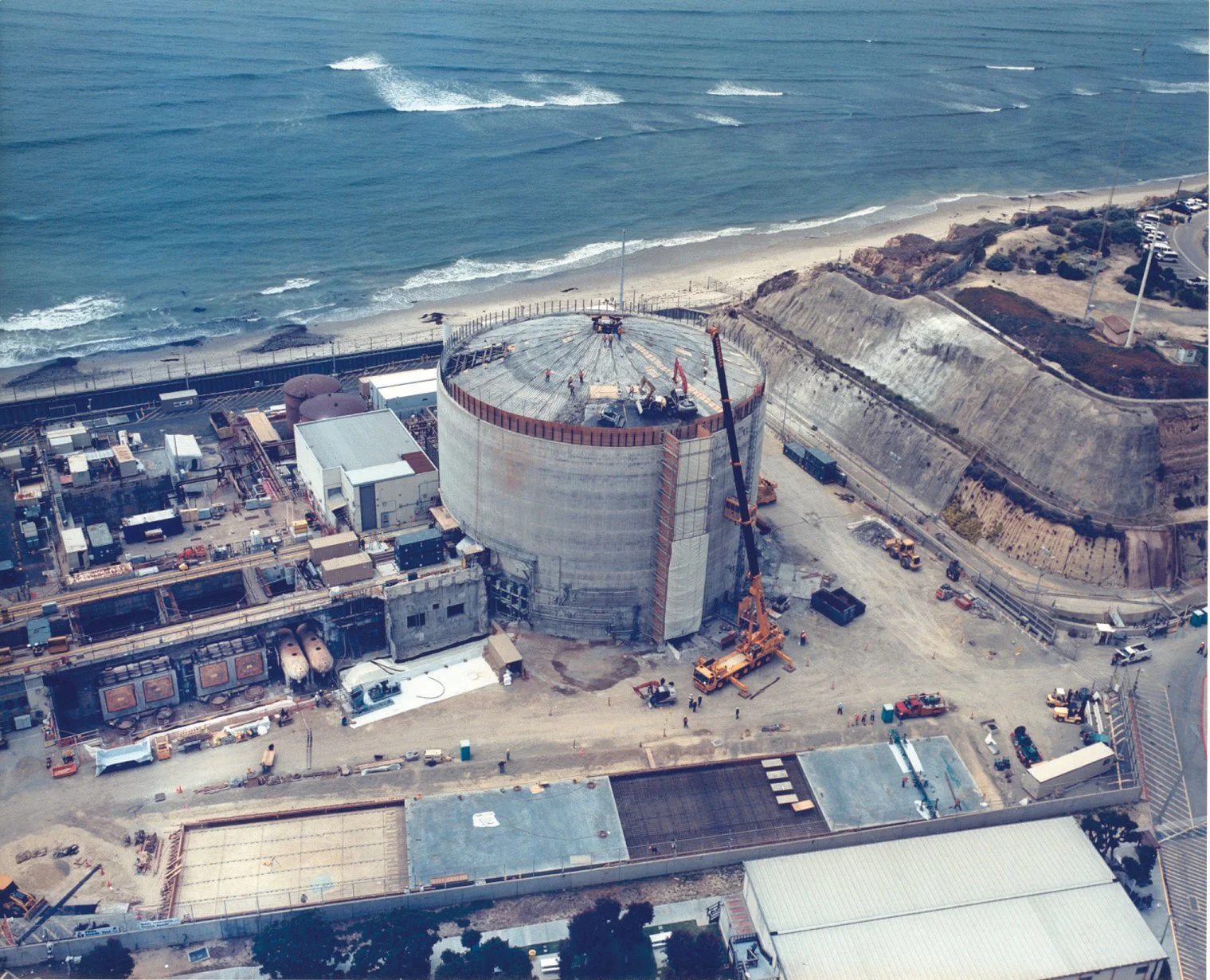
Photo of the decommissioning of the San Onofre Nuclear Power Plant on the southern coast of California | Credit: SONGS Community
Background
To facilitate the development of nuclear energy, the federal government created a complex scheme to promote the civilian development of the technology. At the same time, it sought to safeguard the public and environment from the risks of nuclear energy. Early on, the federal government allowed the states to continue their traditional role in regulating electricity production, but the federal regulatory structure was repeatedly amended. As the industry developed, the issue of how nuclear waste would be disposed of became a pressing issue for state governments, the federal government, and the public.
In response to concerns regarding waste, California enacted the Warren-Alquist State Energy Resources Conservation and Development Act in 1974 and imposed additional regulations in 1976 amendments. In particular, § 25524.1(b) required that before additional nuclear plants were built, the Commission must determine that there will be “adequate capacity” for storage of a plant’s waste and required that each utility provide continuous, on-site, “full core reserve storage capacity” to allow storage of the entire reactor core if it needed be removed for repairs. Additionally, § 25524.2 imposed a moratorium on the certification of new nuclear plants until the Commission “finds that there has been developed and that the United States through its authorized agency has approved and there exists a demonstrated technology or means for the disposal of high-level nuclear waste.” “Disposal” is defined as a “method for the permanent and terminal disposition of high-level nuclear waste . . . .” Such a finding was subject to review by the state legislature, which had the authority to nullify it.
Pacific Gas & Electric Co. and San Diego Gas & Electric, two California public utilities, sought declaratory judgment against the Act in the U.S. District Court for the Eastern District of California, challenging § 25524.1(b) and § 25524.2. The district court granted declaratory judgment, but the Commission appealed. On appeal, the Ninth Circuit reversed the district court’s holding. The Supreme Court then granted certiorari.
Unanimous decision for the Commission
P. G&E
State Energy Commission


Stevens
O’Connor
Rehnquist
Powell
Burger
Brennan
White
Marshall
Blackmun