NLRB v. Jones &
Laughlin Steel Corp.
Case Overview
CITATION
ARGUED ON
DECIDED ON
DECIDED BY
301 U.S. 1
Feb. 10-11, 1937
Apr. 12, 1937
Legal Issues
Does the Commerce Clause grant Congress the authority to regulate labor relations, even if the disputes are purely intrastate?
Holding
Yes, the Commerce Clause grants Congress the authority to regulate labor relations, even those disputes which are purely intrastate, because of the negative impact they could have on interstate commerce overall.
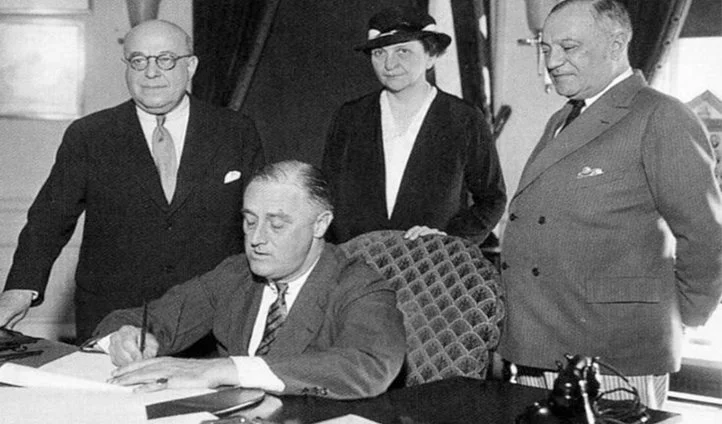
President Roosevelt signing the National Labor Relations Act into law in 1935 | Credit: Constitutional Law Reporter
Background
In 1935, Congress passed the National Labor Relations Act (NLRA) to protect the rights of employees to organize and bargain collectively. To enforce these rights, the National Labor Relations Board (NLRB) was created. The Jones & Laughlin Steel Corporation, the fourth-largest steel producer in the United States, operated as a massive, vertically integrated enterprise. It owned everything from coal and iron mines across multiple states, in addition to the railroads and steamships used to transport raw materials to its manufacturing plants in Pittsburgh and Aliquippa, Pennsylvania.
When Jones & Laughlin fired ten employees at its Aliquippa plant for planning to unionize and join the Steel Workers Organizing Committee, the NLRB found that the company had engaged in unfair labor practices by discriminating against union members and intimidating employees to interfere with their self-organization. The NLRB ordered Jones & Laughlin to reinstate the fired workers with back pay, but they refused to comply, instead arguing that the NLRA was unconstitutional because it sought to regulate manufacturing and labor relations, which they considered a purely local (intrastate) activity outside of Congress’ authority granted by the Commerce Clause. The NLRB then petitioned the U.S. Court of Appeals for the Fifth Circuit, which agreed with Jones & Laughlin and denied the enforcement of the NLRB’s order. The Supreme Court then granted certiorari.
5 - 4 decision for the NLRB
NLRB


Jones & Laughlin
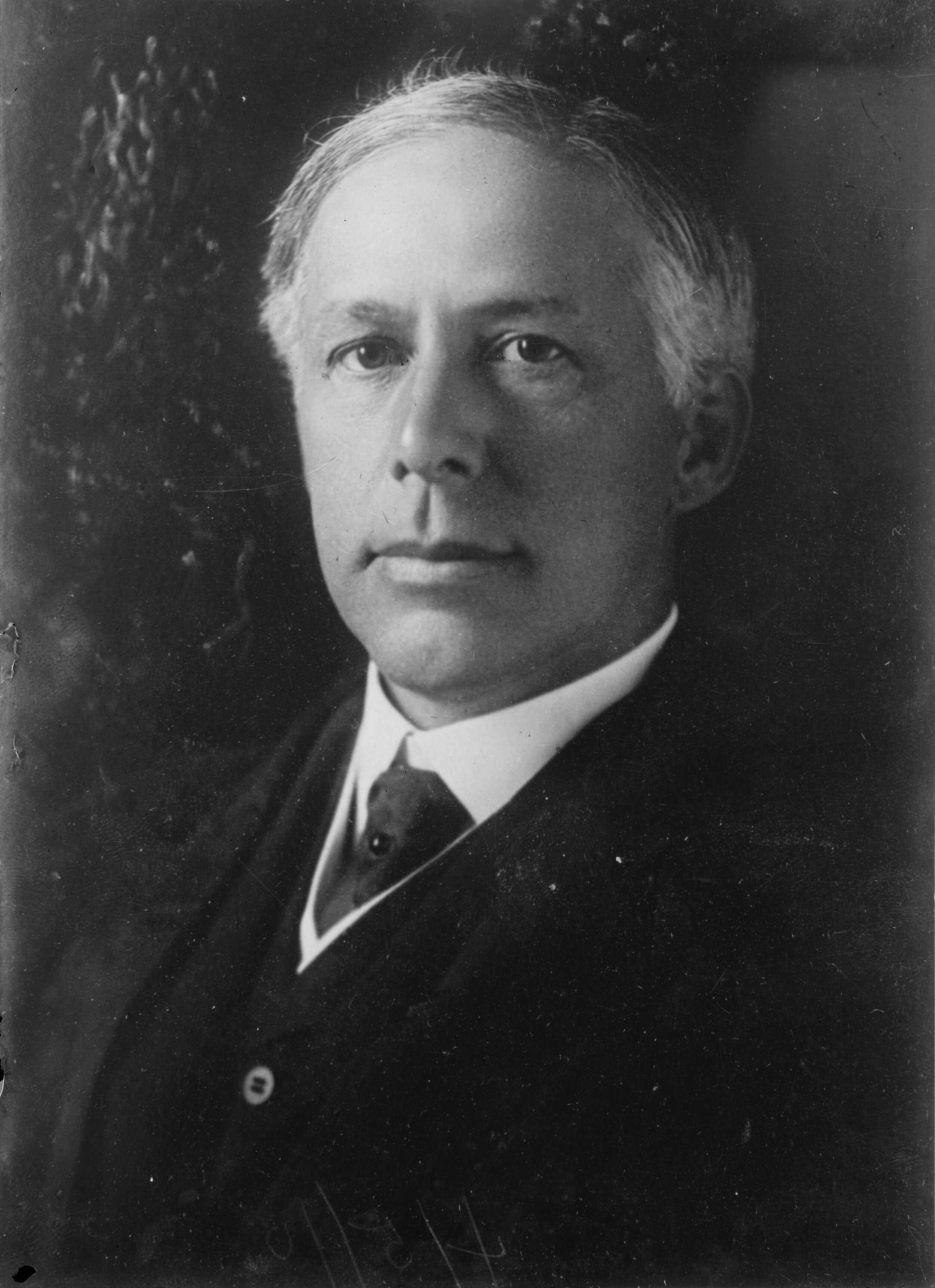


Brandeis
Hughes
Roberts
Cardozo
Stone

Sutherland
Van Devanter
McReynolds
Butler
-
Writing for the Court, Chief Justice Charles Evans Hughes began by establishing the constitutional bounds of the National Labor Relations Act, noting that it only targets labor practices that “burden or obstruct” interstate commerce. Hughes broadened the Court’s interpretation of the Commerce Clause by establishing the “close and substantial relation” test. Under this standard, Congress possesses the power to regulate activities that may be entirely intrastate or local in character (such as manufacturing), given that those activities have a “close and substantial relationship to interstate commerce.” This test replaced the Court’s prior strict distinction between “production” and “commerce”, shifting the focus to the actual economic effect of an activity rather than on a categorical label.
Hughes emphasized that protecting the right of employees to self-organize and collectively bargain is critical to preventing the “paralyzing consequences of industrial war” that disrupt the national economy. Hughes rejected the argument that manufacturing is entirely local and exempt from federal regulation, explaining that the fact that the employees were engaged solely in “production” is not determinative and that what matters is the effect the labor practice has upon interstate commerce. He further explained that Congress’ power to protect commerce is not strictly limited to the flow or stream of commerce.
Applying these principles to the case at hand, Hughes examined Jones & Laughlin Steel Corporation specifically, finding that because the company operated a massive, highly integrated, and “far-flung” national enterprise, any stoppage of its manufacturing operations due to industrial strife would have an “immediate” and potentially “catastrophic” impact on interstate commerce. Therefore, Jones & Laughlin’s labor practices, even if they are local, fell squarely within Congress’ regulatory power.