Manhattan Community Access Corp. v. Halleck
Case Overview
CITATION
ARGUED ON
DECIDED ON
587 U.S. __
Feb. 25, 2019
Jun. 17, 2019
DECIDED BY
Legal Issue
Does a private entity exercise a traditional, exclusive public function when it operates public access channels?
Holding
No, private operators of public access channels are not state actors, so they aren’t subject to First Amendment restrictions on its editorial discretion.
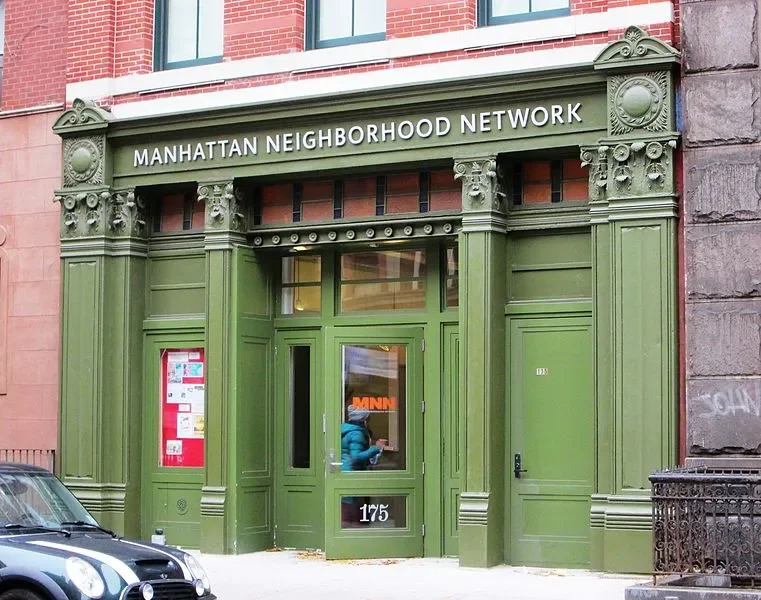
The outside of the building for the Manhattan Neighborhood Network | Credit: SCOTUSblog
Background
In the 1970s, the Federal Communications Commission’s (FCC) regulations required certain cable operators to set aside channels for public access. However, the Supreme Court ruled in FCC v. Midwest Video Corp. (1979) that the FCC lacked statutory authority to impose such a mandate. In 1984, President Ronald Reagan signed the Cable Communications Policy Act of 1984, authorizing state and local governments to require cable operators to set aside channels for public access.
The New York state Public Service Commission required cable operators in the State to set aside channels for public access and provide them free of charge on a first-come, first-serve basis. New York law dictates that the cable operator manage the public access channels unless a local government chooses to operate the channels itself or designate the responsibility to a private entity. Time Warner operated a cable system in Manhattan and under state law, it was required to set aside channels for public access. New York City designated the Manhattan Neighborhood Network (MNN), a private nonprofit, to operate Time Warner’s public access channels in Manhattan.
DeeDee Halleck and Jesus Papoleto Melendez made a film about MNN’s alleged neglect of the East Harlem community. Halleck submitted the film to MNN to be aired on MNN’s public access channels, and MNN later televised the film. In response to multiple complaints about the film’s content, MNN temporarily suspended Halleck from using the public access channels. After another dispute between Halleck and Melendez and MNN staff, MNN suspended Halleck and Melendez from all MNN services and facilities. Halleck and Melendez sued the MNN in the U.S. District Court for the Southern District of New York, alleging a First Amendment violation of their right to free speech. The district court dismissed the case, and the case was appealed. On appeal to the U.S. Court of Appeals for the Second Circuit, the district court’s ruling was reversed. The MNN petitioned for writ of certiorari, which was granted by the Supreme Court.
5 - 4 decision for Manhattan
Manhattan



Halleck


Ginsburg
Gorsuch
Alito
Kagan
Thomas
Kavanaugh
Roberts
Breyer
Sotomayor
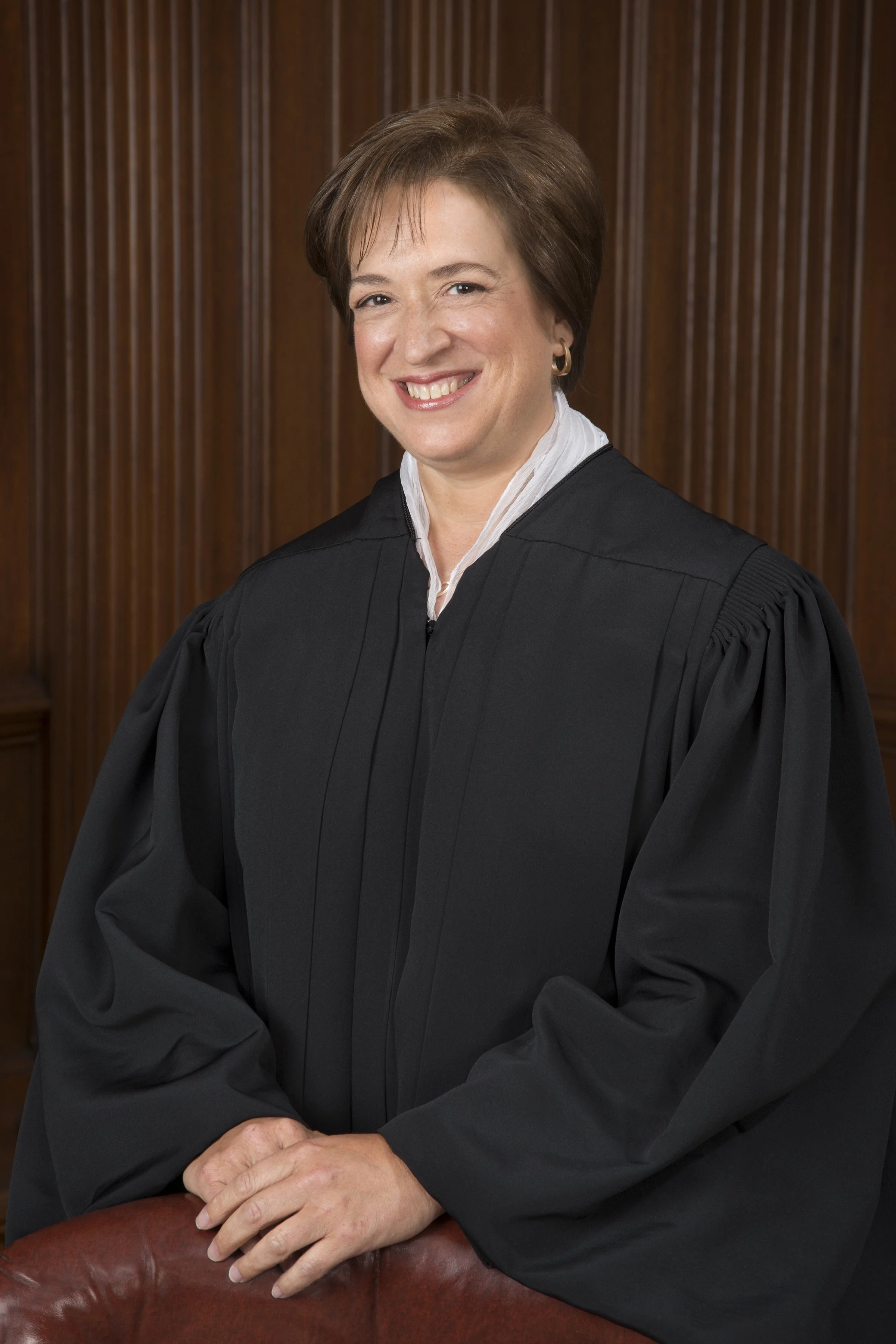
-
Writing for the Court, Justice Brett Kavanaugh first established that the Free Speech Clause of the First Amendment prohibits only governmental abridgement of speech, not private abridgement. Kavanaugh explained that the state-action doctrine distinguishes government action from private action, and “[b]y enforcing that constitutional boundary between the governmental and the private, the state-action doctrine protects a robust sphere of individual liberty.”
Kavanaugh stated that under the Court’s precedent, “a private entity may qualify as a state actor when it exercises ‘powers traditionally exclusively reserved to the State.’” Kavanaugh explained that it’s “not enough that the federal, state, or local government exercised the function in the past, or still does,” or that “ the function serves the public good or the public interest in some way.” He added that “very few” functions fall into this category, such as running elections and operating a company town (as held in Marsh v. Alabama (1946) and Terry v. Adams (1953)).
Kavanaugh stated that in this case, the relevant function was the operation of public access channels on the cable system. Kavanaugh explained the history of this function, finding that since public access channels became a regular part of cable systems in the 1970s, they were operated by a variety of public and private actors. Focusing on Manhattan specifically, Kavanaugh found that since their introduction, Manhattan’s public access channels have been operated by largely by private cable operators with some help from private nonprofits. This continued until the 1990s, when MNN (also a private entity), began operating Manhattan’s public access channels. In light of this history, Kavanaugh ultimately concluded that “operating public access channels on a cable system is not a traditional, exclusive public function within the meaning of this Court’s cases.”