Grable & Sons Metal Products, Inc. v.
Darue Engineering & Manufacturing
Key Principle
Grable Exception: Sometimes a federal question is so important to a state law case, the well-pleaded complaint rule doesn’t apply.
Case Overview
CITATION
ARGUED ON
DECIDED ON
DECIDED BY
525 U.S. 308
Apr. 18, 2005
Jun. 13, 2005
Legal Issue
Does federal question jurisdiction exist when a claim arises out of a federal statute that has not specifically granted a private right to a cause of action?
Holding
Yes, if the claim is sufficiently substantial to support the exercise of federal question jurisdiction over the disputed issue on removal.
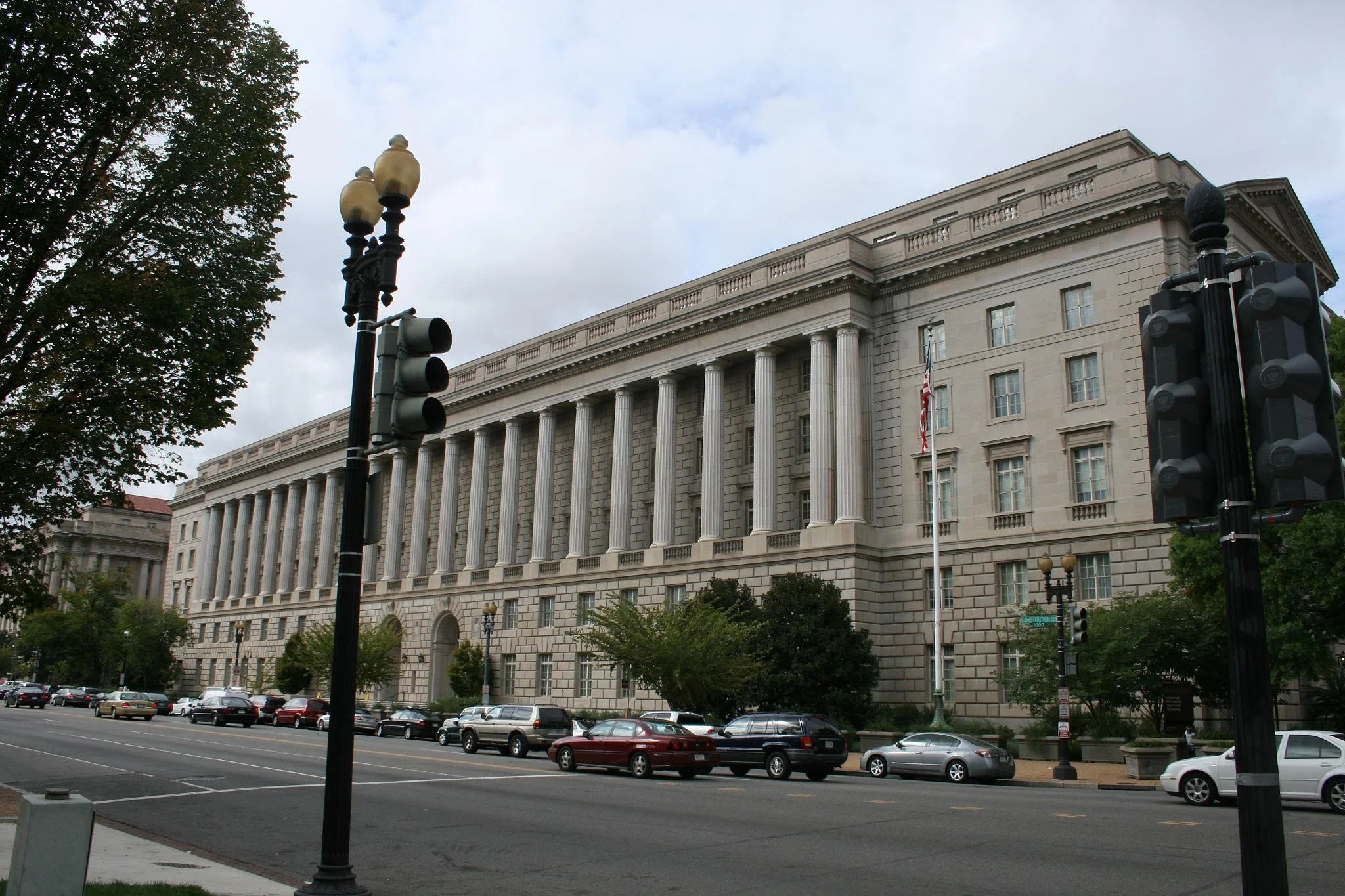
IRS Headquarters in Washington, D.C. | Credit: Shashi Bellamkonda, Flickr
Background
The IRS seized real property in Michigan owned by Grable & Sons Metal Products, Inc. to satisfy a federal tax delinquency. The IRS provided notice of the seizure to Grable via certified mail, but Grable did not exercise its statutory right to redeem the property within 180 days, and the government subsequently sold the property to Darue Engineering & Manufacturing.
Five years later, Grable filed a quiet title action in Michigan state court, arguing that the IRS’s notice was inadequate because 26 U.S.C. §6335(a) required personal service rather than certified mail. Darue responded by removing the case to the U.S. District Court for the Western District of Michigan, arguing that the claim raised a federal question regarding the interpretation of federal tax law. The District Court found that federal jurisdiction was appropriate for the case and granted summary judgment in favor of Darue. The Sixth Circuit Court of Appeals affirmed that decision, and Grable appealed to SCOTUS.
Summary
Unanimous decision for Darue Engineering and Manufacturing
Grable



Darue


Scalia
O’Connor
Ginsburg
Stevens
Thomas
Rehnquist
Souter
Breyer
Kennedy
Opinion of the Court
Writing for the Court, Justice David Souter held that the absence of a independent federal cause of action does not preclude federal jurisdiction when the federal issue implicated by the case is substantial and the case does not threaten to overwhelm federal courts. Justice Souter explained that federal question jurisdiction may apply to cases where a state law claim necessarily raises a stated federal issue that is actually disputed, substantial, and consistent with the legislatively proscribed balance of federal and state judicial responsibilities.
Justice Souter explained that Grable’s claim depended on the interpretation of 26 U.S.C.S. § 6335(a), making federal law an essential element of the case. He further stated that the federal issue was actually disputed and substantial since it involved the adequacy of notice under federal tax law, which directly impacts the IRS’s ability to collect delinquent taxes and provide clear title to buyers. Lastly, he emphasized the government’s strong interest in ensuring the prompt and certain collection of taxes and the importance of a federal forum for resolving disputes over federal tax provisions and noted that recognizing federal jurisdiction wouldn’t disrupt the balance between federal and state court responsibilities, since such claims rarely involve federal law. Ultimately, the SCOTUS affirmed the judgment of the Sixth Circuit, holding that the national interest in providing a federal forum for federal tax litigation was sufficiently substantial to support the exercise of federal-question jurisdiction over the disputed issue.