Garcia v. San Antonio
Metropolitan Transit Authority
Case Overview
CITATION
ARGUED ON
REARGUED ON
DECIDED ON
DECIDED BY
OVERRULED
379 U.S. 294
Mar. 19, 1984
Oct. 1, 1984
Feb. 19, 1985
National League of Cities v. Usery (1976)
Legal Issues
Does the Commerce Clause of the Constitution grant Congress the authority to regulate the wages and work requirements of employees working for a municipal mass transit system operated by a local government?
Holding
Yes, the Commerce Clause grants Congress the authority to regulate a municipal mass transit system, and that authority does not threaten state sovereignty under the Tenth Amendment.
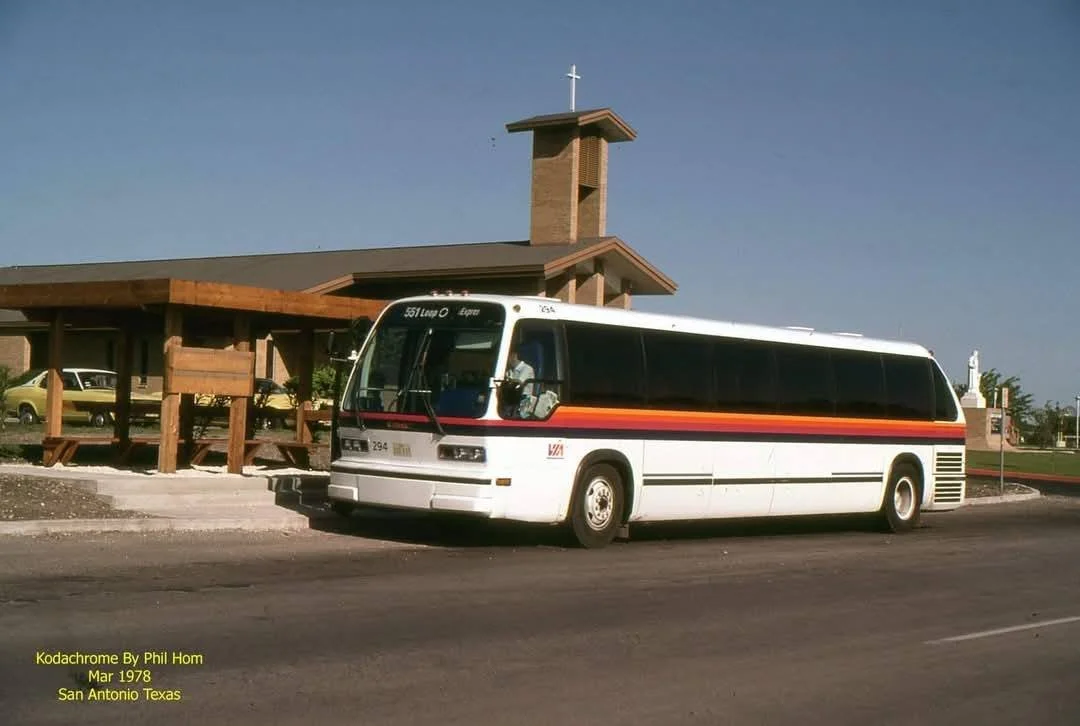
San Antonio MTA bus in 1978 | Credit: VIA Metropolitan Transit
Background
In 1938, Congress passed the Fair Labor Standards Act (FLSA), which originally didn’t apply to state and local government employees. Over time, however, Congress amended the Act to extend minimum wage and overtime coverage to certain public employees, including those in mass transit. In 1976, the Supreme Court ruled in National League of Cities v. Usery that the Tenth Amendment prohibited Congress from applying the FLSA to state and local governments performing “traditional governmental functions.” The San Antonio Metropolitan Transit Authority (SAMTA) subsequently told its employees that it was no longer obligated to provide them with overtime pay.
In 1979, the Wage and Hour Division of the U.S. Department of Labor determined that SAMTA’s operations were not a “traditional governmental function” and therefore remained subject to the FLSA’s overtime requirements. In response, SAMTA filed a lawsuit in the U.S. District Court for the Western District of Texas, seeking a declaratory judgment that its transit operations were exempt from federal regulation under the National League of Cities precedent. At the same time, Joe Garcia and other SAMTA employees filed their own suit to recover their unpaid overtime wages, and Garcia was subsequently allowed to intervene as a defendant in SAMTA’s declaratory judgment action alongside the Department of Labor.
The District Court initially ruled in favor of SAMTA, finding that local mass transit was a traditional governmental function and thus exempt from the FLSA. After the Supreme Court vacated and remanded that decision, the District Court once again held for SAMTA. Garcia and the Department of Labor appealed directly to the U.S. Supreme Court, and they were granted certiorari.
5 - 4 decision for Garcia
Garcia


San Antonio


White
Brennan
Blackmun
Stevens
Marshall
O’Connor
Rehnquist
Burger
Powell

-
Writing for the Court, Justice Harry Blackmun began by declaring that the “traditional governmental function” test established in National League of Cities v. Usery has proven to be unworkable in practice and inconsistent with established principles of federalism. Blackmun explained that federal and state courts have struggled for eight years to distinguish “traditional” from “nontraditional” functions of government, ultimately leading to contradictory results. Blackmun argued that any rule of state immunity that relies on a judicial appraisal of which state policies are “integral” or “necessary” inevitably invites the unelected federal judiciary to substitute its own policy preferences for those put in power through the democratic process.
Blackmun posited that the Framers designed the federal system to protect the states through their participation in the national political process rather than through judicially enforced categories of state activity. Blackmun pointed to the role of the states in electing members of the Executive and Legislative branches as the primary means of ensuring that Congress does not overreach. Blackmun explained that this “built-in restraint” ensures that the national political process will remain responsive to the interests of the states as sovereign entities.
To support the effectiveness of these political safeguards, Blackmun highlighted the success states have had in influencing federal legislation and securing federal funding. Blackmun explained that states have consistently directed a substantial proportion of federal revenues into their own treasuries through various grants and have frequently obtained exemptions for themselves from generally applicable federal obligations. Blackmun stated that because the internal safeguards of the political process have performed as intended, the Court must conclude that the minimum-wage and overtime requirements of the Fair Labor Standards Act are not destructive of state sovereignty. Therefore, the Court overruled National League of Cities, holding that the principal limit on the federal commerce power is the political process itself, not the Tenth Amendment.