Ex Parte McCardle
Case Overview
CITATION
ARGUED ON
DECIDED ON
DECIDED BY
74 U.S. 506
Mar. 2-4, 9, 1868
Apr. 12, 1869
Legal Issues
Does Congress have the authority to withdraw appellate jurisdiction from the Supreme Court at any time?
Holding
Yes, Congress has the authority to withdraw appellate jurisdiction from the Supreme Court at any time, and the Supreme Court does not have the liberty to question their motives.
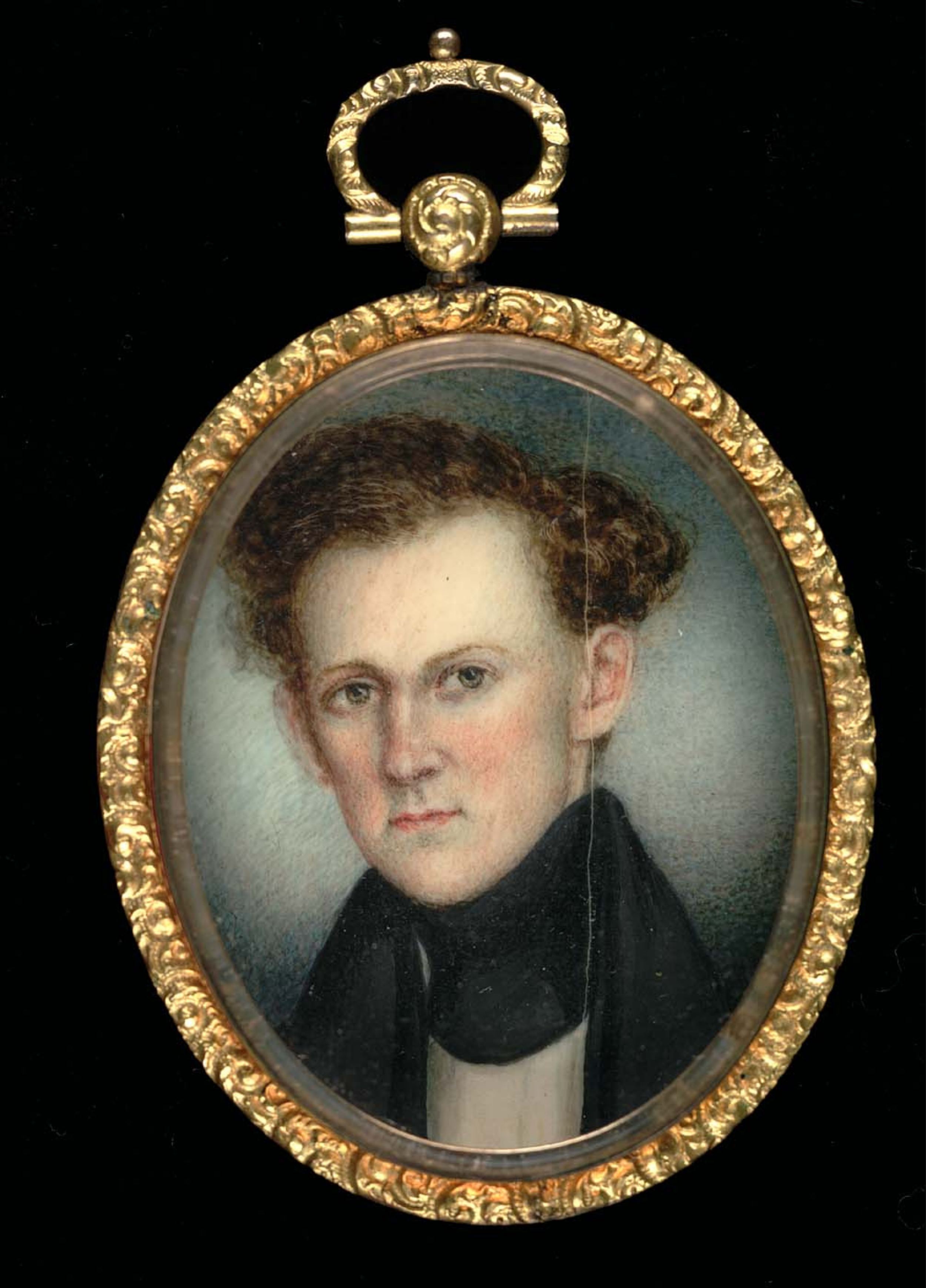
Painting of William McCardle of unknown origin | Credit: Smithsonian American Art Museum/Public Domain
Background
Following the defeat of the Confederacy in the Civil War, William McCardle, a newspaper editor in Vicksburg, Mississippi, was arrested by federal military officials for publishing “incendiary” articles that strongly opposed Reconstruction laws passed by Congress. Charges were brought against him under the Military Reconstruction Act of 1867, meaning he would face a military trial despite his status as a civilian. McCardle challenged the constitutionality of his detention by filing a petition for a writ of habeas corpus, claiming that the Military Reconstruction Act was unconstitutional and that his military prosecution violated his Fifth and Sixth Amendment rights.
After the Circuit Court of the Southern District of Mississippi denied his petition, McCardle appealed to the Supreme Court under the Habeas Corpus Act of 1867. The 1867 Act significantly broadened the jurisdiction of federal courts, authorizing them to grant habeas relief to any person detained in violation of the Constitution, regardless of whether they were being held by state or federal authority. The Supreme Court accepted the case and held oral arguments in early March 1868. Recognizing that a ruling in McCardle’s favor could dismantle the legal framework of Military Reconstruction in the South, the Republican-controlled Congress moved quickly to strip the Court of its ability to decide the case by passing a repeal of the specific section of the 1867 Act that granted the Supreme Court appellate jurisdiction over such habeas petitions. While President Andrew Johnson vetoed the repeal, Congress overrode his veto in March 1868.
Unanimous decision against McCardle
For
Against


Davis


Field
Nelson
Chase
Clifford
Swayne
Grier
Miller
-
Writing for the Court, Chief Justice Salmon Chase ordered the case be dismissed for lack of jurisdiction. Chase began by establishing that while the Court’s appellate jurisdiction is derived from the Constitution, it’s conferred “with such exceptions and under such regulations as Congress shall make.” Therefore, when Congress enacts legislation that expressly removes jurisdiction over a certain class of cases, the Court is bound by that exception and can’t exercise power that Congress has withheld.
Chase clarified the limits of judicial inquiry into legislative acts, asserting that the Court wasn’t at liberty to question Congress’ motives for repealing the act, even if the timing suggested a political reason to block the Court from ruling on Reconstruction. Chase focused solely on Congress’ constitutional power to make exceptions to appellate jurisdiction, which he found to be clear and express in this case. However, Chase noted that the 1868 Act only repealed the specific jurisdiction conferred by the 1867 Act, explicitly stating that it didn’t affect the appellate power the Court possessed prior to that statute, therefore leaving open other potential avenues for habeas relief.
Chase rejected the argument that the repeal of the 1867 Habeas Corpus Act shouldn’t apply to McCardle’s pending case simply because it had already been argued. He reasoned that jurisdiction is fundamentally the “power to declare the law,” and when that power ceases to exist, the only remaining function for the Court is to announce the lack of jurisdiction and dismiss the cause. He explained that the Act of 1868 didn’t merely stay the proceedings but expressly repealed the statutory provision that McCardle’s appeal relied on, leaving the Court with no legal footing to render a judgment.