Edmonson v. Leesville Concrete Co.
Case Overview
CITATION
ARGUED ON
DECIDED ON
DECIDED BY
500 U.S. 614
Jan. 15, 1991
Jun. 3, 1991
Legal Issue
Can a private litigant in a civil case use peremptory challenges to exclude jurors on the basis of their race?
Holding
No, a private litigant in a civil case cannot use peremptory challenges to exclude jurors because of their race, since race-based exclusion violates the rights of the challenged jurors under the Equal Protection Clause of the Fourteenth Amendment.
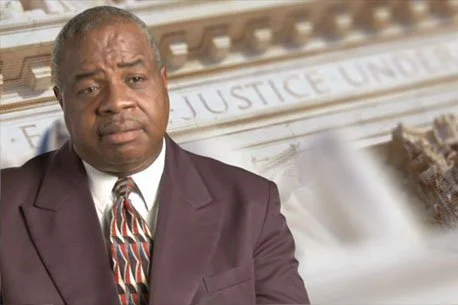
Thaddeus Donald Edmonson in a video for “Dr. King, Project Vote” | Credit: Source
Background
Thaddeus Donald Edmonson was a construction worker on a jobsite at Fort Polk, Louisiana. Edmonson was injured in a jobsite accident when one of Leesville Concrete Co.’s trucks rolled backward and pinned him against construction equipment. He subsequently sued Leesville for negligence in the U.S. District Court for the Western District of Louisiana.
Under Louisiana law, parties in civil lawsuits are entitled to three peremptory challenges during voir dire. Leesville used two of its three peremptory challenges to remove black people from the prospective jury. Relying on the Court’s decision in Batson v. Kentucky (1986), Edmonson, who is black, requested that the district court require Leesville to articulate a race-neutral explanation for their challenges. The district court denied his request, finding that Batson doesn’t apply to civil proceedings. The empaneled jury consisted of 11 white jurors and 1 black juror. The jury rendered a verdict for Edmonson, but attributed 80% of the fault to his contributory negligence and awarded him only $18,000. Edmonson appealed to the U.S. Court of Appeals for the Fifth Circuit, which reversed the district court’s holding on the grounds that parties become state actors during jury selection.
6 - 3 decision for Edmonson
Edmonson


Leesville
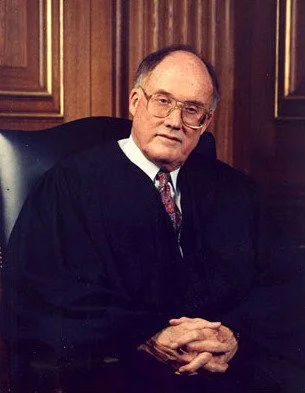

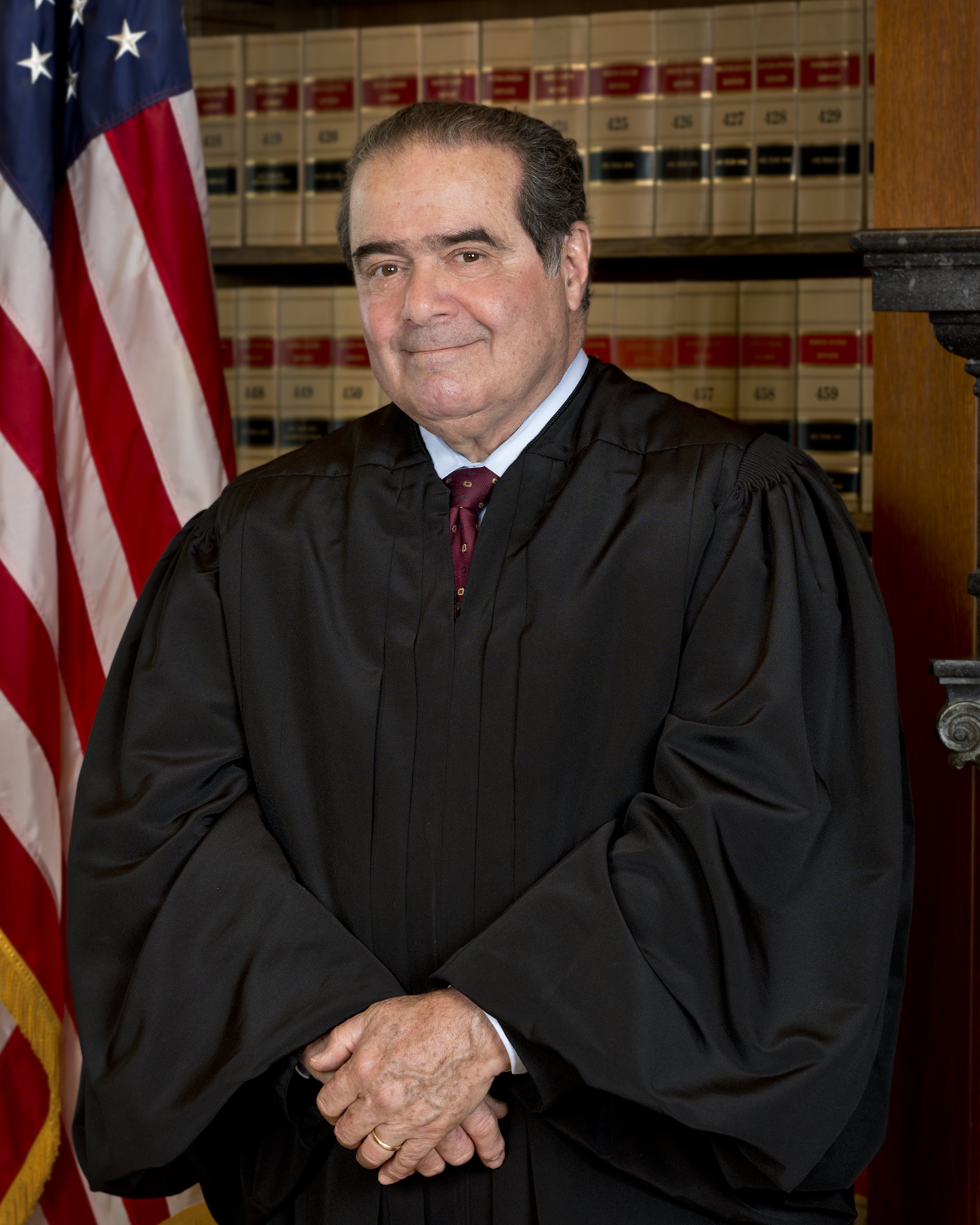
Marshall
Rehnquist
Scalia
Kennedy
White
Stevens
O’Connor
Blackmun
Souter
-
Writing for the Court, Justice Anthony Kennedy recalled the Court’s precedent to establish that “a prosecutor’s race-based peremptory challenge violates the equal protection rights of those excluded from jury service.” Kennedy explained that race-based discrimination in voir dire for a civil proceeding is “no less than discrimination in a criminal trial” because “[i]n either case, race is the sole reason for denying the excluded venireperson the honor and privilege of participating in our system of justice.
Kennedy explained, however, that the Constitution’s protection of individual liberty and equal protection generally only apply to government action. In Lugar v. Edmonson Oil Co. (1982), the Court established a two-prong test for state-action analysis. First, the Court asks whether the claimed constitutional deprivation was the result of the exercise of a right or privilege derived from state authority.
Second, the Court determines whether the private party charged with the deprivation can be fairly described as a state actor. Kennedy explained that making such a determination, the Court examines “the extent to which the actor relies on governmental assistance and benefits, whether the actor is performing a traditional governmental function, and whether the injury caused is aggravated in a unique way by the incidents of governmental authority.”
In this case, Kennedy found that “[t]here can be no question” that the first element is satisfied because “[b]y their very nature, peremptory challenges have no significance outside a court of law. Their sole purpose is to permit litigants to assist the government in the selection of an impartial trier of fact.” On the second element, Kennedy found it was satisfied because “without the overt, significant participation of the government, the peremptory challenge system, as well as the jury trial system of which it is a part, simply could not exist.” Further, he explained that a private party invokes the formal authority of the court to make the challenge and that when a court enforces a discriminatory peremptory challenge, “the court ‘has not only made itself a party to the [biased act], but has elected to place its power, property and prestige behind the [alleged] discrimination.’”
Satisfying the test, Kennedy ultimately concluded that Leesville’s use of racially discriminatory peremptory challenges constituted state action and therefore violated the Equal Protection Clause of the Fourteenth Amendment.