Cohens v. Virginia
Case Overview
CITATION
ARGUED ON
DECIDED ON
DECIDED BY
19 U.S. 264
N.d.
Mar. 2-3, 1821
Legal Issues
Does the Supreme Court have the authority to review state court decisions in criminal cases under state law?
Holding
Yes, the Supreme Court has appellate jurisdiction over all cases arising under federal law and the authority to review state court decisions in criminal matters.

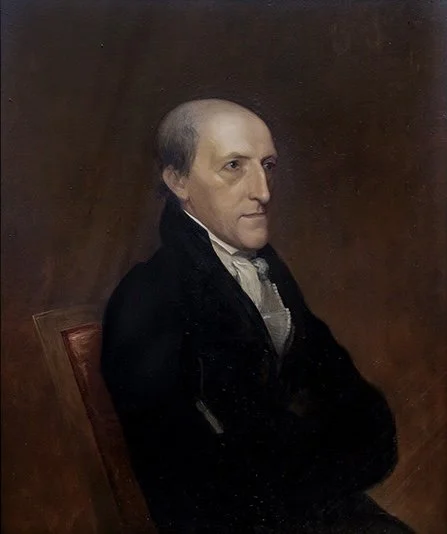
Portrait of Mendes Cohen, one of the appellants, by artist Joseph Wood (1818) | Credit: Smithsonian American Art Museum
Background
In 1812, the Cohen family established a prominent lottery and exchange firm in Baltimore, Maryland. By 1820, brothers Philip and Mendes Cohen were managing a branch in Norfolk, Virginia. At the time, lotteries were a primary method for governments to raise capital.
Congress passed legislation establishing a National Lottery to fund improvements in the District of Columbia. However, Virginia had its own state-authorized lotteries and had passed a law strictly prohibiting the sale of out-of-state lottery tickets within its borders.
On June 1, 1820, Virginia authorities charged the Cohens with selling National Lottery tickets in Norfolk. The brothers were convicted in a local state court and fined $100. On appeal, state courts ruled in favor of the Virginia law prohibiting the sale of out-of-state lotteries, but the Cohens appealed to the U.S. Supreme Court and argued that their conduct was protected by the Act of Congress authorizing the D.C. lottery.
The Supreme Court agreed with the Cohens on the constitutional argument that Article III, section 2 of the Constitution and the Supremacy Clause granted them the authority to review state court decisions. However, the Court ultimately ruled in favor of Virginia and upheld the Cohens’ convictions, arguing that Congress never intended to grant the right to sell lottery tickets outside the District of Columbia.
Unanimous decision for Virginia
Cohens
Virginia



Todd
Livingston
Duvall
Johnson
Washington
Story
Marshall