Abbott Laboratories v. Gardner
Case Overview
CITATION
ARGUED ON
DECIDED ON
DECIDED BY
387 U.S. 136
Jan. 16, 1967
May 22, 1967
Legal Issues
Can plaintiff drug manufacturers challenge an FDA regulation regarding retail drug labeling if was yet to be enforced ?
Holding
Yes, plaintiffs can challenge the FDA regulation regarding retail drug labeling before it’s actually enforced because the issue is fit for judicial decision and the plaintiffs faced sufficient hardship.
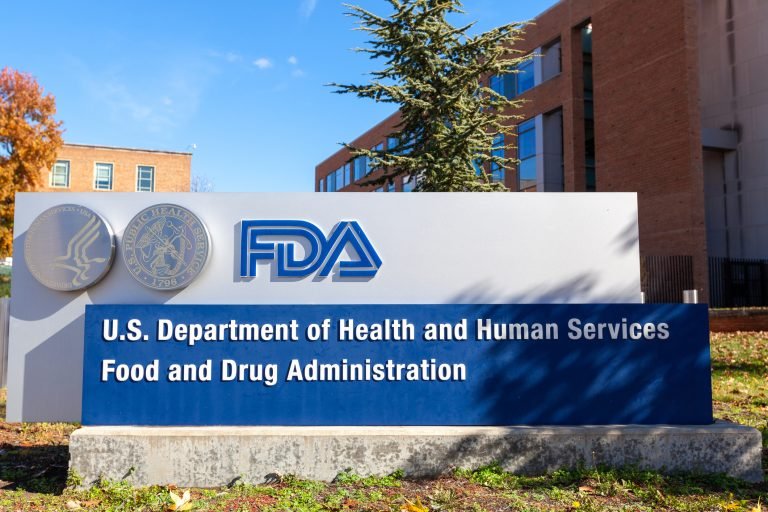
FDA Headquarters | Credit: Consumer Federation of America
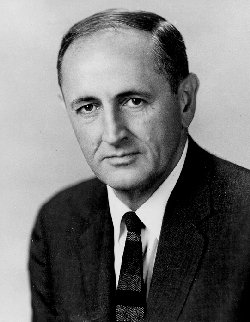
Portrait of John Gardner, the Secretary of Health, Education, and Welfare at the time of the case | Credit: U.S. Social Security Administration
Background
A group of 37 drug manufacturers and their trade association challenged a 1962 FDA regulation promulgated under the Federal Food, Drug, and Cosmetic Act. The regulation required that labels, advertisements, and promotional materials for prescription drugs print the “established name” (generic name) of a drug in a specific type size every time its “proprietary name” (trade name) appeared. The manufacturers argued that the Commissioner had exceeded his statutory authority, as they interpreted the law to only require the generic name to appear once on the label, not in every instance of the trade name’s use.
The District Court had granted summary judgment for the drug companies, but the Third Circuit Court of Appeals reversed, holding that it lacked jurisdiction to conduct pre-enforcement review of the regulation and the manufacturers couldn’t challenge the law’s validity until the FDA actually attempted to enforce it against them.
Summary
5 - 3 decision for Abbott Laboratories
Abbott Laboratories


Gardner

Fortas
Warren
White
Clark
Harlan II
* Justice Brennan took no part in the consideration or decision of this case.

Douglas
Black
Stewart
-
Writing for the Court, Justice John Marshall Harlan II reversed the Third Circuit Court of Appeals’ ruling and held that the drug manufacturers’ challenge to the FDA’s “established name” regulation was ripe for judicial review. Harlan began by clarifying that the basic rationale of the ripeness doctrine is to prevent courts from entangling themselves in abstract disagreements over administrative policies and to protect agencies from judicial interference until a decision has been formalized and its effects felt in a concrete way. Harlan established a two-part test for evaluating ripeness, explaining that courts must evaluate both the “fitness of the issues for judicial decision” and the “hardship to the parties of withholding court consideration.”
Regarding the fitness of the issues, Harlan found that the dispute was a purely legal question of statutory construction since the Court was asked to determine if the Commissioner had properly interpreted the statute to require the generic name of a drug to appear every time the trade name was used. Harlan noted that the regulation represented a “final agency action” and because the issue was legal in nature and didn't require further factual development, it was appropriate for immediate judicial review.
Harlan then addressed the hardship prong, arguing that the impact of the regulation on the manufacturers was sufficiently “direct and immediate.” He explained that the regulation put the companies in a dilemma where they either had to comply and incur the significant costs of changing all their labels and promotional materials or follow their present course and risk serious criminal and civil penalties for “misbranding” drugs. Ultimately, the Court held that the controversy was ripe and the manufacturers weren’t required to wait for an actual prosecution to challenge the law.